CASE STUDY
How Telefónica trained its employees in new skills with a large-scale reskilling plan

Brain
The first AI trained to teach

Author
The #1 AI-powered authoring tool on the market

Factory
Custom e-learning content factory

Skills
Comprehensive power skills course catalog

LMS
All-in-one LMS platform with AI

Engage
App for managing frontline teams
Product

What is Brain?
Everything you need to know about the first AI trained to teach.

How does it work?
Adaptive, conversational, and contextual. That’s learning with Brain.

Security
Why your company’s knowledge never leaves your environment or trains other models.

Comparison
Discover what sets isEazy Brain apart from other AI solutions.

Frequently Asked Questions
Want to learn more? Find answers to all your questions about isEazy Brain here.
FEATURES

AINew
Unlock your full potential and speed up course creation with artificial intelligence.

Accessibility
Automatically meet accessibility guidelines—without sacrificing interactivity!

Interactivity
Boost engagement with interactive, ready-to-use activities that make learning fun.

Course Creation
Reduce the time it takes to create your e-learning courses with our authoring tool.

Distribution
We offer you different distribution options, so that nothing can stop you.

SCORM
Publish your course in SCORM format and share it on any LMS.
SERVICES

Instrucional Design
Surprise your students with multimedia and interactive content.

Custom Courses
We create e-learning courses for you—tailored to your needs and hassle-free!

Virtual Reality
Turn learning into an immersive experience.

Custom Avatars
Give your courses and videos a unique touch with personalized avatars.

Audiovisual FactoryNew
Turn training into something dynamic and visual with engaging videos.
CATALOG

Course catalog
Over 600 skills and competency courses to help you adapt to your team's needs.
Microsoft Copilot AcademyNew
Your professionals will learn how to apply Copilot AI to key processes within your organization.

Artificial Intelligence Academy
Train your teams in the practical use of AI to boost productivity and innovation in your company.

Cybersecurity Academy
Capacita a tu empresa con el catálogo más completo en seguridad digital corporativa.
FEATURES

Learning platform
Manage all your training from one place

Analitycs
Measure the impact of your training

Learning Experience
Offer a unique learning experience to your team
Content Library
Choose from hundreds of expert-created courses
Authoring Tool
Create your own content—faster than ever

Use cases
Choose the solution that best fits your needs

Industries
Solutions for all types of industries
USE CASES

Onboarding
Facilitate the onboarding process, productivity and engagement of your new employees.

Upskilling
Boost your team's skills and prepare them for the challenges of the future with upskilling.

Microlearning
Discover all the advantages of microlearning and boost your training results.

Gamification
Enjoy addictive training that will get your professionals hooked.

Internal Communication
Improve communication in your company and enjoy an aligned and committed team.

Mobile learning
Agile, flexible, and interactive learning—built for today’s digital-first workforce.
INDUSTRIES

Banking and financial services
Training in compliance, cybersecurity, customer service, and key skills development.

Pharmaceuticals and healthcare
Digital onboarding, regulatory updates, and ongoing training for healthcare staff.

Retail and consumer
Agile and scalable training for in-store, operational, and customer service teams.

Industry and manufacturing
Training in processes, safety, and corporate culture for distributed teams.

Education and training
Digital solutions for training centers, internal academies, and corporate universities.

Technology and telecommunications
Development of technical talent, digital skills, and upskilling and reskilling programs.
CLIENTS

MAPFRE
How MAPFRE turn e-learning into sales with isEazy

Pepco
A personalised learning experience for a growing team.

BBVA
Digitisation and creation of high quality e-learning content.

Shiseido
We increase the engagement of the training with a social and gamified app.

Telefónica
Large-scale reskilling for the company's digital transformation.

Vodafone
A personalised learning experience for a growing team.
More than 1,000 companies already rely on isEazy.





MEET ISEAZY

Events
Discover our upcoming events and connect with the future of e-learning.

News
Find out the latest news about isEazy: press releases, partnerships, updates...

Contact
Leave us your personal details and we will contact you as soon as possible.
About isEazyNew
Find out more about our company.

Careers
We are looking for the best talent, join our team!

Partners
Become our partner and grow your business.
INTERESTING RESOURCES

Blog
The best content on e-learning: trends, tools and key strategies.

Whitepapers
Gain valuable insights and stay ahead of industry trends.

Product releases
The latest news and releases of our e-learning products and solutions.

Glossary
Definitions of the most commonly used terms and key industry concepts.

Guides
Discover the best step-by-step tips and tricks to optimize your L&D strategy.

Webinars
Video sessions on our products, trends and more

Comparatives
Compare e-learning solutions available on the market and choose the most suitable one.


WEBINAR
Master AI in isEazy Author in under an hour.




GUIDE
Prepare your organization to comply with the new AI regulations

Stay up to date with all our latest news
 Subscribe to our newsletter
 Stay up to date with all our latest news

September 28, 2026

CONTENT CREATED BY:

Table of contents
Artificial intelligence is reshaping tasks, processes, and the competencies companies need from their teams. For L&D and HR departments, the challenge is no longer just adopting new tools — it’s preparing professionals to use them with judgment and apply them effectively in their work.
The shift is already underway. The World Economic Forum’s Future of Jobs Report 2025 estimates that 39% of workers’ core skills will change by 2030. Meanwhile, McKinsey projects that up to 375 million workers may need to change occupational categories due to automation. For L&D leaders, this raises a direct question: what competencies does your team need to work with — not against — AI?
Artificial intelligence is transforming industries at an unprecedented pace. McKinsey estimates that up to 375 million workers may need to shift occupational categories by 2030 due to automation. According to the IBM Institute for Business Value, more than 60% of executives say generative AI will disrupt how their organization designs experiences for both employees and customers.
For L&D and HR departments, this raises a direct question: what competencies does your team need to work with — not against — AI? Building AI skills enables professionals to stay competitive, access new roles, and deliver greater business impact.
Automation doesn’t just eliminate tasks — it also creates new roles that didn’t exist a decade ago. AI ethics specialists, prompt engineers, data analysts, and AI governance officers are now essential in many organizations. According to the WEF report, 85% of employers plan to upskill their workforce by 2030. Developing AI skills isn’t just a response to the risk of automation — it’s a lever for professional and organizational growth.
AI skills are the competencies that enable professionals to interact with artificial intelligence systems, interpret their outputs, make data-driven decisions, and apply AI strategically and responsibly. They fall into two complementary categories: technical skills (hard skills) and power skills (human skills).
The key is not to choose one category over the other, but to combine them. A brilliant machine learning model is useless if no one can explain the results to leadership. A chatbot can fail if empathy is missing in its design. Real competitive advantage comes from teams that integrate both dimensions.
Not all AI skills carry the same weight or priority for every role. The table below maps each competency, its type, and its practical application in L&D and HR contexts — so you can prioritize based on role and your organization’s digital maturity.
| AI Skill | Type | Practical application in L&D / HR |
|---|---|---|
| Generative AI (GenAI) | Technical | Creating training content, automating communications |
| Machine Learning (ML) | Technical | Collaborating with technical teams, evaluating models with informed criteria |
| Data analysis | Technical | Measuring training impact, detecting skills gaps with real data |
| Natural Language Processing (NLP) | Technical | Internal chatbots, document analysis, employee support |
| Prompt engineering | Technical | Optimizing day-to-day interactions with AI tools |
| Computer vision | Technical | Quality control, workplace safety, customer experience |
| Deep learning | Technical | Evaluating when to adopt advanced AI systems in the organization |
| MLOps | Technical | Maintaining and scaling AI models beyond the initial pilot |
| Critical thinking | Power skill | Evaluating AI outputs, detecting bias, validating decisions |
| Creativity | Power skill | Combining AI capabilities with human innovation in products and processes |
| Collaboration | Power skill | Leading cross-departmental AI adoption projects |
| Adaptability | Power skill | Integrating new AI tools with agility in the face of continuous change |
| Problem-solving | Power skill | Identifying real business challenges before seeking a technological solution |
| Empathy and user-centered design | Power skill | Designing AI solutions that drive adoption and internal trust |
| Communication | Power skill | Explaining AI impact and limitations to non-technical profiles |
| Ethical judgment | Power skill | Responsible use of AI: privacy, bias, algorithmic transparency |
| Strategic vision | Power skill | Aligning AI projects with business and corporate training goals |
| Regulatory knowledge | Power skill | Compliance with the EU AI Act and applicable data regulations |
Some organizations make the mistake of focusing only on technical skills when designing their AI training plan. But AI projects don’t fail because of a lack of technical capability — they fail because of poor communication, misaligned strategy, and lack of ethical judgment.
A common scenario in corporate environments: a retail company trains its management team in AI-powered data analysis to anticipate inventory needs. The technical model works. But if managers can’t interpret results critically, can’t explain recommendations to their teams, or can’t make responsible decisions when the model makes errors — the project stalls. The investment doesn’t pay off.
Real competitive advantage doesn’t come from choosing between technical and human skills, but from integrating both in every role. The goal is to give each professional the right AI skills for their function — not to turn the entire organization into technical experts. This connects directly with the concept of skills transformation as a continuous, strategic process.
Telefónica is a compelling example of how a large organization can tackle reskilling at scale, combining technical training and transversal competencies to prepare its workforce for digital transformation. Discover how they did it →
CASE STUDY
How Telefónica trained its employees in new skills with a large-scale reskilling plan


Most top-ranking content for “AI skills” focuses on competency lists for individual technical profiles. What’s missing in all of them — and what L&D leaders actually need — is a structured implementation plan. Here are the four key steps:
The first step is to identify which AI skills already exist in your organization and which are missing by role, department, or level. Without this diagnosis, your training plan will be generic and ineffective. Using a structured skills taxonomy makes this mapping easier and helps prioritize the most business-critical gaps. Go deeper into the skills mapping methodology step by step.
Not all gaps are equally urgent. Prioritize the AI skills that will have the greatest impact on short- and medium-term business objectives. Start with the roles most exposed to AI — data, marketing, customer service, operations — and expand progressively.
Design blended pathways combining microlearning (5–10 minute lessons for daily use), blended learning with practical simulations, and podcasts for on-the-go learning. Format variety improves both adoption and engagement. Explore how generative AI can also accelerate the creation of training content.
AI evolves faster than most training cycles. AI skills acquired today may need updating in 12–18 months. Audit gaps regularly, update learning pathways as new tools emerge, and foster a culture where employees experiment and learn by doing. Learn more about the skills gap and how to address it systematically.
Building AI skills across a team may seem complex, but you don’t need to start from scratch. The most effective methodologies are those that integrate into the daily workflow without disrupting activity:
Short, focused sessions of 5–10 minutes that enable continuous learning without overwhelm. Ideal for fast-evolving technical skills — prompt engineering, new generative AI tools — or for progressively reinforcing power skills.
Combining technical theory with simulations, real-world cases, and role plays significantly increases transfer to the job. This is the most effective format for developing AI skills that require genuine practice, such as data analysis or AI-assisted decision-making.
Format variety improves adoption and engagement. Podcasts for on-the-go learning, interactive videos to explain complex concepts, simulation exercises for practicing in a safe environment. Channel diversity extends the reach of your training program across the entire organization.
One of the most effective ways to demonstrate newly acquired competencies is through certifications. For organizations, certifications provide a tangible way to validate learning outcomes and demonstrate the impact of training programs to leadership, clients, and talent alike.
With isEazy Skills — which includes programs such as the AI Academy and the Microsoft Copilot School — every course includes a completion certificate that employees can download and share on their professional profiles, including LinkedIn. This motivates learners and helps organizations strengthen their employer branding by showcasing a culture of continuous learning and innovation.

By integrating certifications into your corporate training strategy, you ensure that employees not only acquire valuable AI knowledge, but also receive recognition for their achievements — driving both engagement and talent retention.
AI evolves faster than most traditional training cycles. AI skills acquired today may need updating in 12–18 months. That’s why continuous learning must become a core part of corporate culture: regularly auditing gaps, updating learning pathways as new tools emerge, and encouraging employees to experiment and learn by doing.
Training in AI skills with a one-size-fits-all pathway isn’t always enough. Every professional starts from a different level, pace, and context. That’s why isEazy Brain adapts the learning experience in real time to each employee — turning your company’s real corporate knowledge into conversational learning agents that support professionals wherever and whenever they need it, inside the course, within the LMS, or in their work environment. Discover how isEazy Brain works →

AI ethics is no longer optional. From data privacy to algorithmic bias, organizations face reputational and regulatory risks if they fail to address the ethical implications of their AI projects. According to the World Economic Forum, 63% of employers cite a lack of competencies as one of the biggest barriers to business transformation — and ethical competency is one of the most neglected.
Training employees in the responsible use of AI ensures projects are not only technically sound but also socially sustainable and compliant with current regulations. AI ethics programs prepare professionals to make balanced decisions and build trust with clients, regulators, and society. Read this comprehensive guide on the European AI regulation to understand what it entails, who it affects, and how to prepare your team and organization for this new reality.
Many organizations begin their AI training journey with good intentions but without a solid strategy behind them. Here are the most common mistakes — and how to avoid them:
AI impacts every department: marketing, sales, HR, customer service, operations. Limiting training to data or technology teams leaves the majority of the organization unprepared and stalls real adoption. An AI skills plan must be cross-functional, with differentiated pathways by role.
As we’ve seen, a machine learning model is useless if no one can explain its outputs or question its biases. Power skills — critical thinking, ethical judgment, communication, adaptability — are just as important as technical skills for AI to actually work in the organization.
Launching a training plan without a prior skills mapping is like prescribing medication without a diagnosis. Without knowing the starting level and real gaps by role, training is generic, barely relevant, and hard to justify to leadership. Identifying the specific skills gap is an essential first step.
A two-day ChatGPT course is not an AI skills strategy. AI evolves too fast for a one-off training event to be sufficient. Organizations leading AI adoption understand learning as a continuous process: living pathways, regularly updated and connected to real changes in the market and tools.
Without clear metrics — completion rates, on-the-job application, improvement in specific KPIs — it’s impossible to demonstrate the return on training investment or make informed decisions about next steps. Define from the outset which indicators you’ll track and how you’ll connect them to business objectives.
Many companies train in AI tool use without including content on privacy, algorithmic bias, or EU AI Act compliance. This can have legal and reputational consequences. AI ethics is not an optional module — it’s central to any responsible training plan.
With isEazy Skills, organizations gain access to a comprehensive training ecosystem for AI skills development:
This enables scalable training strategies, ensuring that employees at every level — from executives to frontline workers — understand and apply AI in their day-to-day work.

AI skills are key to staying competitive in a constantly evolving labor market. According to the World Economic Forum’s Future of Jobs Report 2025, 44% of the skills workers will need over the next five years will change. As AI transforms industries and automates tasks, professionals with AI skills are better equipped to adapt, innovate, and create value in their organizations.
Organizations should promote a combination of technical skills — such as machine learning, data analysis, generative AI, or natural language processing — and power skills like critical thinking, ethical judgment, adaptability, and strategic vision. This combination ensures effective, responsible AI adoption aligned with business goals. The aim is not to turn everyone into a technical expert, but to equip each role with the right competencies.
The first step is to adopt accessible, flexible methodologies: microlearning to learn without interrupting the workday, blended learning that combines theory with practice, and varied formats such as interactive videos, simulations, and podcasts. Before training, it’s advisable to run a skills mapping to identify real gaps. Platforms like isEazy Skills offer a ready-to-use catalog combining technical and transversal AI-focused skills, including the AI Academy.
Training employees in AI improves productivity by automating repetitive tasks, drives innovation by enabling new business models, and strengthens data-driven decision-making. Companies that invest in AI skills also improve talent retention: employees feel more valued and ready for future challenges. This translates into greater business impact and a sustainable competitive advantage.
Not necessarily. Many AI skills — especially power skills like adaptability, critical thinking, collaboration, and ethical use of AI — are accessible to any professional profile. isEazy Skills offers varied learning formats designed for all types of professionals, making AI learning inclusive and accessible regardless of technical background.
The starting point is skills mapping: identifying what roles exist in the organization, what tasks each one performs, and how much AI already affects them or could automate them. From there, you prioritize the most critical gaps and design a focused training plan. Tools like isEazy Skills enable gap detection through assessments and help build personalized AI skills pathways for each team or role.

GUIDE
Prepare your organization to comply with the new AI Regulations
Download guide


Learn about the Artificial Intelligence Academy
A catalog of courses and programs on artificial intelligence designed to turn AI into a real advantage for your company.
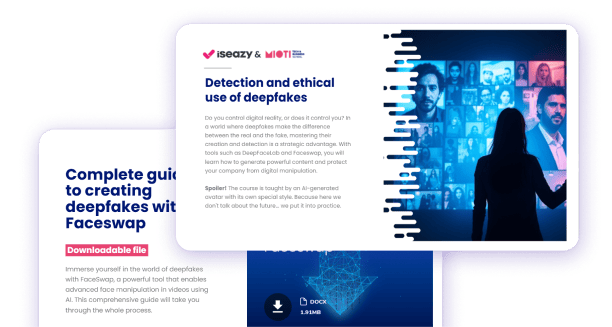
Learn about the Artificial Intelligence Academy
A catalog of courses and programs on artificial intelligence designed to turn AI into a real advantage for your company.