The first AI trained to teach

Brain
The first AI trained to teach

Author
The #1 AI-powered authoring tool on the market

Factory
Custom e-learning content factory

Skills
Comprehensive power skills course catalog

LMS
All-in-one LMS platform with AI

Engage
App for managing frontline teams
Discover isEazy Brain


Product
What is Brain?
Everything you need to know about the first AI trained to teach.
Learning agent: CompanionNew
Supports learners and answers their questions right inside the course, without breaking the audit trail.
How does it work?
Adaptive, conversational, and contextual. That’s learning with Brain.
Discover isEazy Author


 See all features
FEATURES
AINew
Unlock your full potential and speed up course creation with artificial intelligence.
Accessibility
Automatically meet accessibility guidelines—without sacrificing interactivity!
Interactivity
Boost engagement with interactive, ready-to-use activities that make learning fun.
Course Creation
Reduce the time it takes to create your e-learning courses with our authoring tool.
Distribution
We offer you different distribution options, so that nothing can stop you.
SCORM
Publish your course in SCORM format and share it on any LMS.
Discover isEazy Factory


SERVICES
Instrucional Design
Surprise your students with multimedia and interactive content.
Custom Courses
We create e-learning courses for you—tailored to your needs and hassle-free!
Virtual Reality
Turn learning into an immersive experience.
Custom Avatars
Give your courses and videos a unique touch with personalized avatars.
Audiovisual FactoryNew
Turn training into something dynamic and visual with engaging videos.
Discover isEazy Skills


CATALOG
Course catalog
Over 600 skills and competency courses to help you adapt to your team's needs.
Microsoft Copilot AcademyNew
Your professionals will learn how to apply Copilot AI to key processes within your organization.
Artificial Intelligence Academy
Train your teams in the practical use of AI to boost productivity and innovation in your company.
Cybersecurity Academy
Capacita a tu empresa con el catálogo más completo en seguridad digital corporativa.

Use cases
Choose the solution that best fits your needs

Industries
Solutions for all types of industries
See all solutions


 See all solutions
USE CASES
Onboarding
Facilitate the onboarding process, productivity and engagement of your new employees.
Upskilling
Boost your team's skills and prepare them for the challenges of the future with upskilling.
Microlearning
Discover all the advantages of microlearning and boost your training results.
Gamification
Enjoy addictive training that will get your professionals hooked.
Internal Communication
Improve communication in your company and enjoy an aligned and committed team.
Mobile learning
Agile, flexible, and interactive learning—built for today’s digital-first workforce.
Discover our industries


 View all industries
INDUSTRIES
Banking and financial services
Training in compliance, cybersecurity, customer service, and key skills development.
Pharmaceuticals and healthcare
Digital onboarding, regulatory updates, and ongoing training for healthcare staff.
Retail and consumer
Agile and scalable training for in-store, operational, and customer service teams.
Industry and manufacturing
Training in processes, safety, and corporate culture for distributed teams.
Education and training
Digital solutions for training centers, internal academies, and corporate universities.
Technology and telecommunications
Development of technical talent, digital skills, and upskilling and reskilling programs.
CLIENTS

MAPFRE
How MAPFRE turn e-learning into sales with isEazy

Pepco
A personalised learning experience for a growing team.

BBVA
Digitisation and creation of high quality e-learning content.

Shiseido
We increase the engagement of the training with a social and gamified app.

Telefónica
Large-scale reskilling for the company's digital transformation.

Vodafone
A personalised learning experience for a growing team.
More than 1,000 companies already rely on isEazy.





MEET ISEAZY

Events
Discover our upcoming events and connect with the future of e-learning.

News
Find out the latest news about isEazy: press releases, partnerships, updates...

Contact
Leave us your personal details and we will contact you as soon as possible.
About isEazyNew
Find out more about our company.

Careers
We are looking for the best talent, join our team!

Partners
Become our partner and grow your business.
INTERESTING RESOURCES

Blog
The best content on e-learning: trends, tools and key strategies.

Whitepapers
Gain valuable insights and stay ahead of industry trends.

Product releases
The latest news and releases of our e-learning products and solutions.

Glossary
Definitions of the most commonly used terms and key industry concepts.

Guides
Discover the best step-by-step tips and tricks to optimize your L&D strategy.

Webinars
Video sessions on our products, trends and more

Comparatives
Compare e-learning solutions available on the market and choose the most suitable one.


WEBINAR
AI-powered course creation, step by step
Master AI in isEazy Author in under an hour.

05/11/2026

11:00 AM ET



GUIDE
Does your training plan comply with the EU AI Act?
Prepare your organization to comply with the new AI regulations


AUTHORING TOOL
Haven’t you tried AI-powered course creation yet?
Create courses automatically and generate interactive activities, games, translations, and multimedia resources in seconds.

Subscribe to our newsletter
Stay up to date with all our latest news
 Subscribe to our newsletter
 Stay up to date with all our latest news

August 3, 2026
Digital Learning Manager: role, responsibilities and key skills

CONTENT CREATED BY:
Sara De la Torre
Content Marketing Manager at isEazy

Table of contents
What is a Digital Learning Manager?
The Digital Learning Manager (DLM) is the professional responsible for designing, managing, and measuring an organization’s digital learning strategy. Their mission is to ensure that online learning programs are effective, accessible, and aligned with business objectives. They are the figure that connects pedagogy, technology, and data within a single L&D function.
Across the US and Europe, this role has gained prominence as the digitalization of corporate training has shifted from an option to a structural necessity. According to LinkedIn Learning’s Workplace Learning Report 2025, 89% of L&D leaders consider skills development a critical priority, and the ability to execute that strategy digitally increasingly falls to profiles like the DLM.
The Digital Learning Manager is the professional who leads digital learning in a company: they design the strategy, manage learning technologies, and measure its impact on business outcomes.
isEazy Definition
What does a Digital Learning Manager do: 6 core responsibilities
The DLM is neither a static nor a one-size-fits-all role. Depending on the size of the organization, they may be a strategic figure with their own team or a cross-functional profile collaborating with HR, IT, and business units. In all cases, however, their work revolves around these six responsibilities:
1. Designing the digital learning strategy
The DLM defines how the organization learns: which modalities to use (e-learning, blended, microlearning, social learning), what content to prioritize, and in what sequence. This strategy must respond to real, identified training needs rather than historical precedent or isolated budget decisions.
2. Selecting and managing learning technologies
The DLM evaluates, procures, and administers the tools in the training ecosystem: LMS, authoring tools, content platforms, assessment solutions, and learning analytics. They must understand both the technical capabilities of each solution and their pedagogical and organizational implications.
3. Overseeing content design and production
While they may not be the direct creator of courses, the DLM sets quality standards for instructional design, coordinates instructional designers or production teams, and ensures content is aligned with learning objectives. A solid understanding of a learning and development strategy is essential for this function.
4. Administering the LMS and learning paths
The day-to-day operational management of the learning platform falls to the DLM or their team: content upload, user assignment, learning path configuration, permissions management, and incident resolution. In many organizations, this role overlaps with that of the LMS administrator, though in larger teams these are separate functions.
5. Measuring and analyzing the impact of training
The DLM works with data: completion rates, engagement, assessment results, learning times, and training ROI. They use LMS analytics to make informed decisions about what’s working, what to improve, and how to justify the investment in training to leadership.
6. Communicating and building a learning culture
A digital learning strategy only works if people adopt it. The DLM acts as an internal learning ambassador: communicating the value of programs, engaging managers in team development, and building a culture where continuous learning is natural rather than an occasional obligation.
Digital Learning Manager skills
The DLM profile is, by definition, hybrid. They are neither a pure technologist nor a traditional instructional designer: they are a professional who connects both dimensions with a strategic, results-oriented mindset. Below are the key competencies organized by dimension:
| Dimension | Key skills | What it's for |
|---|---|---|
| Pedagogical | Instructional design, active learning methodologies, blended learning, microlearning | Creating training programs that actually work and generate learning that transfers to the job |
| Technological | LMS, authoring tools (Articulate, iSpring, isEazy Author), SCORM/xAPI, API integrations | Selecting, configuring, and maximizing the full learning technology ecosystem |
| Analytical | Training KPIs, LMS dashboards, training ROI, learning data analysis | Demonstrating the impact of training and making evidence-based decisions |
| Project management | Planning, stakeholder management, agile methodologies, training budget | Coordinating teams and resources to execute complex programs on time and within budget |
| Communication | Storytelling, executive presentations, change management, internal marketing | Securing buy-in from employees and leaders for digital learning programs |
Organizations that prioritize learning are 92% more likely to innovate and 52% more productive per employee.
LinkedIn Workplace Learning Report, 2025
Digital Learning Manager vs. Traditional Training Manager
The DLM has not come to replace the traditional training manager — they have come to evolve that role to meet the demands of the digital environment. The difference lies not only in the tools they use, but in their approach, their metrics, and the way they conceive learning within the organization:
| Aspect | Traditional Training Manager | Digital Learning Manager |
|---|---|---|
| Primary focus | Administrative and logistical management of in-person training | Comprehensive digital learning strategy aligned with business outcomes |
| Tools | Physical classrooms, external course catalogs, spreadsheets | LMS, authoring tools, content platforms, learning analytics |
| Metrics | Training hours, attendance, post-course satisfaction | Completion rates, engagement, on-the-job transfer, training ROI |
| Relationship with technology | Occasional user, depends on IT for any changes | Active manager of the learning technology ecosystem |
| Methodology | Training scheduled in annual calendars | Continuous, personalized learning adapted to each employee's moment and need |
Training and career path of a Digital Learning Manager
There is no single path into the DLM role. Most professionals who hold it come from one of three backgrounds:
- Training or HR managers who have progressively incorporated digital tools into their work and taken on LMS management and e-learning project leadership.
- Instructional designers or learning designers who have expanded their skill set toward project management, technology, and strategy.
- Technology or communications professionals (IT, marketing, internal comms) who have pivoted into corporate learning.
In terms of formal education, master’s programs in e-learning, educational technology, or organizational learning offered by universities such as Penn State, Purdue, or Georgetown provide a recognized academic foundation. ATD (Association for Talent Development) certifications — especially the CPTD (Certified Professional in Talent Development) — are the most internationally recognized credentials in the sector.
The typical career trajectory begins with training coordinator or digital learning specialist roles, advances toward e-learning project management, and leads to senior L&D digital manager, Head of Learning, or Chief Learning Officer positions in larger organizations. The key to progression is combining practical experience with demonstrable data on impact.
Digital Learning Manager challenges in 2026 – 2027
The DLM role is not without its difficulties. Identifying them is just as important as knowing the responsibilities, because much of the value this professional brings lies in their ability to navigate complex environments with limited resources.
Integrating generative AI without losing pedagogical rigor
Generative AI tools have accelerated the production of training content, but have also introduced new risks: generic content, hallucinations in technical materials, and the loss of the organization’s voice and values. The DLM must establish clear criteria for when and how AI should be used in training production, ensuring speed does not come at the cost of pedagogical quality.


Demonstrating training ROI to leadership
One of L&D’s longstanding challenges remains: justifying the investment in training with concrete data. The DLM must go beyond activity metrics (how many completed the course) and connect training outcomes to business indicators (error reduction, onboarding time, talent retention). LMS learning reports are a key tool for building that business case.
Managing the generational and digital skills gap
In many organizations, employees with very different levels of digital fluency work side by side. Designing a learning strategy that works for both digital natives and those who joined before the digital transformation requires personalization, accessibility, and careful change management. New manager training is one of the areas where this gap is most visible.
Maintaining engagement in fully digital formats
E-learning that doesn’t engage doesn’t train. The DLM knows that dropout rates in online courses can exceed 70% when the design is poor. Working with methodologies such as microlearning, gamification, and social learning requires constant effort to update programs and evaluate their real impact on employee behavior.
STF Group is an example of how an organization can transform its leadership training with a well-executed digital strategy. With isEazy, they achieved an 87% completion rate in their executive development program — one of the hardest indicators to reach in corporate e-learning. Discover how they did it →
CASE STUDY
We helped STF Group achieve an 87% completion rate in its leadership program


How the Digital Learning Manager designs the training plan
The DLM doesn’t improvise training — they plan it. A well-structured corporate training plan is the document that articulates their entire strategy: what employees need to learn, in what format, with what resources, and how results will be measured.
The typical process a DLM follows includes four phases:
- Needs diagnosis: competency gap analysis, conversations with managers, LMS data review, and alignment with the organization’s strategic objectives.
- Learning path design: content selection, modalities (e-learning, blended, social), sequencing, and evaluation criteria.
- Technology implementation: LMS content upload, learning path configuration, communication automation, and access management.
- Measurement and continuous improvement: KPI tracking, results analysis, and program iteration for the next cycle.

How the LMS supports the Digital Learning Manager
If there is one tool that defines the day-to-day work of a Digital Learning Manager, it is the LMS (Learning Management System). It is not just a course repository: it is the operations center from which the DLM manages the entire digital learning ecosystem of the organization.
A good LMS enables the DLM to:
- Centralize all training content in a single environment accessible to any employee, on any device.
- Automate learning path assignment based on role, department, or stage in the employee lifecycle (onboarding, upskilling, compliance).
- Measure progress in real time — for each individual and for the organization as a whole — with actionable data to drive decisions.
- Integrate external tools such as video conferencing platforms, authoring tools, or HR systems to maintain a cohesive learning ecosystem.
- Generate automated reports that justify the investment in training to leadership with objective data.
isEazy LMS is built specifically so that L&D teams can manage their digital learning autonomously, without depending on IT for every update. Its architecture — built around personalized learning paths, advanced analytics, and an intuitive interface — makes it the natural ally of the Digital Learning Manager looking to scale their training strategy without losing control. Request a free demo and see it in action.
Frequently asked questions about the Digital Learning Manager
What’s the difference between a Digital Learning Manager and an instructional designer?
An instructional designer focuses on the pedagogical design of content: course structure, scripts, learning activities, and assessments. Their work is to create didactically effective training materials. A Digital Learning Manager, on the other hand, operates at a more strategic and cross-functional level: they define the organization’s digital learning strategy, select the right technologies (LMS, authoring tools, content platforms), manage the L&D budget, lead the teams involved, and measure the impact of training on business outcomes. In many organizations, the DLM coordinates one or more instructional designers as part of their team. The DLM profile requires, beyond a pedagogical foundation, competencies in project management, data analysis, and stakeholder communication.
What kind of LMS does a Digital Learning Manager need?
A Digital Learning Manager needs an LMS that goes beyond hosting courses: it must offer detailed learning analytics, learning path management, integration with HR systems, and authoring tools compatible with standards such as SCORM or xAPI. The most valued features include progress reports by employee or team, enrollment automation, blended learning support (face-to-face and digital), and the ability to personalize learning journeys. Ease of administration is also key: an LMS that requires a dedicated technical team for every update slows down the DLM’s ability to act with agility. Platforms like isEazy LMS allow teams to centralize all training management — from content publishing to report generation — with an intuitive interface built for L&D teams.
How much does a Digital Learning Manager earn?
Digital Learning Manager salaries vary depending on experience, company size, and industry. In the US, entry-level or recently transitioned DLMs typically earn between $65,000 and $85,000 per year. Profiles with 3 to 5 years of experience managing teams or large-scale training programs generally fall in the $90,000–$120,000 range. Senior DLMs or heads of digital L&D at larger organizations can exceed $130,000, particularly in roles with strategic leadership responsibilities. In the UK and Europe, equivalent ranges tend to be lower but follow a similar progression based on seniority and scope of responsibility. These figures are indicative, based on job market data and sector surveys from 2025.
Is a specific certification required to become a Digital Learning Manager?
There is no single mandatory certification to work as a Digital Learning Manager, but several recognized credentials strengthen the professional profile. The most valued in the L&D sector include ATD (Association for Talent Development) certifications — particularly the CPTD (Certified Professional in Talent Development) and the APTD — as well as instructional design certifications for tools like Articulate or Adobe Learning Manager, and project management credentials such as PMP, Agile, or PRINCE2. In English-speaking markets, an advanced degree in instructional design, educational technology, or organizational learning also provides a strong foundation. What matters most to employers is a combination of formal training, demonstrable hands-on experience, and up-to-date knowledge of digital learning tools and methodologies.
Featured articles




The power of AI in a fully integrated training platform
Automate processes, access 600+ ready-to-use courses, or create your own content with the help of AI.
Request a demoContact us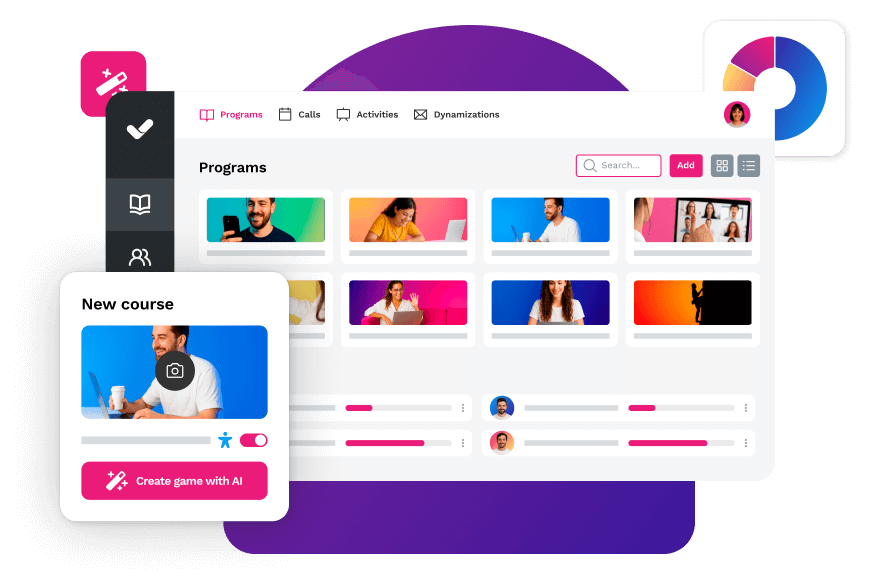


Streamline your training management
Experience the power of AI in an LMS that has it all


Streamline your training management
Experience the power of AI in an LMS that has it all
Related articles

Sara De la Torre
August 25, 2026
Competency-Based Learning: The Complete Guide
Read more

Cristina Sánchez
March 27, 2024
High turnover? 6 strategies for attracting and retaining talent
Read more

Sara De la Torre
June 16, 2026
Quiet cracking: what it is and how it affects employee engagement
Read more