CASE STUDY
We multiplied x3 the productivity in the creation of e-learning courses at Vodafone

Brain
The first AI trained to teach

Author
The #1 AI-powered authoring tool on the market

Factory
Custom e-learning content factory

Skills
Comprehensive power skills course catalog

LMS
All-in-one LMS platform with AI

Engage
App for managing frontline teams
FEATURES

AINew
Unlock your full potential and speed up course creation with artificial intelligence.

Accessibility
Automatically meet accessibility guidelines—without sacrificing interactivity!

Interactivity
Boost engagement with interactive, ready-to-use activities that make learning fun.

Course Creation
Reduce the time it takes to create your e-learning courses with our authoring tool.

Distribution
We offer you different distribution options, so that nothing can stop you.

SCORM
Publish your course in SCORM format and share it on any LMS.
SERVICES

Instrucional Design
Surprise your students with multimedia and interactive content.

Custom Courses
We create e-learning courses for you—tailored to your needs and hassle-free!

Virtual Reality
Turn learning into an immersive experience.

Custom Avatars
Give your courses and videos a unique touch with personalized avatars.

Audiovisual FactoryNew
Turn training into something dynamic and visual with engaging videos.
CATALOG

Course catalog
Over 600 skills and competency courses to help you adapt to your team's needs.
Microsoft Copilot AcademyNew
Your professionals will learn how to apply Copilot AI to key processes within your organization.

Artificial Intelligence Academy
Train your teams in the practical use of AI to boost productivity and innovation in your company.

Cybersecurity Academy
Capacita a tu empresa con el catálogo más completo en seguridad digital corporativa.

Use cases
Choose the solution that best fits your needs

Industries
Solutions for all types of industries
USE CASES

Onboarding
Facilitate the onboarding process, productivity and engagement of your new employees.

Upskilling
Boost your team's skills and prepare them for the challenges of the future with upskilling.

Microlearning
Discover all the advantages of microlearning and boost your training results.

Gamification
Enjoy addictive training that will get your professionals hooked.

Internal Communication
Improve communication in your company and enjoy an aligned and committed team.

Mobile learning
Agile, flexible, and interactive learning—built for today’s digital-first workforce.
INDUSTRIES

Banking and financial services
Training in compliance, cybersecurity, customer service, and key skills development.

Pharmaceuticals and healthcare
Digital onboarding, regulatory updates, and ongoing training for healthcare staff.

Retail and consumer
Agile and scalable training for in-store, operational, and customer service teams.

Industry and manufacturing
Training in processes, safety, and corporate culture for distributed teams.

Education and training
Digital solutions for training centers, internal academies, and corporate universities.

Technology and telecommunications
Development of technical talent, digital skills, and upskilling and reskilling programs.
CLIENTS

MAPFRE
How MAPFRE turn e-learning into sales with isEazy

Pepco
A personalised learning experience for a growing team.

BBVA
Digitisation and creation of high quality e-learning content.

Shiseido
We increase the engagement of the training with a social and gamified app.

Telefónica
Large-scale reskilling for the company's digital transformation.

Vodafone
A personalised learning experience for a growing team.
More than 1,000 companies already rely on isEazy.





MEET ISEAZY

Events
Discover our upcoming events and connect with the future of e-learning.

News
Find out the latest news about isEazy: press releases, partnerships, updates...

Contact
Leave us your personal details and we will contact you as soon as possible.
About isEazyNew
Find out more about our company.

Careers
We are looking for the best talent, join our team!

Partners
Become our partner and grow your business.
INTERESTING RESOURCES

Blog
The best content on e-learning: trends, tools and key strategies.

Whitepapers
Gain valuable insights and stay ahead of industry trends.

Product releases
The latest news and releases of our e-learning products and solutions.

Glossary
Definitions of the most commonly used terms and key industry concepts.

Guides
Discover the best step-by-step tips and tricks to optimize your L&D strategy.

Webinars
Video sessions on our products, trends and more

Comparatives
Compare e-learning solutions available on the market and choose the most suitable one.


WEBINAR
Master AI in isEazy Author in under an hour.




GUIDE
Prepare your organization to comply with the new AI regulations


AUTHORING TOOL
Create courses automatically and generate interactive activities, games, translations, and multimedia resources in seconds.

Stay up to date with all our latest news
 Subscribe to our newsletter
 Stay up to date with all our latest news

May 28, 2026

CONTENT CREATED BY:

Table of contents
Authoring tools are the software that L&D teams use to create e-learning courses independently, without relying on technical development. According to LinkedIn Learning’s Workplace Learning Report 2024, 90% of organisations consider internal content creation a strategic priority for the coming years. Understanding what they are, how they work, and what features set them apart is the first step to making the right choice.
An authoring tool is software specifically designed to create digital training content: e-learning courses, assessments, interactive modules, and multimedia resources. Unlike generic tools such as PowerPoint or Word, authoring tools are optimised to produce pedagogical content exportable in standard formats (SCORM, xAPI) that integrate directly into learning management platforms.
In a corporate context, these tools allow an organisation’s own content experts — L&D managers, HR professionals, team leads — to create their own courses without any programming knowledge. The result is greater autonomy, shorter production timelines, and content that is more closely aligned with real business needs.
It is important not to confuse them with an LMS (Learning Management System): the LMS is the platform where courses are distributed and managed, while the authoring tool is used to create them. They are complementary, not interchangeable.
The workflow with an authoring tool is structured around three main phases:
The most modern solutions have significantly streamlined this cycle: cloud-based tools like isEazy Author allow you to create, collaborate in real time, and publish directly from the browser, with no installation or manual exports required.
Not all authoring tools are equal. These are the features that make the difference between a basic solution and a professional tool built for corporate L&D teams:
The editor is the heart of the tool. It should allow you to lay out courses visually, with pre-designed templates and drag-and-drop elements, without requiring any design skills. An intuitive interface shortens the learning curve and allows anyone on the team to produce quality content from day one. The ability to create interactive learning — with clicks, drag-and-drop interactions, and embedded questions — makes a fundamental difference to learner engagement.
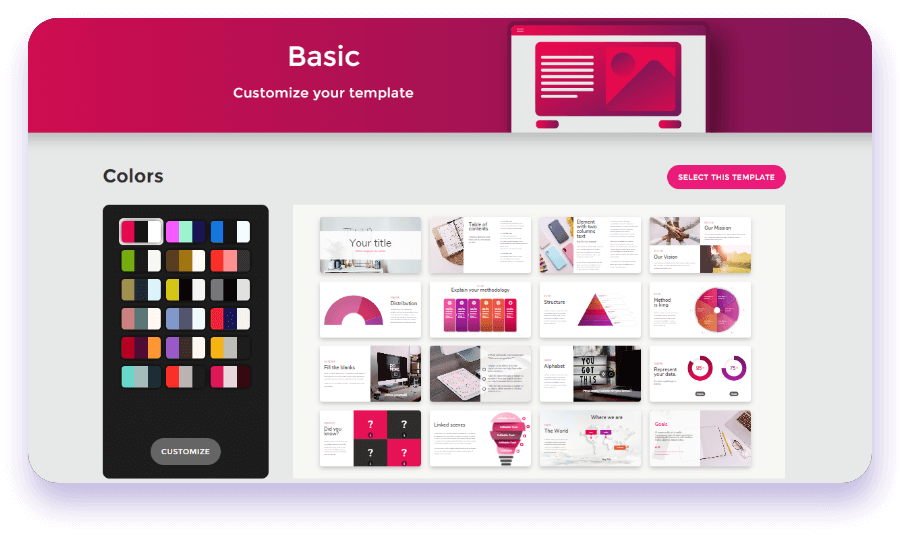
Training content is only effective if learners complete it and retain it. Leading authoring tools include interactive elements (multiple choice questions, drag-and-drop, branching scenarios), animations, embedded videos, and basic gamification. These resources turn a passive course into an active experience that improves knowledge retention.
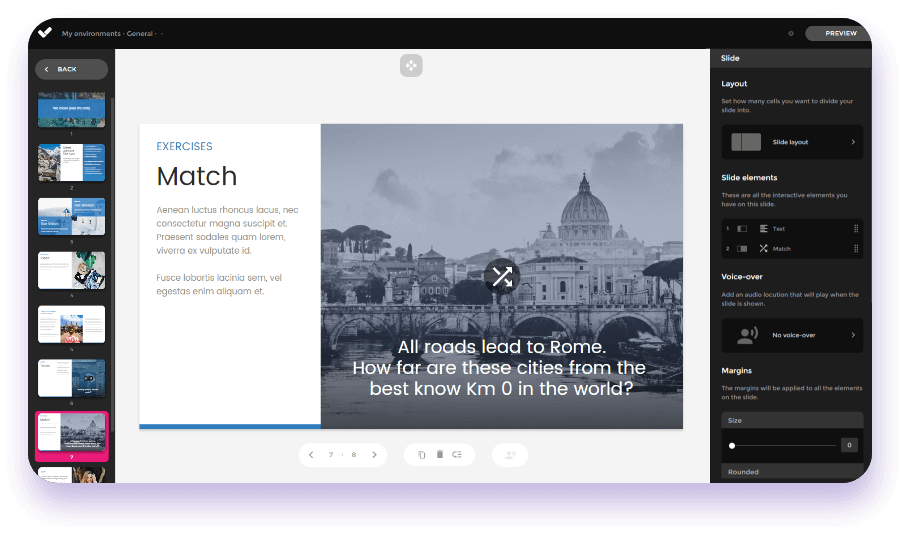
Production speed is a critical factor for L&D teams with high content demand. Professional tools offer reusable template libraries, block-copy functions across courses, assisted translations, and built-in review workflows. These features can reduce course production time by more than 50% compared to traditional methods.
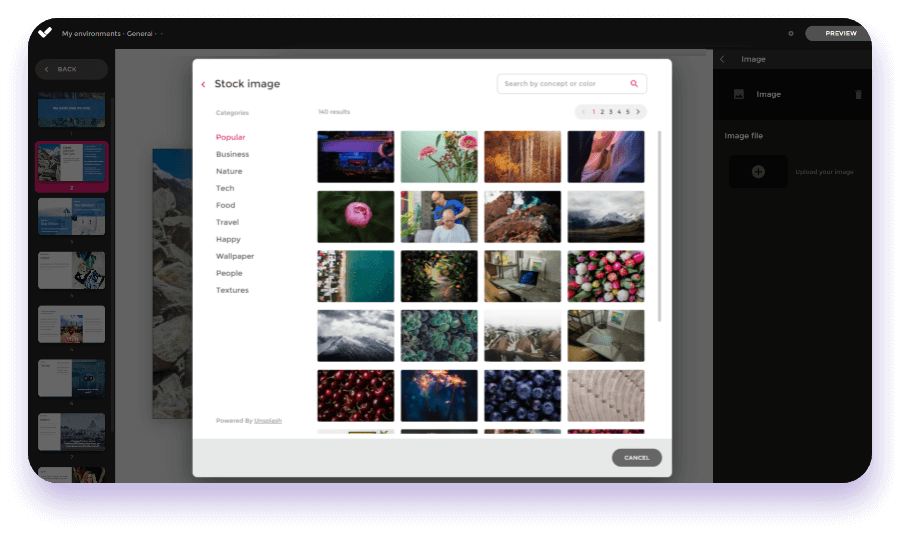
In corporate environments, content is rarely created by just one person. Cloud-based authoring tools allow multiple team members to work simultaneously on the same course, with version control, comments, and approval workflows. This eliminates the typical bottlenecks of working locally and speeds up review cycles.

Accessibility is increasingly both a legal and an ethical requirement in corporate training. An accessible authoring tool must produce content that complies with WCAG 2.1 guidelines (at least level AA): adequate colour contrast, screen reader compatibility, alternative text for images, and keyboard navigation. In the UK, the EU, and many other regions, digital accessibility regulations are mandatory for the public sector and increasingly expected in the private sector. To go deeper on this topic, our guide on accessibility in e-learning covers all the relevant standards.
Artificial intelligence has radically changed the way L&D teams create e-learning content. isEazy Author integrates a complete set of AI features that cover the entire production process: from automatic course generation to image creation, voiceovers, subtitles, and AI-powered avatar videos.
The most powerful feature is AI Autopilot. Here’s how it works: you specify the topic of your course or upload your documentation (PDF, Word, PowerPoint), and the AI analyses the content, proposes a coherent pedagogical structure, selects the most appropriate interactive resources at each point — games, comparisons, videos, role plays — and generates a complete course ready for review and publishing.
Unlike other AI tools that simply generate text or presentations, AI Autopilot applies instructional design principles: it organises content into modules with clear learning objectives, distributes interactive resources with pedagogical intent, and maintains didactic consistency throughout the course. The result is not just a nicely formatted document — it is structured training ready to be deployed in corporate environments.
The trainer remains in control at all times: every slide is editable, you can adjust the proposed structure, add additional content, and apply your corporate branding (logo, colours, typography) automatically across the entire project.
For those who prefer to build their course slide by slide, isEazy Author also integrates AI into the editor to automate the most repetitive tasks:
Once the course is created, the authoring tool exports it in a standard format that ensures compatibility with any LMS. The main standards are:
The authoring tool market is wide and varied. Below you will find the five most widely used options in corporate environments, with their key features, so you can compare them and make an informed decision. For a more in-depth analysis, see our full comparison of authoring tools.
isEazy Author is a 100% cloud-based authoring tool designed for corporate L&D teams that need to produce high-quality courses quickly and without any technical dependency. It stands out for its intuitive interface with professional templates, its generative AI features (AI Autopilot), real-time collaborative creation, and full compatibility with SCORM, xAPI, and AICC. It includes built-in WCAG accessibility and support in multiple languages. Explore all isEazy Author features.

Features
Benefits
Pricing
Accessibility
Awards
Features
Benefits
Pricing
Accessibility
Awards
Easy Generator is a cloud-based authoring tool focused on enabling quick course creation by content experts without a technical profile. Its core value proposition is simplicity: it offers a very minimalist editor with a limited number of slide types. It is a suitable option for organisations that need fast production of basic content, though it offers less interactive depth and fewer AI features than solutions like isEazy Author.

Key Features
Benefits
Pricing
Key Features
Benefits
Pricing
Gomo is a cloud-based authoring tool with a strong focus on multichannel distribution and responsive design. It allows courses to be published directly as a web app, in addition to standard SCORM formats. Its visual editor is accessible for non-technical profiles, though its template catalogue and interactive resources are more limited than other tools in the category.

Features
Benefits
Pricing
Features
Benefits
Pricing
Articulate Storyline is one of the best-known authoring tools on the market, particularly valued by instructional designers with a technical background. It offers great flexibility for creating custom interactions and complex branching scenarios. Its main limitation is the steep learning curve: it is not the most suitable option for teams without prior e-learning design experience. It runs as a desktop application (Windows only), which involves local installation and manual project synchronisation for collaborative teams. Its licence price is among the highest in the market.

Key Features
Benefits
Pricing
Key Features
Benefits
Pricing
iSpring Suite is an authoring tool that works as a PowerPoint add-in, which makes adoption easier for users familiar with that environment. It allows existing presentations to be converted into SCORM courses with relative ease and includes features for creating assessments, role-play dialogues, and screen recordings. Its PowerPoint integration is an advantage for certain profiles, but it also limits design flexibility and the ability to create content from scratch with a modern aesthetic. It requires Windows installation.

Key Features
Benefits
Pricing
Key Features
Benefits
Pricing
Choosing the right authoring tool for your organisation depends not just on software features: it depends on your context, your team, and your training objectives. These are the key criteria to evaluate:
| Criterion | What to look for | Why it matters |
|---|---|---|
| Ease of use | Visual interface without coding, pre-designed templates, short learning curve | Determines whether your team can create content independently from day one |
| Export formats | Compatibility with SCORM 1.2, SCORM 2004, and xAPI as a minimum | Ensures integration with the LMS already in place at your organisation |
| Cloud collaboration | Simultaneous editing, comments, approval workflows | Essential for teams of more than one person or with external reviewers |
| AI features | Content generation, question suggestion, pedagogical optimisation | Reduces production time and improves the quality of the final content |
| Accessibility | WCAG 2.1 AA compliance, screen reader compatibility | Legal requirement in many contexts and necessary for inclusive training |
| Support & onboarding | Support in your language, documentation, training sessions | Determines adoption speed and the real return on your investment |
Before making a decision, always request a free trial or a guided demo. Verify that the tool includes the interactive elements you need (assessments, branching scenarios, gamification), that the export formats are compatible with your LMS, and that the interface is accessible to all team profiles. You can explore isEazy Author’s full feature set for a comprehensive reference of what a professional tool should offer.
Product pages and demos always show the tool at its best. For a more realistic picture, check verified reviews on platforms such as G2, Capterra, or TrustRadius. Pay particular attention to comments about technical support, platform stability, and update frequency: these factors directly impact your long-term productivity.
Prices vary depending on the licensing model and features included. Annual SaaS subscriptions are the most common in the corporate market and typically include updates, support, and cloud storage. Check isEazy Author’s pricing for a reference on typical investment levels for professional solutions.
Vodafone is a good example of the impact a well-chosen authoring tool can have. After adopting isEazy Author, the company tripled its productivity in e-learning content creation, drastically reducing the time needed to produce and update courses for their teams. Find out how they did it →
CASE STUDY
We multiplied x3 the productivity in the creation of e-learning courses at Vodafone


Choosing an authoring tool is a strategic decision for any L&D team. The right tool does not just improve content quality: it reduces production time, increases team autonomy, and improves the real business impact of training.
If you still have doubts, the best way to decide is to try. isEazy Author offers a guided demo with a specialist who will help you assess whether the tool fits your specific needs. You can also start creating courses for free and see for yourself the difference that working with a tool designed for corporate training teams can make.
An authoring tool is the software used to create and design training content: courses, modules, assessments, and interactive resources. An LMS (Learning Management System) is the platform where that content is distributed, managed, and tracked among users. They are complementary tools: the authoring tool produces the course, and the LMS delivers it to learners and records their progress. Most organisations use both together to cover the full training cycle.
Professional authoring tools allow you to export content in the most widely used e-learning standards: SCORM 1.2, SCORM 2004, xAPI (Tin Can API), and AICC. These formats ensure compatibility with the vast majority of LMS platforms on the market. Many tools also allow direct publishing as HTML5 for the web, or in video format for alternative distribution channels. When evaluating an authoring tool, always verify that its export formats are compatible with the LMS already in use at your organisation.
The price of an authoring tool varies considerably depending on the type of solution and the licensing model. Annual SaaS subscription models are the most common in the corporate market and typically range from €400 to over €2,000 per user per year, depending on the features included. There are also free options with limited capabilities, suitable for small projects or for trying the software before committing. For organisations with multiple content creators, it is important to assess the total cost per user and compare whether the tool includes support, updates, and cloud storage.
For L&D teams with no prior technical experience, the most recommended authoring tools are those that offer an intuitive template-based interface, without requiring any coding. Solutions like isEazy Author are specifically designed so that anyone can create professional courses from day one, with a very short learning curve. The most important factors are that the tool offers clear onboarding resources, support in your language, and quality editable templates. Avoid tools that require HTML or programming knowledge if your team does not have that technical background.

Optimize e-learning course creation with our powerful AI features
Try it freeRequest a demo


How can AI become your best ally for creating e-learning courses?
Discover isEazy Author's powerful AI features

How can AI become your best ally for creating e-learning courses?
Discover isEazy Author's powerful AI features