CASE STUDY
How Akron boosted their talent through an upskilling and reskilling plan

Brain
The first AI trained to teach

Author
The #1 AI-powered authoring tool on the market

Factory
Custom e-learning content factory

Skills
Comprehensive power skills course catalog

LMS
All-in-one LMS platform with AI

Engage
App for managing frontline teams
Product

What is Brain?
Everything you need to know about the first AI trained to teach.

How does it work?
Adaptive, conversational, and contextual. That’s learning with Brain.

Security
Why your company’s knowledge never leaves your environment or trains other models.

Comparison
Discover what sets isEazy Brain apart from other AI solutions.

Frequently Asked Questions
Want to learn more? Find answers to all your questions about isEazy Brain here.
FEATURES

AINew
Unlock your full potential and speed up course creation with artificial intelligence.

Accessibility
Automatically meet accessibility guidelines—without sacrificing interactivity!

Interactivity
Boost engagement with interactive, ready-to-use activities that make learning fun.

Course Creation
Reduce the time it takes to create your e-learning courses with our authoring tool.

Distribution
We offer you different distribution options, so that nothing can stop you.

SCORM
Publish your course in SCORM format and share it on any LMS.
SERVICES

Instrucional Design
Surprise your students with multimedia and interactive content.

Custom Courses
We create e-learning courses for you—tailored to your needs and hassle-free!

Virtual Reality
Turn learning into an immersive experience.

Custom Avatars
Give your courses and videos a unique touch with personalized avatars.

Audiovisual FactoryNew
Turn training into something dynamic and visual with engaging videos.
CATALOG

Course catalog
Over 600 skills and competency courses to help you adapt to your team's needs.
Microsoft Copilot AcademyNew
Your professionals will learn how to apply Copilot AI to key processes within your organization.

Artificial Intelligence Academy
Train your teams in the practical use of AI to boost productivity and innovation in your company.

Cybersecurity Academy
Capacita a tu empresa con el catálogo más completo en seguridad digital corporativa.
FEATURES

Learning platform
Manage all your training from one place

Analitycs
Measure the impact of your training

Learning Experience
Offer a unique learning experience to your team
Content Library
Choose from hundreds of expert-created courses
Authoring Tool
Create your own content—faster than ever

Use cases
Choose the solution that best fits your needs

Industries
Solutions for all types of industries
USE CASES

Onboarding
Facilitate the onboarding process, productivity and engagement of your new employees.

Upskilling
Boost your team's skills and prepare them for the challenges of the future with upskilling.

Microlearning
Discover all the advantages of microlearning and boost your training results.

Gamification
Enjoy addictive training that will get your professionals hooked.

Internal Communication
Improve communication in your company and enjoy an aligned and committed team.

Mobile learning
Agile, flexible, and interactive learning—built for today’s digital-first workforce.
INDUSTRIES

Banking and financial services
Training in compliance, cybersecurity, customer service, and key skills development.

Pharmaceuticals and healthcare
Digital onboarding, regulatory updates, and ongoing training for healthcare staff.

Retail and consumer
Agile and scalable training for in-store, operational, and customer service teams.

Industry and manufacturing
Training in processes, safety, and corporate culture for distributed teams.

Education and training
Digital solutions for training centers, internal academies, and corporate universities.

Technology and telecommunications
Development of technical talent, digital skills, and upskilling and reskilling programs.
CLIENTS

MAPFRE
How MAPFRE turn e-learning into sales with isEazy

Pepco
A personalised learning experience for a growing team.

BBVA
Digitisation and creation of high quality e-learning content.

Shiseido
We increase the engagement of the training with a social and gamified app.

Telefónica
Large-scale reskilling for the company's digital transformation.

Vodafone
A personalised learning experience for a growing team.
More than 1,000 companies already rely on isEazy.





MEET ISEAZY

Events
Discover our upcoming events and connect with the future of e-learning.

News
Find out the latest news about isEazy: press releases, partnerships, updates...

Contact
Leave us your personal details and we will contact you as soon as possible.
About isEazyNew
Find out more about our company.

Careers
We are looking for the best talent, join our team!

Partners
Become our partner and grow your business.
INTERESTING RESOURCES

Blog
The best content on e-learning: trends, tools and key strategies.

Whitepapers
Gain valuable insights and stay ahead of industry trends.

Product releases
The latest news and releases of our e-learning products and solutions.

Glossary
Definitions of the most commonly used terms and key industry concepts.

Guides
Discover the best step-by-step tips and tricks to optimize your L&D strategy.

Webinars
Video sessions on our products, trends and more

Comparatives
Compare e-learning solutions available on the market and choose the most suitable one.


WEBINAR
Master AI in isEazy Author in under an hour.




GUIDE
Prepare your organization to comply with the new AI regulations

Stay up to date with all our latest news
 Subscribe to our newsletter
 Stay up to date with all our latest news

January 13, 2026

CONTENT CREATED BY:

Table of contents
Imagine this: you have a team full of talent, but you feel they’re not reaching their full potential. Annual reviews seem like empty rituals, and your employees don’t quite connect their goals with the company’s strategy. If this sounds familiar, you need to know about Performance Enablement.
According to the latest State of Performance Enablement Report 2025, nearly 9 out of 10 leaders believe their performance management is successful, but 2 out of 5 employees see it as a failure. This gap isn’t just uncomfortable—it’s costly: employees are 17% less productive when they don’t feel enabled to perform at their best.
In this article, we’ll explore what Performance Enablement really is, why it’s revolutionizing the way companies manage talent, and how you can implement it in your organization to unlock the true potential of every person on your team.
Performance Enablement is a proactive approach that empowers your employees to reach their maximum potential through continuous support, the right tools, and real-time feedback. It’s not about evaluating what already happened, but what’s coming next.
Think of it as moving from being a judge who grades to being a coach who guides. Instead of waiting until the end of the year to tell someone how they did, Performance Enablement focuses on giving them the tools, knowledge, and support to do better every day.
Many companies are still stuck in traditional performance management models that no longer work. Here is the fundamental difference:
| Aspect | Performance Management (Traditional) | Performance Enablement (Modern) |
|---|---|---|
| Time focus | Looks backward (what already happened) | Looks forward (what could be) |
| Frequency | Annual or semiannual | Continuous and in real time |
| Objective | Evaluate and classify | Develop and empower |
| Manager’s role | Supervisor and judge | Coach and mentor |
| Feedback | Formal and scheduled | Fluid and contextual |
| Decision-making power | Top-down (from the top down) | Collaborative (co-creation) |
The key is that Performance Enablement eliminates recency bias (that phenomenon where we only remember what happened most recently) and turns every interaction into an opportunity for growth.
For Performance Enablement to truly work, you need these four fundamental pillars:
The days of “this is what you have to do” are over. When employees actively participate in defining their goals, the likelihood that they achieve them increases by up to 70%.
Real example: instead of saying “you must increase sales by 20%,” ask “what do you think you could achieve with the right tools, and how does that align with your career?”
Waiting until December to tell someone they’ve been falling short since March is cruel and inefficient. Continuous feedback builds trust and accelerates learning.
This is where many companies fail: they offer boring courses that no one wants to take and that are completely disconnected from day-to-day tasks. Effective learning isn’t a separate activity—it’s integrated into everyday work.
Do you want to know what learning in the flow of work is all about? Take a look at this post on our blog.
This is the most difficult—but also the most transformative—pillar. Your managers need to stop being “bosses” and become “performance coaches.”
Red flag: if your managers spend more time putting out fires than developing talent, you have a structural problem that Performance Enablement can solve.
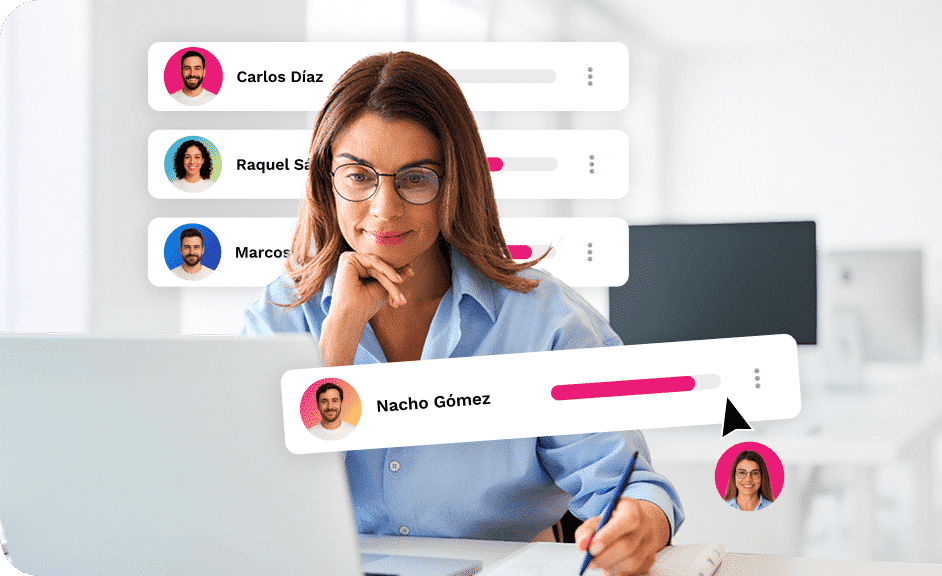
The magic of Performance Enablement is that it isn’t an isolated initiative—it runs through every stage of the employee journey:
The goal: attract talent with a growth mindset. The best candidates aren’t just looking for a salary—they’re looking for a place where they can grow. Clearly communicate how your company enables development from day one.
The goal: early wins that build confidence. A strong onboarding program can improve retention by up to 82%. But it has to be more than “read the handbook.”
Key tools: use tools that allow you to stay in constant communication with your employees—where they can access all knowledge, training, and tasks, and feel supported throughout the process. We can think of a couple of them; we share them in the guide “The 4 C’s for effective online onboarding.”
The goal: skills that evolve with the business. The world changes fast. Companies that invest in upskilling have 11% higher profitability according to Gallup.
The goal: transparency and ongoing alignment. Monthly performance conversations create a 10x higher likelihood that employees see growth opportunities.
The goal: make sure your best talent doesn’t leave for the competition. Employees who see a clear path for growth are 2.9 times more likely to stay at your company.
Imagine a workplace where every employee not only completes their tasks, but is also genuinely committed to the company’s mission and vision. What difference could this make in productivity, in corporate culture, and in overall satisfaction? This is precisely what employee engagement is all about, and if you want to learn how to boost it in your company, here is this guide.
The goal: prepare your team for market changes. In a world where professions change every 5 years, reskilling isn’t optional. Today, companies are looking for workers with very different skills than in previous years. In this context, retraining employees is crucial to maintain core competencies, rather than hiring new talent to fill gaps.
If you want to learn how to develop a reskilling strategy in your organization, take a look at this post and also learn the main differences between upskilling and reskilling.
You can’t improve what you don’t measure. But you also can’t measure effectively if you only focus on course completion rates. These are the key metrics to evaluate your Performance Enablement strategy:
Measures the percentage of people who stay in the organization over a period of time. It’s a direct thermometer of stability, satisfaction, role fit, and the quality of the environment (including performance support).
What else to look at: retention by area, by manager, by tenure, and by critical groups (key roles, high performers, etc.).
Measures how likely your team is to recommend the company as a place to work. It’s a synthetic indicator of employee experience, engagement, and perceptions of leadership and culture.
What else to look at: month-over-month or quarterly trends, segmentation by areas/teams, and recurring themes in comments.
Measures how much output or value each person generates on average. There isn’t a single “right” way—it depends on the industry and the role type, but it should always be linked to real output.
What else to look at: productivity by role/area, and the relationship between productivity and variables such as onboarding, training, and goals.
Measures the percentage of goals (individual, team, or business) achieved within the defined period. It indicates alignment, clarity of priorities, and real execution capability.
What else to look at: distribution (how many teams fall far below vs. far above), and whether goals were well defined (clear, measurable, time-bound).
Measures the time it takes a new hire to reach the expected level of autonomy and performance in their role. It’s key to evaluating onboarding quality, manager support, and the effectiveness of “on-the-job” learning.
What else to look at: time to productivity by role, seniority, country/site, and hiring cohorts (to detect which improvements are working).
Measures the level of commitment, energy, and connection people feel toward their work, their team, and the company. High engagement often correlates with better performance, lower turnover, and a greater willingness to learn and improve.
What else to look at: trend (up/down), drivers (autonomy, clarity, recognition, workload), and gaps between teams.
Beyond these talent-focused metrics, it’s useful to measure learning and turn data into decisions with clear charts and reports, and to analyze results by person, department, or across the whole company. With an LMS like isEazy LMS, you can measure, for example:
In practice, the goal of these metrics isn’t “to look at data,” but to understand quickly and visually how the team learns, what works, where friction exists, and which decisions to make to improve outcomes.
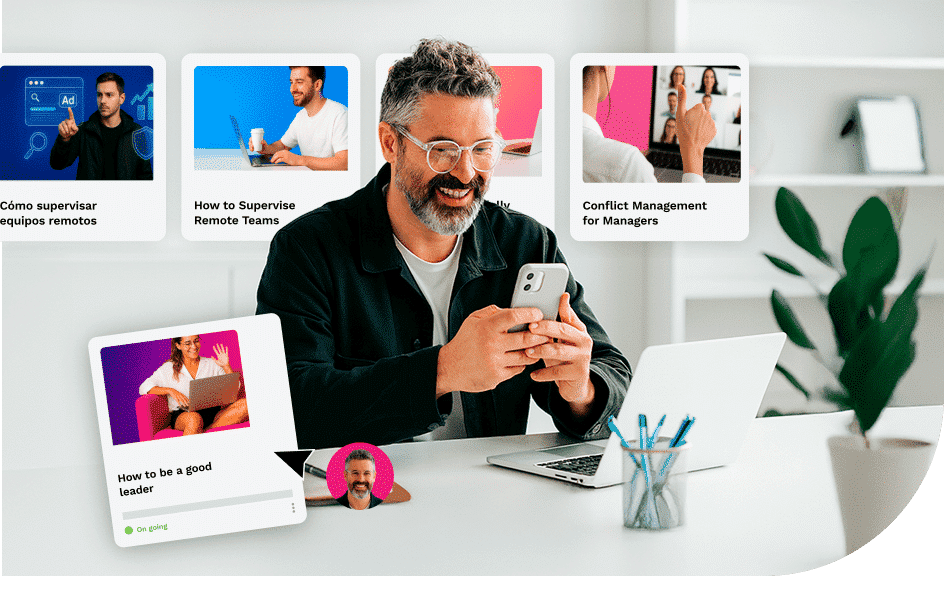
Implementing Performance Enablement usually doesn’t fail due to a lack of intention, but because of how it’s brought into day-to-day reality. These are the most repeated mistakes when a company moves from “managing performance” to “enabling it,” and the most effective levers to correct them in time.
In this effort, technology shouldn’t be “just another tool,” but the place where everything happens: from defining goals and activating learning, to verifying whether performance is actually improving. That’s why a modern LMS like isEazy LMS shouldn’t be a simple course repository, but the operational hub of your strategy—where you design experiences, activate learning, and turn data into decisions.
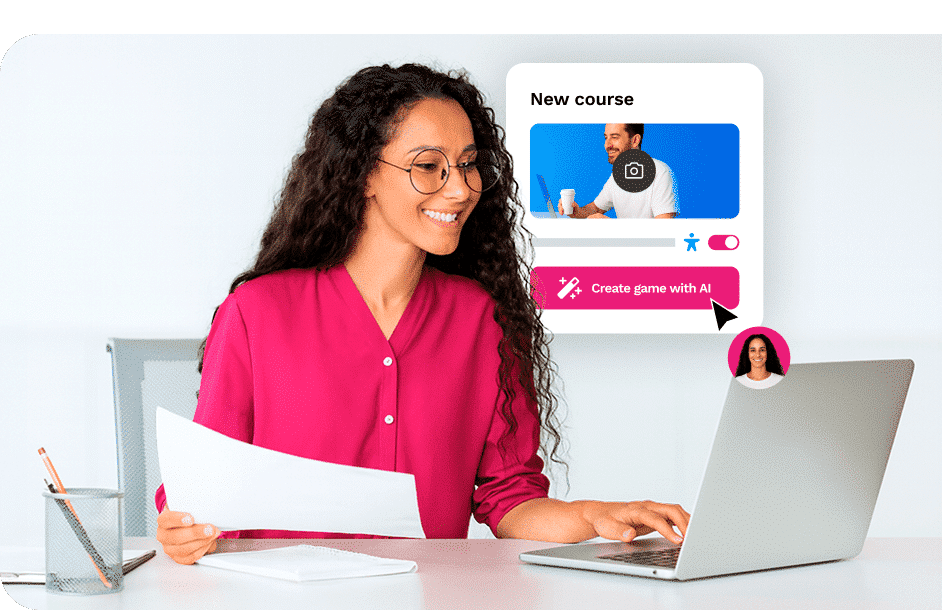
Before you start designing big programs, the most effective approach is to begin with a 90-day plan that combines three things: internal alignment, a controlled test, and data-driven scaling. The goal isn’t to make it perfect from day one, but to build a solid foundation, validate it with a pilot, and adjust quickly before rolling it out across the entire organization. Here is a practical, week-by-week action plan to move from intention to execution without losing momentum.
| Phase (first 90 days) | Week | Actions |
|---|---|---|
| Days 1–30: Lay the foundations | Week 1–2 | Form a task force with HR, key managers, and employee representatives. Define clear objectives and success metrics. Audit your current situation (surveys, focus groups). |
| Days 1–30: Lay the foundations | Week 3–4 | Design your Performance Enablement model tailored to your culture. Select the right technology. Create an internal communication plan. |
| Days 31–60: Pilots and adjustments | Week 5–6 | Launch a pilot program with 1–2 teams. Train managers in coaching skills. Implement weekly feedback loops. |
| Days 31–60: Pilots and adjustments | Week 7–8 | Gather feedback from the pilot. Adjust processes based on learnings. Prepare materials for the full rollout. |
| Days 61–90: Scaling | Week 9–10 | Roll out across the organization in phases. Celebrate quick wins publicly. Keep feedback channels open. |
| Days 61–90: Scaling | Week 11–12 | First metrics review. Make data-driven adjustments. Plan the next 6 months. |
Performance Enablement isn’t a passing trend—it’s the future of talent development. Companies that adopt it see tangible results:
But beyond the numbers, it’s about creating a place where people want to work, grow, and bring their best every day.
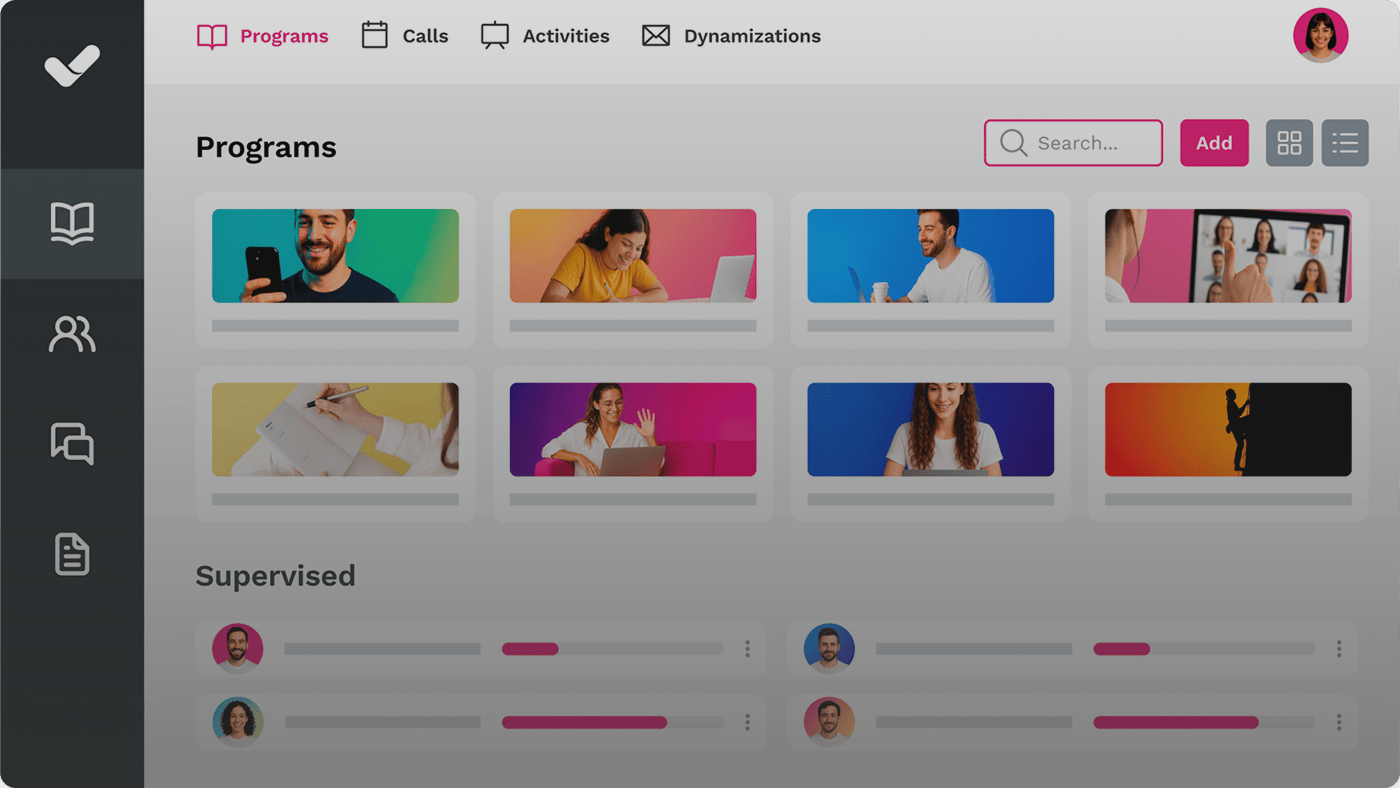
Ready to transform how your organization develops talent? Request a demo of isEazy LMS and discover how our all-in-one LMS platform can integrate seamlessly into your Performance Enablement strategy. With isEazy, you’ll have:
Request your demo here and start enabling your team’s potential.
Performance Enablement is a results-oriented operating model that enables performance through co-created goals, continuous feedback, learning in the flow of work, and managers acting as coaches. It is not “motivation” or one-off engagement initiatives; it is a system that ensures people understand what’s expected, have the resources to deliver, and receive ongoing support to improve.
Start with a small, measurable pilot. Choose one or two teams, shift the cadence to frequent check-ins (weekly or biweekly), introduce co-created goals (such as OKRs), and establish a simple feedback ritual. In parallel, train managers in coaching skills. Once the pilot demonstrates impact, scale it in phases.
What typically works best is combining continuous micro-feedback (after key milestones or projects) with short, recurring check-ins (10–15 minutes) and a more structured monthly or quarterly conversation to review goals and development. The key is not “more meetings,” but feedback that is contextual, actionable, and timely.
Beyond goal achievement, track indicators that connect performance to employee experience and business outcomes: retention, eNPS, engagement, productivity per employee, and time to productivity for new hires. For learning, go beyond completions: actual participation, assessment results, team-level comparisons, and early signals of drop-off or friction.
Technology is the “operating system” that makes the model scalable: it helps activate learning, increase visibility into progress, and turn data into decisions. An LMS that supports Performance Enablement should enable role-based personalization, learning paths, visual tracking by individual/team, advanced segmentation, and actionable reporting. If it also integrates authoring and ready-to-use content, you reduce the content creation bottleneck and accelerate rollout.

GUIDE
Prepare your organization to comply with the new AI Regulations
Download guide


Streamline your training management
Experience the power of AI in an LMS that has it all


Streamline your training management
Experience the power of AI in an LMS that has it all