CASE STUDY
How Pepco was able to comprehensively manage employee training with an LMS

Brain
The first AI trained to teach

Author
The #1 AI-powered authoring tool on the market

Factory
Custom e-learning content factory

Skills
Comprehensive power skills course catalog

LMS
All-in-one LMS platform with AI

Engage
App for managing frontline teams
FEATURES

AINew
Unlock your full potential and speed up course creation with artificial intelligence.

Accessibility
Automatically meet accessibility guidelines—without sacrificing interactivity!

Interactivity
Boost engagement with interactive, ready-to-use activities that make learning fun.

Course Creation
Reduce the time it takes to create your e-learning courses with our authoring tool.

Distribution
We offer you different distribution options, so that nothing can stop you.

SCORM
Publish your course in SCORM format and share it on any LMS.
SERVICES

Instrucional Design
Surprise your students with multimedia and interactive content.

Custom Courses
We create e-learning courses for you—tailored to your needs and hassle-free!

Virtual Reality
Turn learning into an immersive experience.

Custom Avatars
Give your courses and videos a unique touch with personalized avatars.

Audiovisual FactoryNew
Turn training into something dynamic and visual with engaging videos.
CATALOG

Course catalog
Over 600 skills and competency courses to help you adapt to your team's needs.
Microsoft Copilot AcademyNew
Your professionals will learn how to apply Copilot AI to key processes within your organization.

Artificial Intelligence Academy
Train your teams in the practical use of AI to boost productivity and innovation in your company.

Cybersecurity Academy
Capacita a tu empresa con el catálogo más completo en seguridad digital corporativa.

Use cases
Choose the solution that best fits your needs

Industries
Solutions for all types of industries
USE CASES

Onboarding
Facilitate the onboarding process, productivity and engagement of your new employees.

Upskilling
Boost your team's skills and prepare them for the challenges of the future with upskilling.

Microlearning
Discover all the advantages of microlearning and boost your training results.

Gamification
Enjoy addictive training that will get your professionals hooked.

Internal Communication
Improve communication in your company and enjoy an aligned and committed team.

Mobile learning
Agile, flexible, and interactive learning—built for today’s digital-first workforce.
INDUSTRIES

Banking and financial services
Training in compliance, cybersecurity, customer service, and key skills development.

Pharmaceuticals and healthcare
Digital onboarding, regulatory updates, and ongoing training for healthcare staff.

Retail and consumer
Agile and scalable training for in-store, operational, and customer service teams.

Industry and manufacturing
Training in processes, safety, and corporate culture for distributed teams.

Education and training
Digital solutions for training centers, internal academies, and corporate universities.

Technology and telecommunications
Development of technical talent, digital skills, and upskilling and reskilling programs.
CLIENTS

MAPFRE
How MAPFRE turn e-learning into sales with isEazy

Pepco
A personalised learning experience for a growing team.

BBVA
Digitisation and creation of high quality e-learning content.

Shiseido
We increase the engagement of the training with a social and gamified app.

Telefónica
Large-scale reskilling for the company's digital transformation.

Vodafone
A personalised learning experience for a growing team.
More than 1,000 companies already rely on isEazy.





MEET ISEAZY

Events
Discover our upcoming events and connect with the future of e-learning.

News
Find out the latest news about isEazy: press releases, partnerships, updates...

Contact
Leave us your personal details and we will contact you as soon as possible.
About isEazyNew
Find out more about our company.

Careers
We are looking for the best talent, join our team!

Partners
Become our partner and grow your business.
INTERESTING RESOURCES

Blog
The best content on e-learning: trends, tools and key strategies.

Whitepapers
Gain valuable insights and stay ahead of industry trends.

Product releases
The latest news and releases of our e-learning products and solutions.

Glossary
Definitions of the most commonly used terms and key industry concepts.

Guides
Discover the best step-by-step tips and tricks to optimize your L&D strategy.

Webinars
Video sessions on our products, trends and more

Comparatives
Compare e-learning solutions available on the market and choose the most suitable one.


WEBINAR
Master AI in isEazy Author in under an hour.




GUIDE
Prepare your organization to comply with the new AI regulations

Stay up to date with all our latest news
 Subscribe to our newsletter
 Stay up to date with all our latest news

October 26, 2025

CONTENT CREATED BY:

Table of contents
Creating a Learning Management System (LMS) Request for Proposal (RFP) is a crucial step for organizations looking to enhance their corporate training initiatives. A well-structured RFP not only streamlines the selection process but also ensures alignment with your company’s learning objectives and business goals. In this guide, you’ll also find practical guidance that can serve as an LMS RFP template to structure your own document.
An LMS RFP is a formal document that organizations issue to solicit proposals from LMS vendors for their digital training needs. The RFP outlines the requirements and specifications for the desired LMS solution, including functionality, integrations, implementation timelines, and costs. By establishing clear guidelines, an LMS RFP helps organizations compare potential platforms and choose the best fit for their training programs. These elements form the core of any effective LMS RFP template, ensuring vendors respond consistently to your requirements.
The RFP process plays a pivotal role in structured LMS selection. It serves as a roadmap that guides organizations through the vendor evaluation process. By providing detailed specifications, the RFP helps ensure that all vendors address the same criteria, enabling informed comparisons. A well-defined RFP not only saves time but also fosters communication and transparency throughout the selection process.
An LMS RFP is necessary when your organization plans to implement a new LMS or upgrade an existing one. Specific situations that warrant an RFP include:
Identifying learning and business objectives
Start by identifying the primary learning and business objectives for implementing a new LMS. Ask questions such as:
Aligning these objectives with the broader organizational goals ensures that the chosen LMS serves a strategic purpose.
Engaging relevant stakeholders early on is crucial for alignment. Gather input from departments such as HR, IT, and training to ensure diverse perspectives are included. Conduct workshops or brainstorming sessions to discuss expectations and requirements. This collaborative approach helps in defining a comprehensive set of specifications for the RFP.
Establishing clear success metrics at the outset allows you to evaluate the LMS’s effectiveness post-implementation. Consider metrics such as:

Work with stakeholders to agree on these measurements to ensure they align with the established training objectives.
The following sections can be used as a customizable LMS RFP template to help your organization build a clear and complete request.
Begin your RFP with a brief introduction to your organization, including the industry, company size, and existing training programs. This background information helps vendors tailor their proposals to your specific context.
Clearly outline the functional requirements of the LMS. Differentiate between must-haves (essential features) and nice-to-haves (desirable but not critical features). For instance:
List the technical specifications required for your organization’s LMS. Consider aspects such as:
Being explicit in your technical requirements helps vendors demonstrate how their solutions align with your infrastructure.
Provide details on your preferred timeline for the project, including key milestones for onboarding. Clarify any customization requirements you may have depending on your unique corporate training objectives.
Outline the expected support channels post-implementation, including:
Clarifying these expectations ensures that the vendor understands your needs for ongoing assistance.
Incorporate a section on training and change management. Discuss the need for:
Understanding how vendors approach change management is essential for a smooth transition.
Detail your preferences concerning licensing models. Determine whether your organization prefers:
Ask vendors to provide a breakdown of costs, including any additional fees associated with maintenance, support, or upgrades. Check out our guide on LMS pricing.
Gauge each vendor’s profile, including their background, relevant experience, and industry accreditation. Review their portfolio and ask for references or case studies illustrating their success with different organizations.
Incorporate a request for case studies that demonstrate the vendor’s ability to deliver impactful learning solutions. Recognitions from industry awards or audits can also serve as indicators of the vendor’s credibility and reliability.
Evaluate how transparently each vendor communicates throughout the RFP process. Clear communication is vital for building a trustworthy relationship and ensuring sound understanding between both parties.
In today’s fast-paced digital landscape, selecting an LMS with built-in artificial intelligence is no longer a nice-to-have — it’s a must. AI capabilities can significantly enhance user engagement, streamline administrative tasks, and personalize learning experiences at scale. When evaluating vendors, prioritize platforms like isEazy LMS that embed smart technologies across the entire training journey. From AI-powered course recommendations tailored to each learner’s needs to automatic content generation, translations, and real-time analytics, isEazy LMS empowers companies to design and manage smarter training strategies — without added complexity.
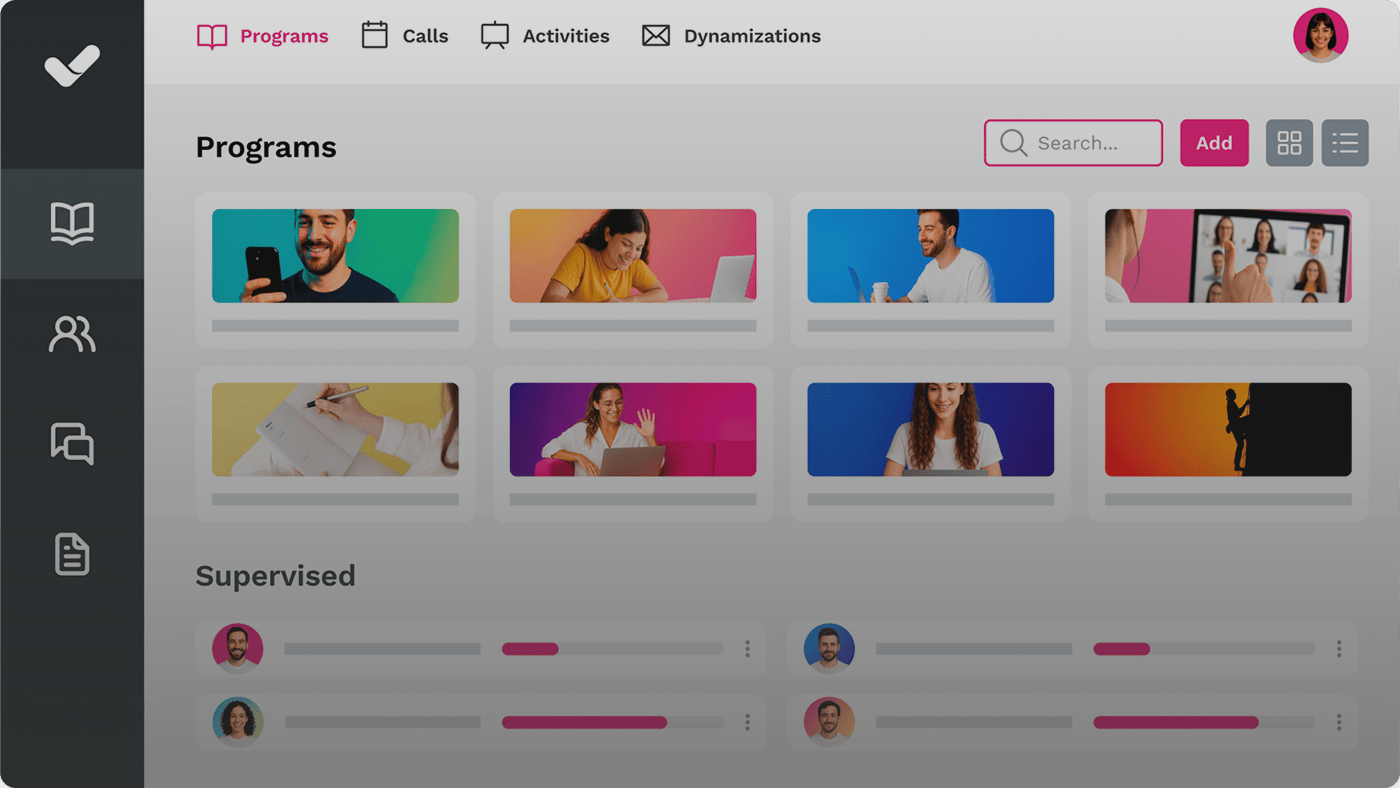
Choosing the right LMS starts with asking the right questions. A well-structured, tailored RFP ensures you’re not only comparing features but aligning each vendor’s capabilities with your organization’s unique goals, culture, and learners. By incorporating key criteria — from AI integration to user experience and vendor support — you set the foundation for a successful partnership.
Platforms like isEazy LMS make it easy to turn your learning strategy into a scalable, intelligent solution. With the right approach and the right tools, your LMS isn’t just a system — it becomes a driver of growth, engagement, and transformation.
Curious to see it in action? Request a demo today and discover how isEazy LMS can help you simplify training management and transform learning in your organization.
An LMS RFP template is a structured document organizations use to request proposals from LMS vendors. It outlines technical, functional, and strategic requirements, enabling consistent vendor responses and fair comparisons. Using a solid LMS RFP template ensures your organization can identify the right platform aligned with your training goals and business needs.
You should use an LMS RFP template when you’re selecting a new LMS, upgrading your current system, or expanding your training programs. It’s particularly useful when you need specific integrations, are dissatisfied with your current LMS, or want to streamline vendor evaluation with a consistent framework.
A complete LMS RFP template should include company background, functional and technical requirements, implementation expectations, support needs, pricing models, and evaluation criteria. Differentiating must-have features from nice-to-haves ensures vendors tailor their proposals to your actual needs.
To future-proof your training strategy, your LMS RFP template should include questions about AI-powered features like personalized course recommendations, content automation, and real-time analytics. Platforms like isEazy LMS embed smart technologies to simplify training management and boost learner engagement at scale.

Optimize your team’s training with isEazy LMS and reach new performance heights
Request a demoTry it free


Streamline your training management
Experience the power of AI in an LMS that has it all


Streamline your training management
Experience the power of AI in an LMS that has it all