CASE STUDY
How Petit Palace managed to enhance the talent of its team through mentoring.

Brain
The first AI trained to teach

Author
The #1 AI-powered authoring tool on the market

Factory
Custom e-learning content factory

Skills
Comprehensive power skills course catalog

LMS
All-in-one LMS platform with AI

Engage
App for managing frontline teams
Product

What is Brain?
Everything you need to know about the first AI trained to teach.

Learning agent: CompanionNew
Supports learners and answers their questions right inside the course, without breaking the audit trail.

How does it work?
Adaptive, conversational, and contextual. That’s learning with Brain.
FEATURES

AINew
Unlock your full potential and speed up course creation with artificial intelligence.

Accessibility
Automatically meet accessibility guidelines—without sacrificing interactivity!

Interactivity
Boost engagement with interactive, ready-to-use activities that make learning fun.

Course Creation
Reduce the time it takes to create your e-learning courses with our authoring tool.

Distribution
We offer you different distribution options, so that nothing can stop you.

SCORM
Publish your course in SCORM format and share it on any LMS.
SERVICES

Instrucional Design
Surprise your students with multimedia and interactive content.

Custom Courses
We create e-learning courses for you—tailored to your needs and hassle-free!

Virtual Reality
Turn learning into an immersive experience.

Custom Avatars
Give your courses and videos a unique touch with personalized avatars.

Audiovisual FactoryNew
Turn training into something dynamic and visual with engaging videos.
CATALOG

Course catalog
Over 600 skills and competency courses to help you adapt to your team's needs.
Microsoft Copilot AcademyNew
Your professionals will learn how to apply Copilot AI to key processes within your organization.

Artificial Intelligence Academy
Train your teams in the practical use of AI to boost productivity and innovation in your company.

Cybersecurity Academy
Capacita a tu empresa con el catálogo más completo en seguridad digital corporativa.

Use cases
Choose the solution that best fits your needs

Industries
Solutions for all types of industries
USE CASES

Onboarding
Facilitate the onboarding process, productivity and engagement of your new employees.

Upskilling
Boost your team's skills and prepare them for the challenges of the future with upskilling.

Microlearning
Discover all the advantages of microlearning and boost your training results.

Gamification
Enjoy addictive training that will get your professionals hooked.

Internal Communication
Improve communication in your company and enjoy an aligned and committed team.

Mobile learning
Agile, flexible, and interactive learning—built for today’s digital-first workforce.
INDUSTRIES

Banking and financial services
Training in compliance, cybersecurity, customer service, and key skills development.

Pharmaceuticals and healthcare
Digital onboarding, regulatory updates, and ongoing training for healthcare staff.

Retail and consumer
Agile and scalable training for in-store, operational, and customer service teams.

Industry and manufacturing
Training in processes, safety, and corporate culture for distributed teams.

Education and training
Digital solutions for training centers, internal academies, and corporate universities.

Technology and telecommunications
Development of technical talent, digital skills, and upskilling and reskilling programs.
CLIENTS

MAPFRE
How MAPFRE turn e-learning into sales with isEazy

Pepco
A personalised learning experience for a growing team.

BBVA
Digitisation and creation of high quality e-learning content.

Shiseido
We increase the engagement of the training with a social and gamified app.

Telefónica
Large-scale reskilling for the company's digital transformation.

Vodafone
A personalised learning experience for a growing team.
More than 1,000 companies already rely on isEazy.





MEET ISEAZY

Events
Discover our upcoming events and connect with the future of e-learning.

News
Find out the latest news about isEazy: press releases, partnerships, updates...

Contact
Leave us your personal details and we will contact you as soon as possible.
About isEazyNew
Find out more about our company.

Careers
We are looking for the best talent, join our team!

Partners
Become our partner and grow your business.
INTERESTING RESOURCES

Blog
The best content on e-learning: trends, tools and key strategies.

Whitepapers
Gain valuable insights and stay ahead of industry trends.

Product releases
The latest news and releases of our e-learning products and solutions.

Glossary
Definitions of the most commonly used terms and key industry concepts.

Guides
Discover the best step-by-step tips and tricks to optimize your L&D strategy.

Webinars
Video sessions on our products, trends and more

Comparatives
Compare e-learning solutions available on the market and choose the most suitable one.


WEBINAR
Master AI in isEazy Author in under an hour.




GUIDE
Prepare your organization to comply with the new AI regulations


AUTHORING TOOL
Create courses automatically and generate interactive activities, games, translations, and multimedia resources in seconds.

Stay up to date with all our latest news
 Subscribe to our newsletter
 Stay up to date with all our latest news

August 4, 2026

CONTENT CREATED BY:
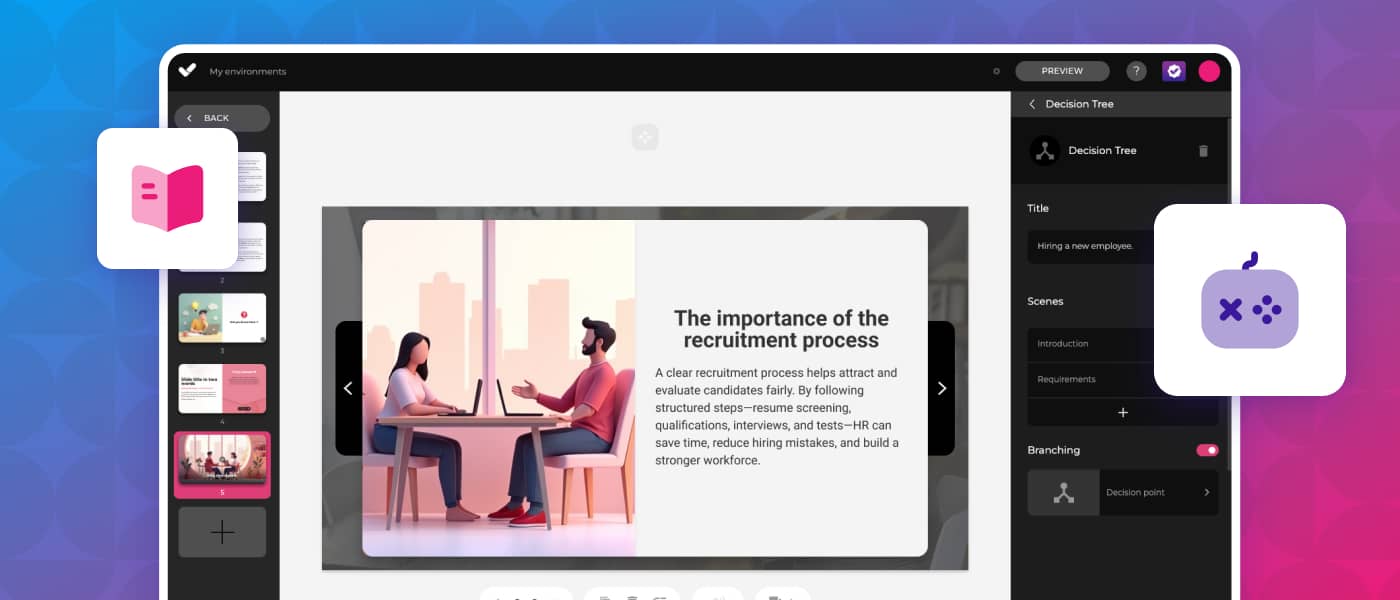
Table of contents
Companies that implement experiential learning methodologies report up to 75% higher knowledge retention compared to traditional methods. Yet only 23% of organizations systematically apply this approach in their corporate training, according to LinkedIn Learning’s 2024 Workplace Learning Report. The gap between knowing and doing remains the biggest challenge for L&D teams.
Experiential learning is an educational methodology that places active practice at the center of the learning process. Unlike passive learning — based on listening and reading — it holds that people learn more deeply and lastingly when they participate in meaningful experiences, reflect on them, and apply them in real-world contexts.
In a corporate environment, this translates into training that goes beyond content delivery: employees practice, make mistakes in a safe setting, receive immediate feedback, and transfer what they’ve learned directly to the job.
John Dewey laid the foundations in 1938 with Experience and Education, arguing that genuine learning arises from reflective experience. Kurt Lewin contributed the concept of feedback as a driver of change in the 1940s. Jean Piaget showed how active interaction with the environment is essential for building knowledge. But it was David Kolb who in 1984 synthesized these ideas into the Experiential Learning Cycle — the most widely used model in corporate training globally — now supported also by cognitive neuroscience (Retrieval Practice, Association for Talent Development).
| Dimension | Traditional learning | Experiential learning |
|---|---|---|
| Learner's role | Passive, information receiver | Active, protagonist of the experience |
| Transfer to the job | Low (theory-practice gap) | High (practice in real context) |
| Long-term retention | 5–20% (lectures, reading) | 70–90% (active practice, teaching others) |
| Feedback | Delayed or absent | Immediate and adaptive |
| Motivation and engagement | Variable, content-dependent | High, driven by challenge and achievement |
David Kolb proposed that experiential learning occurs through a cycle of four interconnected stages. Understanding this cycle is key to designing training that truly works — and to avoiding the most common mistake: creating activities without completing the full cycle.
The starting point is direct participation in an activity: a simulation, a role-play, a decision-making scenario, or a practical challenge. Without this phase, the cycle never starts.
Immediately after the experience, the learner analyzes it from different angles: what happened?, why?, what would they do differently? This structured reflection is what turns the activity into learning.
From the reflection, the learner extracts principles and mental models that can be applied beyond the specific situation. Theoretical content enters here — but as a support, not as the protagonist.
The cycle closes when the learner applies what they’ve learned in a new situation. It’s the only way to verify that real learning has taken place.
The following table shows how to translate each stage of the cycle into concrete e-learning design — something most training programs overlook:
| Kolb Stage | In e-learning this translates to... |
|---|---|
| Concrete experience | Interactive simulation, branching scenario, AI role-play, gamified practical exercise |
| Reflective observation | Immediate feedback, annotated rubric, guided reflection video, learning journal |
| Abstract conceptualization | Short content capsule (microlearning), conceptual infographic, optional supplementary reading |
| Active experimentation | On-the-job application task, LMS challenge, project with real deliverable |

For a training experience to truly qualify as experiential learning, it must incorporate the following characteristics:
The learner is not a passive receiver: they are the protagonist. They make decisions, solve problems, and face consequences — even if in a simulated environment.
Activities must be contextualized in authentic, job-relevant situations. According to Brandon Hall Group (2023), 68% of employees trained with experiential methodologies immediately apply the acquired skills when the training context mirrors the real application context.
Experience without reflection does not generate learning. Feedback must be immediate, specific, and improvement-oriented — not just a grade.
Competencies like communication, leadership, and negotiation can only be developed in interaction with others. The social dimension of learning is inseparable from the experiential approach.
One of the biggest barriers to learning in professional settings is the fear of making mistakes. Well-designed experiential learning creates contexts where failure is part of the process, not a penalized outcome.
Organizations that incorporate experiential methodologies into their training strategy see improvements across multiple dimensions:
Edgar Dale’s Learning Pyramid, backed by decades of cognitive neuroscience research, shows that we retain approximately 10% of what we read, 20% of what we hear, and up to 75–90% of what we practice and teach to others. In corporate training, the difference is decisive.

One of the biggest challenges of traditional corporate training is transfer: the gap between “knowing” and “doing.” Experiential learning closes this gap because training occurs in the same format in which it will be applied. According to Brandon Hall Group, 68% of employees trained with experiential methodologies immediately apply the acquired skills on the job.
Active practice, challenges, and immediate feedback activate intrinsic motivation mechanisms that passive content cannot replicate. Completion rates for experiential courses exceed those of passive courses by 30–50%, according to the Association for Talent Development (2024).
Experiential learning simultaneously develops knowledge, skills, and attitudes — the triad that L&D managers need to impact for real behavior change on the job.
When training design includes guided job application and structured measurement, the impact on performance is quantifiable. Organizations like Vodafone or MAPFRE have documented direct improvements in business KPIs after implementing experiential training programs with isEazy.
Experiential learning is not a single technique, but an umbrella that covers multiple methodologies. The key for L&D teams is choosing the right one based on the learning objective.
Participants take on roles and face situations that replicate professional reality. Sales role-play, for example, allows teams to practice objections, closing, and conflict management in a controlled, repeatable environment. With generative AI, conversational role-plays have reached a level of realism that was unimaginable five years ago: the learner interacts with a virtual character that responds naturally and adapts its behavior to the learner’s decisions.
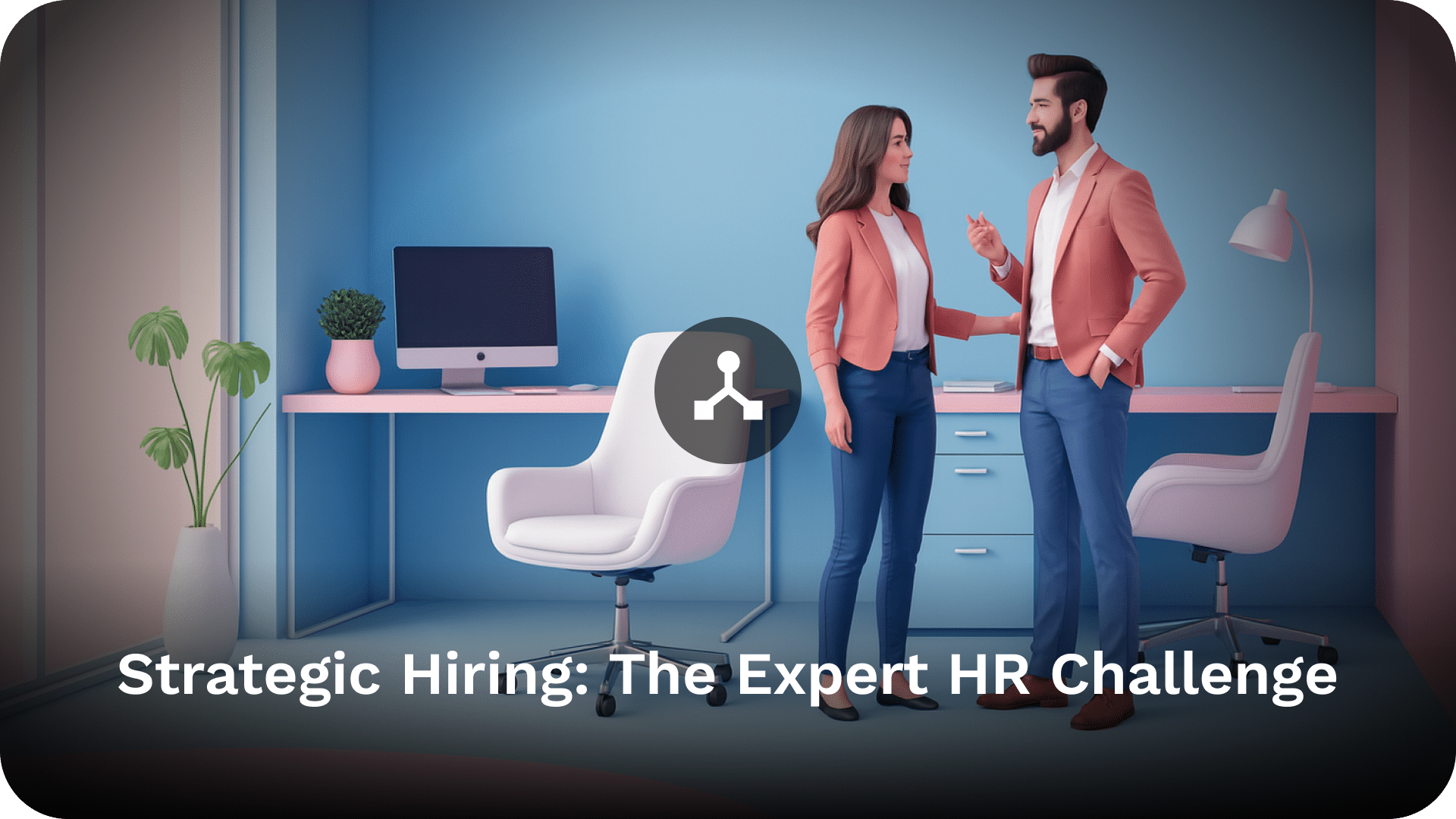
Gamification at work applies game mechanics — points, levels, challenges, competition — to learning contexts. Game-based learning uses complete games as a training vehicle. Both approaches share the same core principle: the learner learns by doing, making decisions with consequences inside the game.
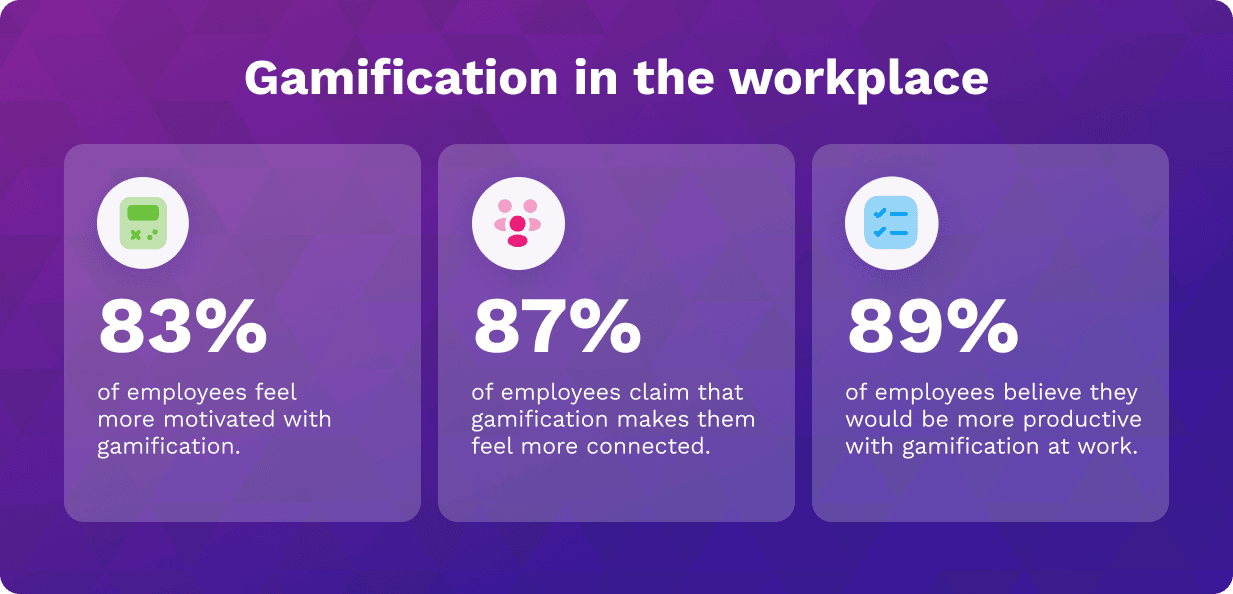
VR places the learner in immersive environments where they can practice high-risk procedures without real consequences. It’s the technique with the greatest retention impact — the brain processes virtual experiences almost identically to real ones. Discover how isEazy Factory creates VR experiences for corporate environments.

Participants work on authentic projects that replicate real organizational challenges. Learning occurs naturally while solving concrete problems, mobilizing knowledge across multiple areas and developing cross-functional competencies. Particularly effective for leadership and executive development programs.
Mentoring pairs experienced professionals with those in development, creating observational and reflective learning opportunities. Petit Palace is a real example of how mentoring can unlock team talent with digital support. Explore further in our article on learning by doing and the simulation-based learning webinar.
| Competency type | Recommended methodology |
|---|---|
| Soft skills (communication, leadership, negotiation) | Role-play, conversational simulation, mentoring |
| Technical and procedural skills | Technical simulation, VR, interactive branching courses |
| Compliance and regulations | Decision scenarios (branching), gamification with consequences |
| Onboarding and corporate culture | Gamification, shadowing, experiential pathways in LMS |
| Sales and customer service | AI role-play, call simulations, practical cases |
| Leadership and executive development | Project-based learning, mentoring, management simulations |
Petit Palace, a Spanish hotel chain, used isEazy to structure an experiential mentoring program that unlocked internal talent and improved the team’s experience. A real example of how experiential learning works beyond large corporations. Discover how they did it →
CASE STUDY
How Petit Palace managed to enhance the talent of its team through mentoring.


Moving from theory to practice requires a structured process. These six phases ensure the implementation is effective and scalable in any organization:
Before designing any experience, identify which specific behaviors your organization needs to change. It’s not about “which topics to cover,” but “what should the employee do differently after training.” Needs surveys, on-the-job observation, and performance KPI analysis are your allies in this phase.
Design activities that follow the complete Kolb cycle: concrete experience → reflection → conceptualization → application. Avoid the most common mistake: adding practical activities as an “extra” at the end of a theory module. Practice must be the core, not the complement. Learn more in our article on employee learning experience.
Technology must serve the design, not the other way around. Choose the tools that best materialize the experiences designed: an authoring tool to create interactive simulations, an LMS to manage learning pathways and track progress, a gamification platform to activate extrinsic motivation.
In experiential learning, the instructor evolves from knowledge transmitter to experience facilitator. Their role is to create the conditions for learning to happen: design authentic challenges, provide quality feedback, facilitate reflection, and connect the experience to business objectives.
Start with a representative pilot group before scaling. Collect engagement, completion, and on-the-job transfer data. Adjust the design based on real evidence before rolling out to the full organization.
Without measurement, there is no improvement. Implement an evaluation framework from the design stage — not as a final step. Training evaluation is an integral part of the process, not an afterthought.
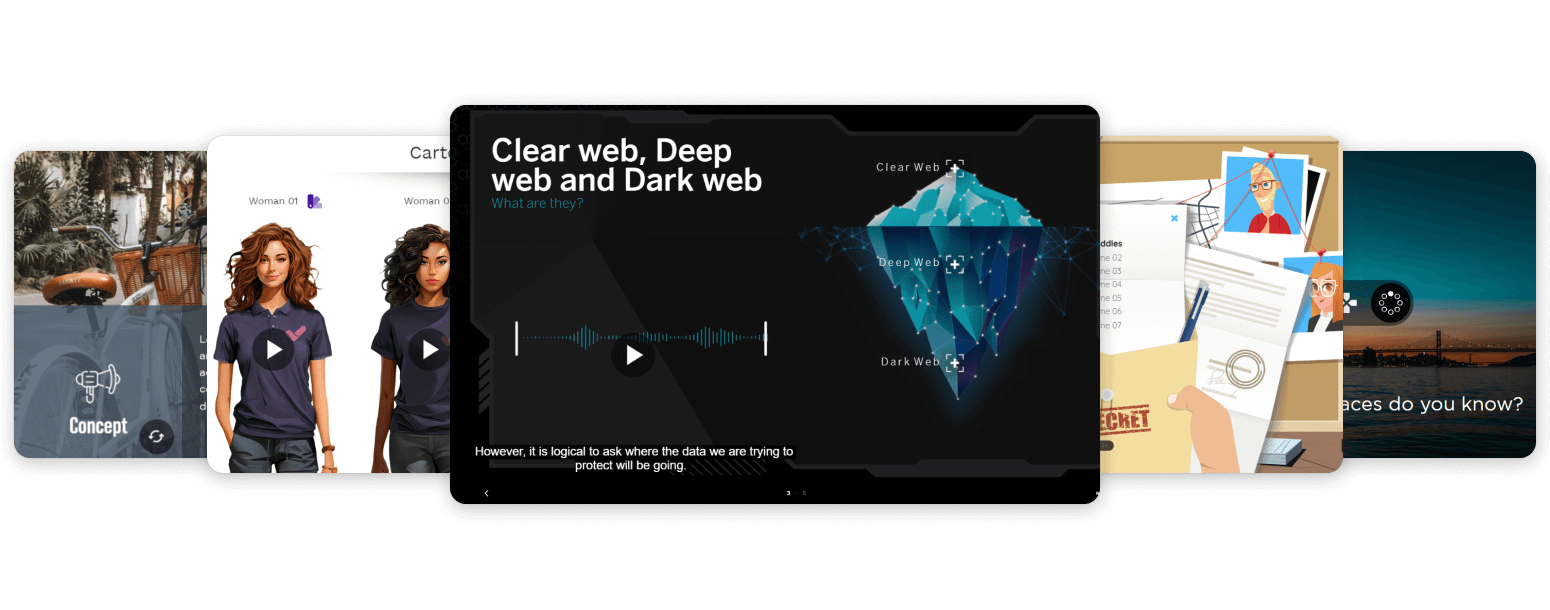
High-fidelity experiences require more investment than a slide-based course. However, the cost per real impact is often lower. The key is to start with lower-cost formats (gamification, text-based simulations) and scale gradually.
The role shift — from instructor to facilitator — is harder than it sounds. Trainers who have spent years delivering content need to develop new competencies: experience design, reflection facilitation, and feedback management.
Many organizations have deeply rooted transmissive training cultures. The shift may face resistance from both employees and managers. Communicating the why and showing early pilot results is the best strategy to manage this resistance.
Measuring the impact of experiential learning is more complex than counting course completions. It requires on-the-job transfer indicators and, ideally, business KPI impact. This complexity is also an opportunity: L&D teams that demonstrate real impact significantly raise their strategic weight in the organization.
ADDIE is an instructional design process, not a learning methodology. They are complementary: you can follow the ADDIE process to design experiential training. The frequent mistake is using ADDIE to produce passive content. When ADDIE is applied with an experiential focus in the Design phase, results improve significantly.
The 70-20-10 model holds that learning in professional settings is distributed as 70% from daily work experience, 20% from social interactions and mentoring, and 10% from formal training. Experiential learning is the ideal vehicle to activate that 70% in a structured and measurable way: it turns work experience into intentional learning, rather than leaving it to chance. More on learning experience and 70-20-10.
Active learning is a broader concept encompassing any strategy that actively engages the learner. Experiential learning is a specific form of active learning that incorporates the complete Kolb cycle: it’s not enough for the learner to participate — the experience must be followed by structured reflection and conceptualization to close the learning loop.
Technology doesn’t create learning experiences on its own, but it greatly facilitates their implementation at scale. These are the essential categories for any corporate experiential strategy:
| Tool | Purpose in experiential context | isEazy product |
|---|---|---|
| LMS | Adaptive pathways, transfer measurement, impact reporting | isEazy LMS |
| Authoring tool | Create simulations, branching scenarios and gamified courses | isEazy Author |
| Gamification | Drive motivation, peer competition, visual progress | isEazy Game |
| VR / Immersive | High-risk practice in a safe environment, maximum retention | isEazy Factory |
| Communication and engagement | Day-to-day learning reinforcement, social learning | isEazy Engage |
The LMS is the central nervous system of the training strategy. In an experiential context, it needs to manage non-linear pathways, record complex interactions, facilitate peer feedback, and provide impact analytics. isEazy LMS is designed for these needs, with native gamification, adaptive learning pathways, and advanced L&D reporting.
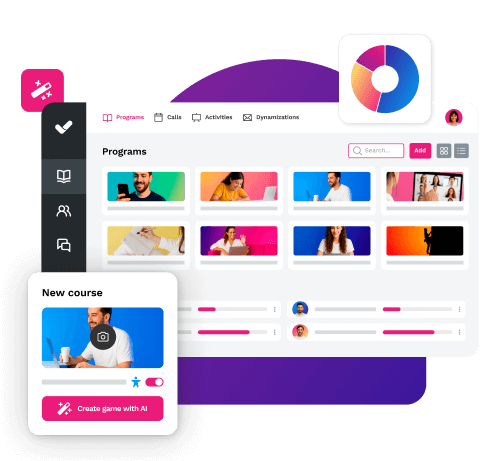
These allow you to transform training into practical-experience courses without relying on technical teams. What to look for:
isEazy Author meets all these criteria with specific templates for simulations and gamified formats, with no technical learning curve. If you’re evaluating options, the guide how to choose your authoring tool can help you make the best decision.

Gamification turns learning into a more motivating and memorable experience. Key elements: level-based challenges and progress, rewards (points, badges), peer competition, and narrative that contextualizes the challenges.
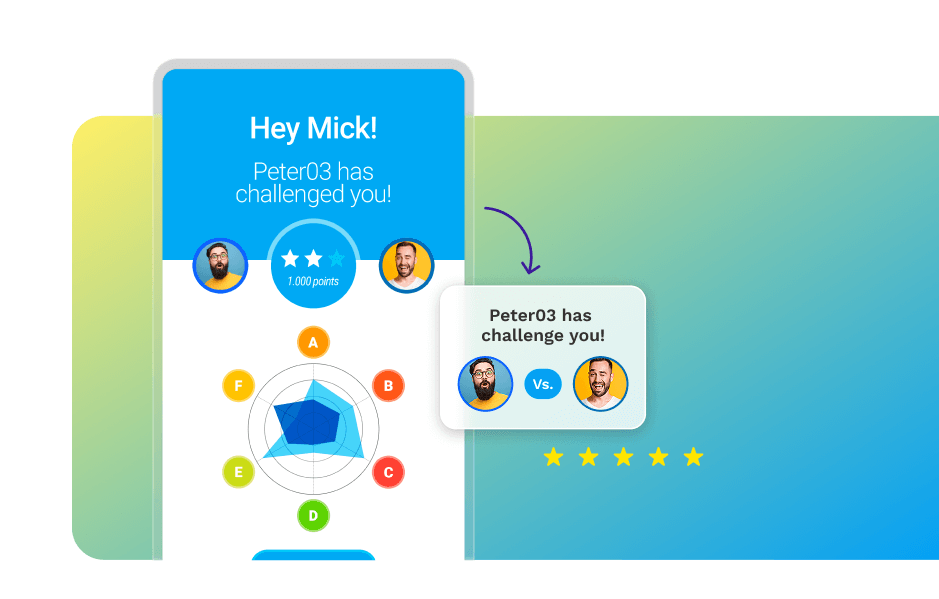
When the context is critical — industrial facilities, risk prevention, complex processes — immersion accelerates understanding and transfer to the job. Explore isEazy Factory’s virtual reality courses and how they apply in real corporate environments.

In experiential learning, many activities are reinforced by peer exchange: reflection forums, practice groups, co-creation activities. What to look for: channels for internal engagement, day-to-day learning reinforcement, and agile mobile access, especially for frontline workers. With isEazy Engage, you can reinforce learning through internal communication and social dynamics that keep knowledge alive between formal training sessions.

The most effective solution is rarely adding more tools. In practice, what works best is centralizing training in an integrated platform that simplifies management for the L&D team and guarantees a coherent experience for the employee.
Tool sprawl creates friction: learning data fragmented across different systems, inconsistent user experiences, duplicate administrative work, and difficulty correlating training activity with business results. When LMS, authoring tool, gamification, and internal communication are integrated, the complete experiential learning cycle — from design to measurement — flows naturally.
isEazy offers an integrated ecosystem where Author, LMS, Game, and Engage work together so L&D teams can implement complete experiential strategies without switching platforms.
| Competency type | Recommended methodology |
|---|---|
| Soft skills (communication, leadership, negotiation) | Role-play, conversational simulation, mentoring |
| Technical and procedural skills | Technical simulation, VR, interactive branching courses |
| Compliance and regulations | Decision scenarios (branching), gamification with consequences |
| Onboarding and corporate culture | Gamification, shadowing, experiential pathways in LMS |
| Sales and customer service | AI role-play, call simulations, practical cases |
| Leadership and executive development | Project-based learning, mentoring, management simulations |
Experiential learning requires sophisticated measurement systems that capture real impact beyond completion metrics. The Kirkpatrick model is the reference standard in corporate L&D for evaluating training programs in depth.
The following table shows the four levels with the specific KPIs to measure at each one — something most experiential learning guides don’t specify:
| Kirkpatrick Level | What it measures | Concrete KPIs for experiential learning |
|---|---|---|
| Level 1: Reaction | Learner satisfaction and perception after the experience | Program NPS, experience rating (1–5), qualitative comments |
| Level 2: Learning | Acquisition of knowledge, skills, and attitudes | Simulation scores, improvement rate between attempt 1 and 2, practical assessment results |
| Level 3: Behavior | Transfer to the job — observable behavior change | % of employees applying skills (manager evaluation at 30/60/90 days), specific performance KPIs |
| Level 4: Results | Impact on business KPIs | Error reduction, revenue increase, customer NPS improvement, onboarding time reduction |

For a complete guide on structuring the measurement of your training programs, visit our guide on training evaluation.
If we had to sum it up in one idea, it would be this: experiential learning works when the complete cycle — experience, reflection, conceptualization, application — is completed, and when technology facilitates each phase without creating friction.
The biggest mistake L&D teams make is fragmenting this cycle: they use one tool to create content, another to distribute it, another to gamify it, and another to measure it. The result is a broken cycle that generates isolated data and incoherent experiences for the employee.
With isEazy, you can design, distribute, gamify, and measure complete experiential learning strategies from a single integrated ecosystem. Request an isEazy Author demo and discover how to create training experiences that truly transform your team’s performance. Also explore how to create interactive courses with our authoring tool.
For a comprehensive guide on structuring the measurement of your training programs, visit our guide on training evaluation.
Implementing experiential learning at scale requires aligning technology, methodology, and organizational culture. The most successful organizations don’t treat it as a one-off project, but as a strategic shift in how they think about learning: from content delivery to experience design.
The key questions to get started:
If you’re looking for a platform that makes all of this possible without tool sprawl, isEazy LMS and isEazy Author are built specifically for L&D teams that want measurable results from their training programs.
Getting started with experiential learning doesn’t require a complete overhaul of your training strategy. Start small: pick one competency, design one experiential activity following the Kolb cycle, measure transfer to the job, and iterate. The evidence is clear — organizations that make this shift see better retention, higher engagement, and measurable business impact. Request a free demo of isEazy Author to see how quickly you can start creating experiential content.
Experiential learning is a learn-by-doing methodology where employees develop skills through practical experiences — simulations, scenarios, real-world cases — and consolidate learning through reflection and feedback. Its focus is on transfer to the job, not just theory.
Traditional training typically focuses on consuming content (reading, watching videos, listening to lectures). Experiential learning places learners in real-world situations, forces them to make decisions, and lets them practice in a safe environment — which improves retention and practical application.
By designing the digital experience to include all four phases: concrete experience (doing), reflection (analyzing what happened), conceptualization (extracting learnings), and active experimentation (applying again). Good experiential e-learning guides the entire cycle, not just the interaction.
The most common formats in corporate settings include branching scenarios, conversational simulations, interactive case studies, game-based learning, mission-based challenges, and immersive 360° experiences when context is critical.
Completion rates alone are not enough. The recommended approach is the Kirkpatrick model: reaction (engagement), learning (ability to apply), behavior (transfer to the job), and business results (impact on KPIs such as quality, productivity, customer satisfaction, or compliance).

Automate processes, access 600+ ready-to-use courses, or create your own content with the help of AI.
Request a demoContact us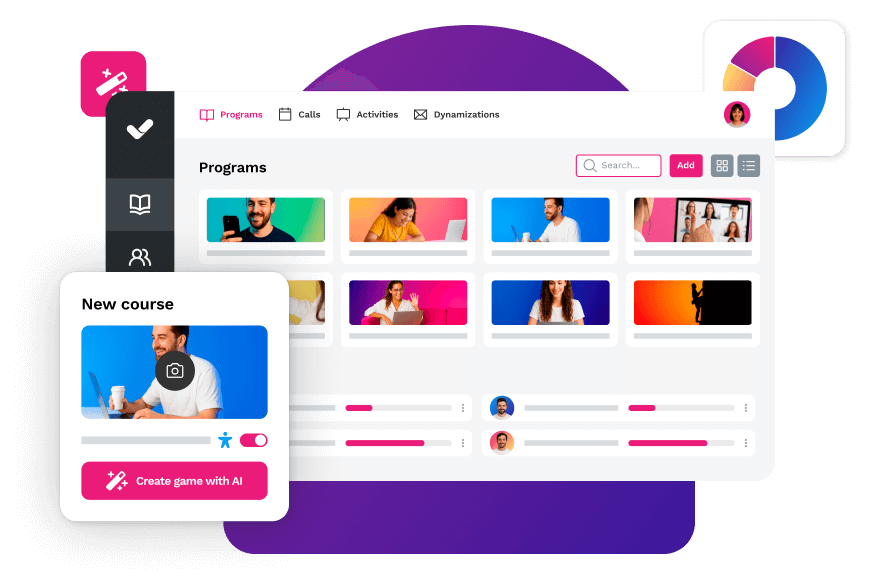

Streamline your training management
Experience the power of AI in an LMS that has it all

Streamline your training management
Experience the power of AI in an LMS that has it all