CASE STUDY
We helped Clarel transform its knowledge into interactive and effective microcontents

Brain
The first AI trained to teach

Author
The #1 AI-powered authoring tool on the market

Factory
Custom e-learning content factory

Skills
Comprehensive power skills course catalog

LMS
All-in-one LMS platform with AI

Engage
App for managing frontline teams
Product

What is Brain?
Everything you need to know about the first AI trained to teach.

How does it work?
Adaptive, conversational, and contextual. That’s learning with Brain.

Security
Why your company’s knowledge never leaves your environment or trains other models.

Comparison
Discover what sets isEazy Brain apart from other AI solutions.

Frequently Asked Questions
Want to learn more? Find answers to all your questions about isEazy Brain here.
FEATURES

AINew
Unlock your full potential and speed up course creation with artificial intelligence.

Accessibility
Automatically meet accessibility guidelines—without sacrificing interactivity!

Interactivity
Boost engagement with interactive, ready-to-use activities that make learning fun.

Course Creation
Reduce the time it takes to create your e-learning courses with our authoring tool.

Distribution
We offer you different distribution options, so that nothing can stop you.

SCORM
Publish your course in SCORM format and share it on any LMS.
SERVICES

Instrucional Design
Surprise your students with multimedia and interactive content.

Custom Courses
We create e-learning courses for you—tailored to your needs and hassle-free!

Virtual Reality
Turn learning into an immersive experience.

Custom Avatars
Give your courses and videos a unique touch with personalized avatars.

Audiovisual FactoryNew
Turn training into something dynamic and visual with engaging videos.
CATALOG

Course catalog
Over 600 skills and competency courses to help you adapt to your team's needs.
Microsoft Copilot AcademyNew
Your professionals will learn how to apply Copilot AI to key processes within your organization.

Artificial Intelligence Academy
Train your teams in the practical use of AI to boost productivity and innovation in your company.

Cybersecurity Academy
Capacita a tu empresa con el catálogo más completo en seguridad digital corporativa.
FEATURES

Learning platform
Manage all your training from one place

Analitycs
Measure the impact of your training

Learning Experience
Offer a unique learning experience to your team
Content Library
Choose from hundreds of expert-created courses
Authoring Tool
Create your own content—faster than ever

Use cases
Choose the solution that best fits your needs

Industries
Solutions for all types of industries
USE CASES

Onboarding
Facilitate the onboarding process, productivity and engagement of your new employees.

Upskilling
Boost your team's skills and prepare them for the challenges of the future with upskilling.

Microlearning
Discover all the advantages of microlearning and boost your training results.

Gamification
Enjoy addictive training that will get your professionals hooked.

Internal Communication
Improve communication in your company and enjoy an aligned and committed team.

Mobile learning
Agile, flexible, and interactive learning—built for today’s digital-first workforce.
INDUSTRIES

Banking and financial services
Training in compliance, cybersecurity, customer service, and key skills development.

Pharmaceuticals and healthcare
Digital onboarding, regulatory updates, and ongoing training for healthcare staff.

Retail and consumer
Agile and scalable training for in-store, operational, and customer service teams.

Industry and manufacturing
Training in processes, safety, and corporate culture for distributed teams.

Education and training
Digital solutions for training centers, internal academies, and corporate universities.

Technology and telecommunications
Development of technical talent, digital skills, and upskilling and reskilling programs.
CLIENTS

MAPFRE
How MAPFRE turn e-learning into sales with isEazy

Pepco
A personalised learning experience for a growing team.

BBVA
Digitisation and creation of high quality e-learning content.

Shiseido
We increase the engagement of the training with a social and gamified app.

Telefónica
Large-scale reskilling for the company's digital transformation.

Vodafone
A personalised learning experience for a growing team.
More than 1,000 companies already rely on isEazy.





MEET ISEAZY

Events
Discover our upcoming events and connect with the future of e-learning.

News
Find out the latest news about isEazy: press releases, partnerships, updates...

Contact
Leave us your personal details and we will contact you as soon as possible.
About isEazyNew
Find out more about our company.

Careers
We are looking for the best talent, join our team!

Partners
Become our partner and grow your business.
INTERESTING RESOURCES

Blog
The best content on e-learning: trends, tools and key strategies.

Whitepapers
Gain valuable insights and stay ahead of industry trends.

Product releases
The latest news and releases of our e-learning products and solutions.

Glossary
Definitions of the most commonly used terms and key industry concepts.

Guides
Discover the best step-by-step tips and tricks to optimize your L&D strategy.

Webinars
Video sessions on our products, trends and more

Comparatives
Compare e-learning solutions available on the market and choose the most suitable one.


WEBINAR
Master AI in isEazy Author in under an hour.




GUIDE
Prepare your organization to comply with the new AI regulations

Stay up to date with all our latest news
 Subscribe to our newsletter
 Stay up to date with all our latest news

December 3, 2025

CONTENT CREATED BY:

Table of contents
In today’s fast-paced corporate environment, effective employee training is more important than ever. As organizations strive to enhance their Learning & Development (L&D) strategies, they must consider how to boost performance, engagement, and retention. With emerging technologies and evolving learning trends, structuring training programs is crucial. Let’s explore ten innovative employee training methods that cater to various learning styles and position your company as a leader in talent development.
Employee training methods are structured approaches organizations use to develop the skills, knowledge, and competencies of their workforce. These methods can be traditional, digital, experiential, collaborative, or powered by emerging technologies. A diverse training strategy ensures employees learn effectively according to their needs, roles, and preferred learning styles—ultimately improving performance, engagement, and business outcomes.
Now, let’s take a look at the four different learning styles: visual, auditory, kinesthetic, and reading/writing.
| Visual Learners | Auditory Learners | Kinesthetic & Reading/Writing Learners |
|---|---|---|
| Prefer images, diagrams, videos, and visual aids. | Learn best through discussion, lectures, and podcasts. | Kinesthetic learners prefer hands-on practice; reading/writing learners prefer documentation and note-taking. |
Incorporating diverse training methods acknowledges that employees learn in different ways. Research indicates that tailoring training strategies to these learning preferences enhances knowledge retention and engagement, which are crucial components of successful L&D efforts.
Utilizing multiple training methods can significantly boost employee engagement. When training programs cater to diverse preferences, employees are more likely to participate actively. This leads to better retention of information and skills since they are absorbed in a meaningful way. For example, combining gamification with traditional instructor-led sessions can transform mundane topics into interesting activities, fostering a deeper understanding and satisfaction among employees.

As workplaces evolve, so do employee expectations regarding training and professional development. Today’s workforce values continuous learning opportunities that contribute to career advancement. Organizations that embrace diverse training methods not only fulfill these expectations but also cultivate an innovative culture, making them more attractive to top talent. Preparing for the future of work means equipping employees with skills relevant to a rapidly changing environment, and a multifaceted training approach is essential for achieving this.
Here are ten effective training methods to consider for enhancing your employee development programs:
Instructor-led training (ILT) remains a cornerstone of corporate education, providing direct guidance and immediate feedback from seasoned professionals. ILT fosters a collaborative learning environment, encouraging participants to engage in discussions and ask questions. This method is particularly advantageous for complex topics, where real-time interaction can clarify doubts and enhance understanding.
Coaching and mentorship programs are invaluable for fostering individual growth. Pairing employees with experienced mentors facilitates knowledge transfer and personal development. This one-on-one approach enables tailored feedback, addressing specific strengths and weaknesses, and helps build a culture of support within the organization.
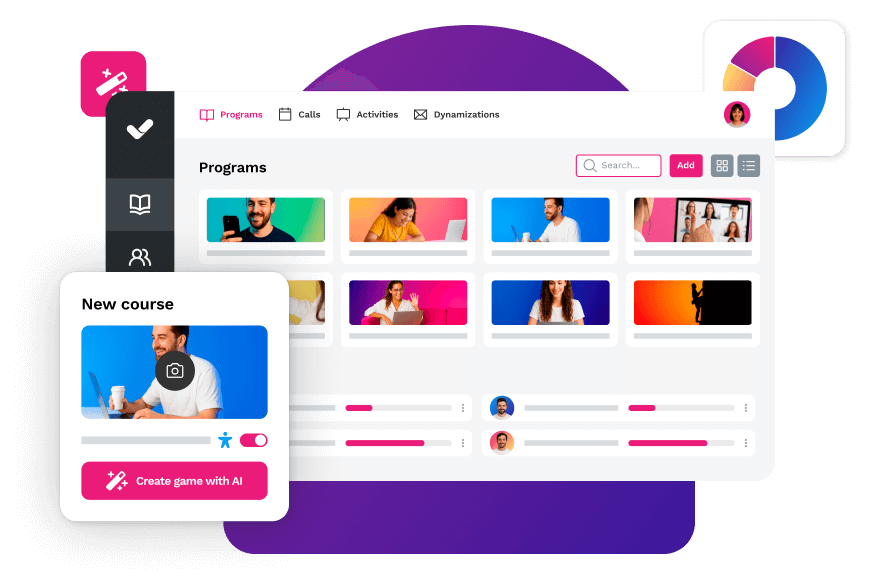
Incorporating gamification into training programs transforms passive learning into an engaging and competitive experience. Through interactive challenges, rewards, and rankings, employees are motivated to achieve their learning goals. Tools like isEazy Game can create custom games that align with corporate training objectives, making learning both fun and effective.
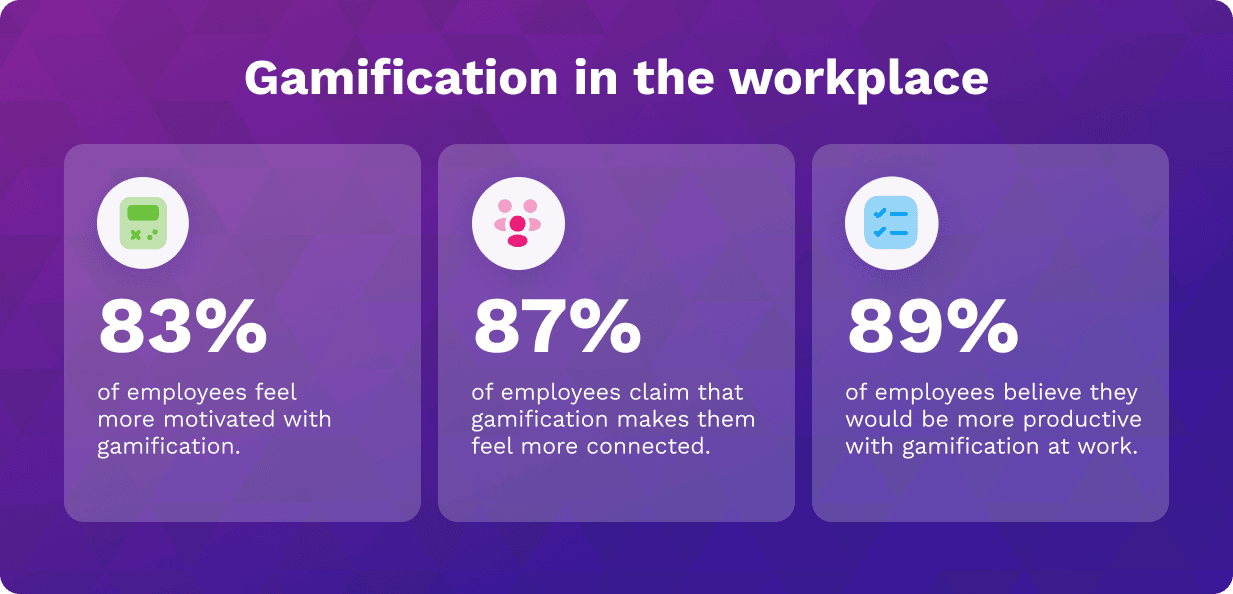
With attention spans dwindling, microlearning has become a critical training method. This approach delivers content in brief, focused segments, making it easier for employees to absorb information quickly. Ideal for busy workers, microlearning modules can be accessed at any time, allowing learners to revisit topics as needed. Integrating tools like isEazy Skills provides a wide variety of microlearning courses, catering to essential soft skills and compliance training.
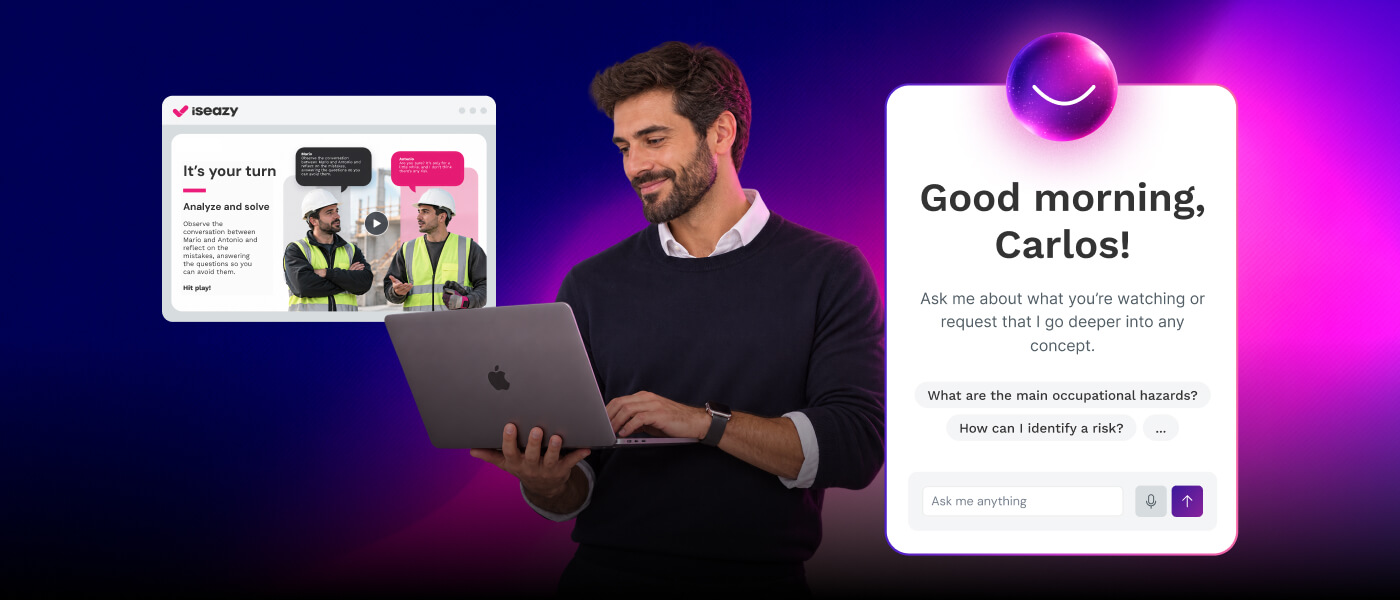
CASE STUDY
We helped Clarel transform its knowledge into interactive and effective microcontents


E-learning platforms have revolutionized corporate training, offering flexibility and accessibility. With courses available online, employees can learn at their own pace and convenience. isEazy LMS streamlines the management of e-learning programs, enabling organizations to assign training paths and track progress, ensuring that training is efficient and comprehensive.
Peer-to-peer learning promotes collaborative knowledge sharing among employees, allowing them to learn from each other’s experiences and insights. This method enhances teamwork and fosters innovation, as diverse perspectives combine to address challenges. Implementing structured peer learning initiatives can empower employees to take charge of their own learning journeys.
Video training effectively caters to both visual and auditory learners, providing engaging content that is easily digestible. High-quality video courses can explain complex concepts, demonstrate skills, and elicit emotional connections that enhance learning retention. With the integration of tools like isEazy Factory, companies can create professional videos tailored to their specific training needs.

Blended learning merges instructor-led training with online elements, creating a well-rounded educational experience. This approach takes advantage of the benefits of both methods, ensuring that employees receive guided instruction while also engaging in self-paced learning. It allows for greater flexibility, accommodating diverse learning preferences and promoting a thorough understanding of the material.
Role-playing is a powerful training method, particularly for developing soft skills such as communication, negotiation, and conflict resolution. Through simulated scenarios, employees can practice responses and strategies in a safe environment that mirrors real-world challenges. This experiential approach helps learners explore different perspectives and build confidence in their abilities.
With isEazy Author’s branching scenarios interactive feature, you can create these role-play experiences directly inside the authoring tool—designing realistic decision-making paths that adapt to each learner’s choices and bring complex situations to life.
Simulation training offers hands-on experience without real-world consequences, which is particularly beneficial in high-stakes environments like healthcare, aviation, or manufacturing. By creating realistic scenarios, employees can practice their skills in a controlled setting. The use of technology-driven simulations can enhance learning outcomes, providing valuable insight into potential real-life challenges.
Now, let’s take a look at the training methods that will be popular in 2026.
Artificial Intelligence (AI) is at the forefront of personalized learning experiences. Training platforms will increasingly utilize AI algorithms to analyze individual performance and preferences, curating customized learning paths that maximize effectiveness. This innovation enhances knowledge retention and ensures that employees engage with material that is most relevant to their roles.
The rise of VR technology in training allows for immersive experiences that change how employees learn. This technology can replicate real-life scenarios, providing contextual training that helps in mastering tasks that may be risky or complicated in the real world. As these tools become more accessible, they will play a pivotal role in hands-on skill development.

Social learning platforms facilitate collaboration and encourage a community-driven approach to knowledge sharing. By integrating social features into the training process, employees can easily share insights, resources, and feedback, enriching the collective learning experience. This shift emphasizes the importance of social interaction in fostering a culture of continuous improvement.
When selecting training methods, it’s essential to align them with your organization’s culture, available budget, and specific learning objectives. Assess your employees’ needs and preferences to determine which methods will be most effective and engaging. For instance, if your company values continuous improvement and fresh ideas, fostering peer-to-peer learning and mentorship may be beneficial.
Understanding the types of skills required for your workforce will inform your choice of training methods. Identify the competencies needed and ensure the chosen methods resonate with employee preferences. Moreover, consider the organization’s technology readiness—are your employees comfortable with online learning platforms, or would they prefer in-person instruction? This evaluation is crucial for effective implementation.
Choosing the right Learning Management System (LMS) is essential for effectively managing employee training. Look for features that support customization, seamless integration with your existing tech stack, and a mobile-friendly experience that adapts to your workforce.
isEazy LMS goes beyond the capabilities of a traditional LMS by offering a true all-in-one learning ecosystem. It combines an AI-powered authoring tool, a complete library of ready-to-use training content, and a modern learning platform within a single solution. This unified approach allows organizations to create, deliver, and manage training from end to end—while leveraging AI to enhance productivity, automate processes, and personalize learning experiences.
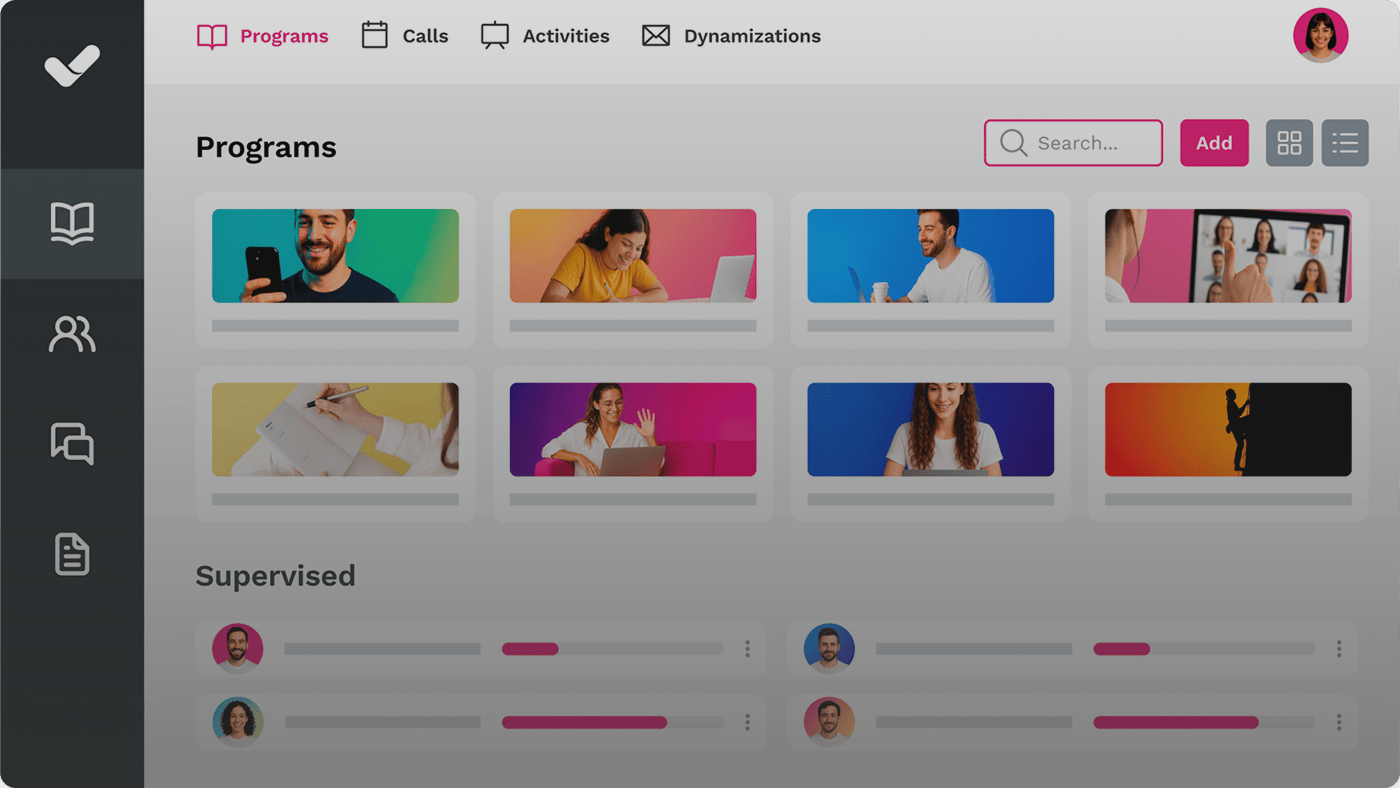
Centralizing training content simplifies access and administration. By compiling all training resources in one platform, employees can easily access materials when needed, leading to better engagement and faster learning. It also allows management to track participation, identify gaps, and adjust programs accordingly to meet evolving business needs.
Engagement is key to successful training programs. When designing training experiences, prioritize inclusivity and interactivity. Use varied formats, such as videos, quizzes, and hands-on activities to maintain interest and appeal to different learning styles. Incorporating elements from tools like isEazy Author can streamline the creation of engaging e-learning content that resonates with learners.

To maximize participation in training programs, clearly communicate the benefits and consider offering incentives for completion. Whether it’s certificates of recognition, bonuses, or promotions, acknowledging employees’ efforts can motivate them to engage actively in their learning process.
Soliciting feedback after training sessions is essential for improvement. Use surveys, focus groups, or one-on-one interviews to gather insights on what worked and what can be enhanced. Continuous feedback loops allow organizations to adapt their training frameworks, ensuring they remain relevant and effective.
As remote and hybrid work environments become more prevalent, companies must adapt their training frameworks to ensure inclusivity. Virtual training sessions, e-learning modules, and digital collaboration tools can accommodate remote employees’ needs and ensure that everyone receives equal access to learning opportunities.
Many companies face budgetary constraints that can limit training initiatives. However, training does not have to be expensive to be effective. Leveraging in-house resources, utilizing open-source materials, or partnering with affordable e-learning providers can allow organizations to maintain quality training without overspending.
Trainers must be equipped with the skills and knowledge to deliver effective training sessions. Providing trainers with professional development opportunities ensures they are prepared and motivated to lead sessions. Additionally, fostering motivation among learners by setting clear expectations and highlighting the benefits of training empowers them to take responsibility for their own learning paths.
A strong Learning & Development program is crucial for retaining talent. Employees who believe that their company invests in their professional growth experience higher job satisfaction levels, leading to lower turnover rates. Organizations that prioritize effective training create an environment that nurtures learning, collaboration, and personal growth.
Investing in continuous upskilling positions companies for future success. As industries evolve, ongoing learning initiatives will ensure that employees remain competitive and equipped to tackle new challenges. By offering diverse training methods, companies can build a resilient workforce ready to adapt to future demands.
Modern training demands much more than isolated courses or disconnected tools: it requires complete, agile experiences designed to support every stage of learning. At isEazy, we bring together everything companies need to create, manage, and deliver training with maximum efficiency.
Our e-learning tools combine the full power of AI with intuitive learning platforms, agile ready-to-use content, and tailored solutions to boost talent development. All of this under one philosophy: helping you deliver the best possible learning experience, without complexity and at scale.
Take your L&D strategy to the next level. Discover how isEazy can transform the way your organization learns and grows. Request a demo and start empowering your team’s talent today.
In 2026, the most effective employee training methods include blended learning, microlearning, simulation training, coaching and mentorship, and gamification. These approaches adapt to different learning styles and promote engagement and retention.
Organizations should align training methods with their culture, goals, employee preferences, and technological capabilities. A combination of digital and traditional approaches often delivers the best results.
Diverse training methods cater to various learning styles, improve knowledge retention, and boost employee satisfaction. They also foster innovation and adaptability within the workforce.
Yes, many modern employee training methods—such as e-learning, video training, and virtual simulations—are ideal for remote and hybrid workforces, ensuring inclusivity and accessibility.
Gamification increases engagement by transforming learning into an interactive experience. It motivates employees through challenges, rewards, and real-time feedback.

GUIDE
Prepare your organization to comply with the new AI Regulations
Download guide


The best e-learning solutions for companies, all in one place
Powerful, quick-to-set-up tools that are easy to use, no matter your training needs


The best e-learning solutions for companies, all in one place
Powerful, quick-to-set-up tools that are easy to use, no matter your training needs