Brain
The first AI trained to teach

Author
The #1 AI-powered authoring tool on the market

Factory
Custom e-learning content factory

Skills
Comprehensive power skills course catalog

LMS
All-in-one LMS platform with AI

Engage
App for managing frontline teams
Product

What is Brain?
Everything you need to know about the first AI trained to teach.

Learning agent: CompanionNew
Supports learners and answers their questions right inside the course, without breaking the audit trail.

How does it work?
Adaptive, conversational, and contextual. That’s learning with Brain.

FEATURES

AINew
Unlock your full potential and speed up course creation with artificial intelligence.

Accessibility
Automatically meet accessibility guidelines—without sacrificing interactivity!

Interactivity
Boost engagement with interactive, ready-to-use activities that make learning fun.

Course Creation
Reduce the time it takes to create your e-learning courses with our authoring tool.

Distribution
We offer you different distribution options, so that nothing can stop you.

SCORM
Publish your course in SCORM format and share it on any LMS.

SERVICES

Instrucional Design
Surprise your students with multimedia and interactive content.

Custom Courses
We create e-learning courses for you—tailored to your needs and hassle-free!

Virtual Reality
Turn learning into an immersive experience.

Custom Avatars
Give your courses and videos a unique touch with personalized avatars.

Audiovisual FactoryNew
Turn training into something dynamic and visual with engaging videos.

CATALOG

Course catalog
Over 600 skills and competency courses to help you adapt to your team's needs.
Microsoft Copilot AcademyNew
Your professionals will learn how to apply Copilot AI to key processes within your organization.

Artificial Intelligence Academy
Train your teams in the practical use of AI to boost productivity and innovation in your company.

Cybersecurity Academy
Capacita a tu empresa con el catálogo más completo en seguridad digital corporativa.


Use cases
Choose the solution that best fits your needs

Industries
Solutions for all types of industries
USE CASES

Onboarding
Facilitate the onboarding process, productivity and engagement of your new employees.

Upskilling
Boost your team's skills and prepare them for the challenges of the future with upskilling.

Microlearning
Discover all the advantages of microlearning and boost your training results.

Gamification
Enjoy addictive training that will get your professionals hooked.

Internal Communication
Improve communication in your company and enjoy an aligned and committed team.

Mobile learning
Agile, flexible, and interactive learning—built for today’s digital-first workforce.
INDUSTRIES

Banking and financial services
Training in compliance, cybersecurity, customer service, and key skills development.

Pharmaceuticals and healthcare
Digital onboarding, regulatory updates, and ongoing training for healthcare staff.

Retail and consumer
Agile and scalable training for in-store, operational, and customer service teams.

Industry and manufacturing
Training in processes, safety, and corporate culture for distributed teams.

Education and training
Digital solutions for training centers, internal academies, and corporate universities.

Technology and telecommunications
Development of technical talent, digital skills, and upskilling and reskilling programs.
CLIENTS

MAPFRE
How MAPFRE turn e-learning into sales with isEazy

Pepco
A personalised learning experience for a growing team.

BBVA
Digitisation and creation of high quality e-learning content.

Shiseido
We increase the engagement of the training with a social and gamified app.

Telefónica
Large-scale reskilling for the company's digital transformation.

Vodafone
A personalised learning experience for a growing team.
More than 1,000 companies already rely on isEazy.






MEET ISEAZY

Events
Discover our upcoming events and connect with the future of e-learning.

News
Find out the latest news about isEazy: press releases, partnerships, updates...

Contact
Leave us your personal details and we will contact you as soon as possible.
About isEazyNew
Find out more about our company.

Careers
We are looking for the best talent, join our team!

Partners
Become our partner and grow your business.

INTERESTING RESOURCES

Blog
The best content on e-learning: trends, tools and key strategies.

Whitepapers
Gain valuable insights and stay ahead of industry trends.

Product releases
The latest news and releases of our e-learning products and solutions.

Glossary
Definitions of the most commonly used terms and key industry concepts.

Guides
Discover the best step-by-step tips and tricks to optimize your L&D strategy.

Webinars
Video sessions on our products, trends and more

Comparatives
Compare e-learning solutions available on the market and choose the most suitable one.


WEBINAR
Master AI in isEazy Author in under an hour.




GUIDE
Prepare your organization to comply with the new AI regulations


AUTHORING TOOL
Create courses automatically and generate interactive activities, games, translations, and multimedia resources in seconds.

Stay up to date with all our latest news
 Subscribe to our newsletter
 Stay up to date with all our latest news

February 18, 2026
Competency map: the complete guide to boosting talent in your company

CONTENT CREATED BY:

Table of contents
Did you know that companies using a structured competency map achieve 30% greater success in their talent development processes? In a work environment where skills become obsolete faster and faster, having a tool that identifies, measures, and develops your team’s competencies is no longer optional—it’s a strategic necessity.
In this article, you’ll learn what a competency map really is, how to design an effective one for your organization, and why this tool has become a foundational pillar of modern talent management.
What is a competency map?
A competency map is a strategic tool that provides a structured, visual view of the skills, knowledge, and behaviors an organization needs to achieve its goals.
You can think of it as your company’s “talent GPS”: it shows where you are, where you need to go, and the path to develop your team.
Unlike a simple list of skills, a competency map:
- Identifies the key competencies that drive individual and collective success.
- Defines proficiency levels for each competency (basic, intermediate, advanced).
- Connects competencies to specific roles within the organization.
- Defines observable behaviors that demonstrate each competency.
- Enables gap analysis between current and desired levels.
Key differences: competency map vs. other concepts
It’s important to distinguish a competency map from other talent management resources:
- Competency map vs. talent map: A talent map is broader and includes factors like potential, experience, and career planning across the workforce. A competency map is more specific and focuses on the competencies required for each role.
- Competency map vs. competency matrix: A competency matrix links an individual’s current competencies to their future potential. A competency map defines which competencies the organization needs, regardless of who currently has them.
- Competencies vs. skills: Skills are one component of a competency. A competency combines knowledge, skills, attitudes, and behaviors applied to achieve a specific outcome.
Key differences: competency map vs. other concepts
| Compared concept | What it is | Key difference vs. competency map |
|---|---|---|
| Talent map | A global view of the organization’s talent: potential, experience, performance, mobility, and career planning. | The competency map is more specific: it focuses only on the skills and capabilities required for each role, not on people’s potential or career path. |
| Competency matrix | A tool that matches specific individuals with the competencies they currently have and those they could develop. | The matrix refers to specific people. The competency map defines what the organization needs, regardless of who currently has it. |
| Skills | Specific abilities a person can perform (for example: negotiating, programming, presenting). | Skills are part of a competency. A competency is broader: it combines knowledge + skills + attitudes + behaviors applied in a professional context. |
What is a competency map for? Tangible benefits
Organizations that implement competency maps gain clear advantages across multiple areas:
1. Recruitment process optimization
With a clearly defined competency map, recruitment processes become more precise and efficient. You know exactly what to look for in a candidate, beyond technical experience. This reduces time-to-hire and improves the quality of new hires.
2. Personalized professional development
By identifying the gaps between each employee’s current competencies and those required for their role, you can design personalized training plans that truly add value. This increases the ROI of your learning and development investments.
3. More accurate promotion decisions
Promotions based on clearly defined competencies are more objective and fair. You reduce the risk of the “Peter Principle” (promoting people to their level of incompetence) by having clear criteria for the competencies required at each hierarchical level.
4. Improved organizational performance
When each person develops the specific competencies their role requires, overall productivity increases. Teams perform better because every member contributes exactly what is needed.
5. Talent retention
Employees who see a clear development path based on specific competencies feel more motivated and engaged. They understand what they need to improve to advance in their careers.
6. Strategic alignment
A competency map aligns individual capabilities with the company’s strategic goals. It ensures talent development is always focused on what the organization truly needs.
7. Building organizational culture
The corporate competencies defined in your map reflect and reinforce your company’s values and culture. You hire, evaluate, and develop people who fit your organizational identity.

Types of competencies in a professional competency map
A comprehensive competency map should include different categories of key competencies:
Corporate or core competencies
These cross-functional business competencies are those that all employees in the organization should have, regardless of their role. They reflect the company’s values, culture, and way of working.
Examples:
- Results orientation.
- Teamwork.
- Adaptability to change.
- Commitment to quality.
- Professional ethics.
Technical or role-specific competencies
These are the technical knowledge and skills required to perform a specific role. For example, technical competencies for IT teams might include blockchain, Office 365, or AI tools.
Examples for a Graphic Designer:
- Proficiency in Adobe Creative Suite.
- Knowledge of color theory.
- Responsive design.
- Interface prototyping.
Leadership competencies
These apply to management and team leadership roles. leadership training can range from team management and strategic decision-making to inspiring and motivating others.
Examples:
- Leadership tools.
- Strategic decision-making.
- Change management.
- Conflict management.
Emotional and social competencies
Related to emotional intelligence and interpersonal skills, developing these competencies is key to building more connected and effective teams.
Examples:
- Empathy.
- Emotional self-management.
- Conflict resolution.
- Collaboration.

Main challenges when creating a competency map (and how to overcome them)
Many organizations face obstacles when trying to develop their competency map:
Challenge 1: Conceptual confusion
- The problem: not clearly understanding the difference between a competency and a skill, a behavior, or an attitude.
- The solution: clearly define your framework. A competency combines knowledge + skill + attitude + observable behavior. For example, “Teamwork” is not just the ability to communicate, but also knowledge of group dynamics, a collaborative attitude, and behaviors such as proactively sharing information.
Challenge 2: Generic corporate competencies
- The problem: copying standard definitions that do not reflect your company’s reality. “Teamwork” means different things in a tech startup versus a nonprofit organization.
- The solution: customize each competency with concrete examples from your context. Define exactly what each competency means in your organization and how it shows up in day-to-day work.
Challenge 3: Excessive granularity
- The problem: trying to define competency levels for every individual position, creating an unmanageable map.
- The solution: group similar roles into job families and define competencies by family. This approach is more practical and easier to keep updated.
Challenge 4: Lack of observable behaviors
- The problem: defining competencies in abstract terms without measurable evaluation criteria.
- The solution: for each competency level, specify 3–5 concrete observable behaviors. For example, for “Customer focus – Intermediate level”: “Proactively follows up on pending requests without the customer having to ask.”
Challenge 5: Static, outdated map
- The problem: creating the map once and failing to update it as the business evolves.
- The solution: establish annual reviews of the map and update it whenever there are major strategic changes in the organization.

How to develop an effective competency map: step-by-step guide
Follow this proven methodology to create a competency map that truly works:
1. Conduct a thorough job analysis
Before defining competencies, you need a deep understanding of each role in your organization.
Concrete actions:
- Collect current job descriptions.
- Interview people in each role about their actual responsibilities.
- Observe work in action whenever possible.
- Ask managers what distinguishes top performers from average ones.
- Identify critical roles that have the greatest impact on organizational success.
Expected outcome: a complete inventory of all roles, their responsibilities, and the activities they perform.
2. Define corporate competencies
These are at the heart of your identity as an organization.
Concrete actions:
- Review the company’s mission, vision, and values.
- Identify behaviors that reflect your organizational culture.
- Consult senior leaders on which competencies are non-negotiable.
- Limit corporate competencies to a maximum of 5–8 (beyond that, they lose impact).
- For each competency, write a clear definition of what it means in your context.
Example of a well-defined corporate competency:
Innovation: “The ability to generate creative ideas that enhance the learning experience, propose disruptive technological solutions, and quickly adapt to new trends. It includes constant curiosity, experimentation with new formats, and a willingness to challenge the status quo.”
3. Identify role-specific or job-family competencies
Now define the technical and functional competencies required for each role.
Concrete actions:
- Group similar roles into families (e.g., Sales Family, Technology Family, Marketing Family).
- For each family, identify 4–6 key specific competencies.
- Combine technical competencies (hard skills) with management or behavioral competencies.
- Validate with experts in each area to ensure the competencies are relevant.
Example of competencies for an eLearning Content Designer:
- Instructional design.
- Creativity in learning formats.
- Proficiency in authoring tools.
- Training needs analysis.
- Effective visual communication.
4. Establish proficiency levels for each competency
Each competency should have clearly differentiated levels that allow you to assess and develop people.
Recommended 4-level system:
Level 1 – Basic/Developing:
- The person is learning the competency.
- Requires frequent supervision and support.
- Performs simple tasks related to the competency.
Level 2 – Intermediate/Competent:
- Masters the competency in routine situations.
- Works independently in most cases.
- Can teach people at the basic level.
Level 3 – Advanced/Expert:
- Handles complex situations with expertise.
- Serves as a reference in this competency within the organization.
- Innovates and improves processes related to the competency.
Level 4 – Mastery/Guru:
- Applies strategic thinking to the competency.
- Transforms how the organization works with this competency.
- Is recognized as an expert even outside the organization.
5. Define observable behaviors for each level
This is the step many organizations skip, and it’s crucial for making the competency map truly useful.
Full example of a competency with levels and behaviors:
Competency: Customer focus
| Level | Observable behaviors |
|---|---|
| Basic | Responds to customer inquiries clearly within 24 hours. Uses courteous and professional language. Escalates complex issues to a supervisor. Accurately logs interactions in the CRM. |
| Intermediate | Anticipates customer needs based on previous interactions. Proposes solutions without waiting for the customer to ask. Adapts communication style to the customer profile. Resolves 80% of inquiries without escalation. |
| Advanced | Identifies patterns in recurring issues and proposes systemic improvements. Manages crisis situations with customers while remaining calm. Builds long-term relationships that generate referrals. Trains new team members in customer service. |
| Mastery | Defines customer experience strategies for the entire organization. Creates loyalty programs based on customer insights. Represents the company as an expert at industry events. Their service standards are adopted as best practices. |
6. Create the visual map
Document everything in a clear and accessible way.
Recommended formats:
- Competency matrix: rows with roles, columns with competencies, and cells indicating the required level.
- Competency profiles: a detailed document for each competency including definition, levels, and behaviors.
- Interactive map: a digital tool where employees can check which competencies are needed for each role.
Useful tools:
- Excel / Google Sheets (for simple maps).
- Miro / Mural (for collaborative visual maps).
- Talent management software (for maps integrated with assessments and learning).
7. Implement an evaluation process
A competency map is only useful if you use it to assess and develop people.
Recommended evaluation system:
- Self-assessment: the employee rates their level in each competency.
- Manager assessment: the supervisor evaluates based on observed behaviors.
- 360° assessment (optional): peers and stakeholders provide their perspective.
- Calibration conversation: manager and employee discuss gaps and a development plan.
Frequency: formal annual evaluation with informal quarterly check-ins.
8. Link the map to learning and development
The real value of the competency map emerges when you connect it to concrete development actions.
Development actions by gap level:
1-level gap:
- Targeted online training.
- Mentoring with an experienced colleague.
- A stretch project where the competency can be practiced.
2-level gap:
- Intensive in-person or blended training.
- Individual coaching.
- Temporary rotation into a role where the competency is used intensively.
3+ level gap:
- Question whether the person is in the right role.
- A comprehensive 6–12 month development program.
- Consider reassignment to a role better aligned with their current competencies.

Practical example of a competency map
Let’s look at a concrete example applied to a real role:
Role: Learning Experience Design Specialist
Required corporate competencies (all at least at an intermediate level):
- Innovation.
- Results orientation.
- Teamwork.
- Effective communication.
Role-specific competencies:
| Competency | Required level | Key behaviors |
|---|---|---|
| Instructional design | Advanced | Applies pedagogical models (ADDIE, SAM) flexibly. Designs assessments aligned with learning objectives. Creates experiences that maximize retention and transfer. |
| Creative thinking | Advanced | Proposes innovative formats beyond conventional approaches. Integrates gamification and microlearning strategically. Positively surprises stakeholders with original solutions. |
| eLearning technology proficiency | Intermediate | Uses authoring tools (Articulate, isEazy). Integrates multimedia (video, audio, interactive elements). Understands LMS capabilities and limitations. |
| Training needs analysis | Intermediate | Conducts effective interviews with stakeholders. Identifies competency gaps within teams. Translates business needs into learning objectives. |
| Storytelling applied to training | Advanced | Creates narratives that connect emotionally. Uses real cases and contextualized examples. Maintains engagement throughout the entire learning experience. |
| Training project management | Intermediate | Meets established deadlines and budgets. Coordinates efficiently with multiple stakeholders. Anticipates risks and proposes contingency plans. |
Common mistakes when implementing competency maps (and how to avoid them)
Mistake 1: Creating an overly complex map
- What happens: you define 15 corporate competencies, 20 competencies per role, 6 proficiency levels… and no one uses it because it’s unmanageable.
- How to avoid it: apply the Pareto principle. 80% of the impact comes from 20% of the competencies. Keep your map simple: 5–7 corporate competencies, 4–6 role-specific ones, and a maximum of 4 levels.
Mistake 2: Not training managers on how to use the map
- What happens: managers don’t know how to assess competencies objectively, leading to biased and inconsistent evaluations.
- How to avoid it: invest in training for evaluators. Run calibration sessions where multiple managers assess the same cases to align criteria.
Mistake 3: Disconnecting the map from real decisions
- What happens: the map exists only on paper. Promotions, salary increases, and training decisions continue to be made using other criteria.
- How to avoid it: institutionalize the use of the map. All talent decisions should be based on it. Include references to the map in promotion, compensation, and development policies.
Mistake 4: Not updating the map when the business changes
- What happens: your company pivots to new products or markets, but the competency map still reflects the old strategy.
- How to avoid it: review the map annually and update it whenever there are significant strategic changes. Competencies must evolve with the business.
Mistake 5: Using vague and abstract language
- What happens: definitions like “Be proactive” or “Have a positive attitude,” which everyone interprets differently.
- How to avoid it: always define concrete, observable behaviors. Instead of “Be proactive,” write “Identifies potential problems before they occur and proposes solutions without waiting for instructions.”
Tools and technology to develop competencies in your team
While you can start with Excel, as your organization grows you’ll need more robust tools. Here are three tools to help develop competencies:

Advantages
Features
- A complete and up-to-date catalog, with new courses added every month.
- A 100% practical methodology focused on real-world application in the workplace.
- An immersive and engaging learning experience, with multiple formats tailored to different types of learners.
- Optimized engagement and knowledge retention through gamification dynamics and interactive content.
- Full scalability and customization, allowing training to be adapted to the specific needs of each company and team.
- A flexible commercial model with an unlimited flat-rate subscription or customized plans that include gamification, communication, and personalized tutoring services.
- More than 600 courses in power skills and digital skills (communication, leadership, digital mindset, innovation, well-being, sustainability, compliance, and more).
- Courses available in multiple languages (Spanish, English, German, French, Italian, Portuguese, LATAM Spanish, and more).
- Different course formats such as Classic (50–70 min) with an interactive structure featuring videos and high-impact resources; Essential Facts (15–20 min) with focused content designed to solve immediate challenges; and podcast-format training to learn anytime, anywhere.
- Compatible with any LMS via SCORM format.
- Available in a SaaS model with an integrated platform (organized spaces for easy course access, a resource library, and learning tracking).
- AI-powered course and program recommender.
Advantages
- A complete and up-to-date catalog, with new courses added every month.
- A 100% practical methodology focused on real-world application in the workplace.
- An immersive and engaging learning experience, with multiple formats tailored to different types of learners.
- Optimized engagement and knowledge retention through gamification dynamics and interactive content.
- Full scalability and customization, allowing training to be adapted to the specific needs of each company and team.
- A flexible commercial model with an unlimited flat-rate subscription or customized plans that include gamification, communication, and personalized tutoring services.
Features
- More than 600 courses in power skills and digital skills (communication, leadership, digital mindset, innovation, well-being, sustainability, compliance, and more).
- Courses available in multiple languages (Spanish, English, German, French, Italian, Portuguese, LATAM Spanish, and more).
- Different course formats such as Classic (50–70 min) with an interactive structure featuring videos and high-impact resources; Essential Facts (15–20 min) with focused content designed to solve immediate challenges; and podcast-format training to learn anytime, anywhere.
- Compatible with any LMS via SCORM format.
- Available in a SaaS model with an integrated platform (organized spaces for easy course access, a resource library, and learning tracking).
- AI-powered course and program recommender.

Advantages
Features
- Enables on-demand learning tailored to different paces and needs.
- Facilitates continuous knowledge updates in key areas.
- Supports the development of essential technical and soft skills.
- Promotes a culture of continuous and proactive learning within the organization.
- Improves knowledge retention through tracking and analytics.
- Adapts to companies of different sizes and industries.
- Optimizes training investment thanks to high-quality content.
- Provides access to a wide library of high-quality courses.
- Offers curated content that is regularly updated.
- Enables the creation of personalized learning paths.
- Includes tools to track employee progress.
- Delivers detailed analytics to evaluate the impact of training.
- Features an intuitive interface optimized for mobile devices.
- Facilitates integration with other business tools and management systems.
Advantages
- Enables on-demand learning tailored to different paces and needs.
- Facilitates continuous knowledge updates in key areas.
- Supports the development of essential technical and soft skills.
- Promotes a culture of continuous and proactive learning within the organization.
- Improves knowledge retention through tracking and analytics.
- Adapts to companies of different sizes and industries.
- Optimizes training investment thanks to high-quality content.
Features
- Provides access to a wide library of high-quality courses.
- Offers curated content that is regularly updated.
- Enables the creation of personalized learning paths.
- Includes tools to track employee progress.
- Delivers detailed analytics to evaluate the impact of training.
- Features an intuitive interface optimized for mobile devices.
- Facilitates integration with other business tools and management systems.

Advantages
Features
- Access to high-quality content backed by leading institutions worldwide.
- Supports the continuous development of strategic competencies in the workplace.
- Improves talent retention and engagement through certified training.
- Contributes to digital transformation and innovation within the organization.
- Allows training to be adapted to the organization’s specific needs.
- Optimizes training investment with up-to-date and relevant programs.
- Provides access to courses and programs from internationally recognized universities and institutions.
- Offers specializations and certifications in key areas such as technology, business, and leadership.
- Allows learning paths to be customized according to each organization’s needs.
- Includes tracking tools to monitor employee progress and performance.
- Integrates easily with other learning management systems and platforms.
- Features an intuitive interface accessible from mobile devices.
- Continuously updates its catalog to deliver relevant and up-to-date content.
Advantages
- Access to high-quality content backed by leading institutions worldwide.
- Supports the continuous development of strategic competencies in the workplace.
- Improves talent retention and engagement through certified training.
- Contributes to digital transformation and innovation within the organization.
- Allows training to be adapted to the organization’s specific needs.
- Optimizes training investment with up-to-date and relevant programs.
Features
- Provides access to courses and programs from internationally recognized universities and institutions.
- Offers specializations and certifications in key areas such as technology, business, and leadership.
- Allows learning paths to be customized according to each organization’s needs.
- Includes tracking tools to monitor employee progress and performance.
- Integrates easily with other learning management systems and platforms.
- Features an intuitive interface accessible from mobile devices.
- Continuously updates its catalog to deliver relevant and up-to-date content.
How isEazy enhances your competency map with personalized training
Having a well-designed competency map is only the first step. The real value emerges when you can efficiently develop the competencies you have identified as priorities.
This is where isEazy Skills makes the difference, with a catalog of more than 600 courses specifically designed to develop the most in-demand professional competencies such as leadership, team management, digital skills, sales competencies, project management, and more.
If you’re ready to take your organization’s competency development to the next level, discover isEazy Skills and request a personalized demo where we’ll show you how to perfectly align your competency map with effective training plans.
Frequently asked questions about competency maps
What is a competency map and why is it important for a company?
A competency map is a strategic talent management tool that defines the capabilities, knowledge, and behaviors an organization needs to achieve its goals. Its importance lies in directly linking business strategy with people development, enabling more objective decisions about hiring, training, promotion, and performance.
How is a competency map different from a competency matrix?
A competency map defines which competencies the organization or each role needs, without focusing on specific individuals. A competency matrix, on the other hand, matches specific employees with their current level in each competency. The map sets the standard; the matrix shows the team’s current reality.
How many competencies should a competency map include?
It should remain manageable. At the corporate level, 5 to 8 core competencies are usually sufficient. For each role or job family, it is common to define 4 to 6 specific competencies. Too many competencies make evaluation difficult and reduce practical use.
Does every position need its own competency map?
Not necessarily. To avoid excessive complexity, it is more effective to group similar roles into job families (for example, sales, technology, marketing) and define shared competencies by family, adjusting only what is essential for very specific or critical roles.
How are competencies measured in a competency map?
They are measured through proficiency levels (for example, basic, intermediate, advanced, and mastery) supported by observable behaviors. These concrete behaviors allow managers and employees to more objectively assess the actual level of a competency and identify development gaps.
How is a competency map used in recruitment processes?
It helps clearly define which competencies are key for each role, beyond experience or academic credentials. This supports structured competency-based interviews, practical assessments, and evaluation criteria, improving hiring quality and reducing the risk of bringing in profiles that are not a good fit.
How is a competency map related to corporate training?
The map identifies gaps between the current level and the required level for each competency. Based on those gaps, personalized development plans are designed, prioritizing competencies that are critical to the business and optimizing training investment.
Featured articles




WHITEPAPER
Do you know what are the essential skills for business success?
Discover the power skills that will transform your company
Download whitepaper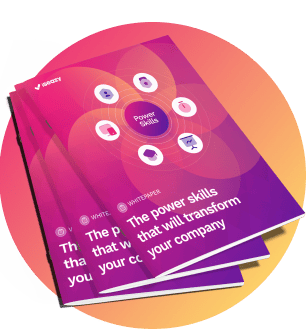


Develop key skills across your workforce
Over 600 courses and programs designed to strengthen your team’s power skills.


Develop key skills across your workforce
Over 600 courses and programs designed to strengthen your team’s power skills.
Related articles