More than AI—Instructional Intelligence

Brain
The first AI trained to teach

Author
The #1 AI-powered authoring tool on the market

Factory
Custom e-learning content factory

Skills
Comprehensive power skills course catalog

LMS
All-in-one LMS platform with AI

Engage
App for managing frontline teams
FEATURES

AINew
Unlock your full potential and speed up course creation with artificial intelligence.

Accessibility
Automatically meet accessibility guidelines—without sacrificing interactivity!

Interactivity
Boost engagement with interactive, ready-to-use activities that make learning fun.

Course Creation
Reduce the time it takes to create your e-learning courses with our authoring tool.

Distribution
We offer you different distribution options, so that nothing can stop you.

SCORM
Publish your course in SCORM format and share it on any LMS.
SERVICES

Instrucional Design
Surprise your students with multimedia and interactive content.

Custom Courses
We create e-learning courses for you—tailored to your needs and hassle-free!

Virtual Reality
Turn learning into an immersive experience.

Custom Avatars
Give your courses and videos a unique touch with personalized avatars.

Audiovisual FactoryNew
Turn training into something dynamic and visual with engaging videos.
CATALOG

Course catalog
Over 600 skills and competency courses to help you adapt to your team's needs.
Microsoft Copilot AcademyNew
Your professionals will learn how to apply Copilot AI to key processes within your organization.

Artificial Intelligence Academy
Train your teams in the practical use of AI to boost productivity and innovation in your company.

Cybersecurity Academy
Capacita a tu empresa con el catálogo más completo en seguridad digital corporativa.

Use cases
Choose the solution that best fits your needs

Industries
Solutions for all types of industries
USE CASES

Onboarding
Facilitate the onboarding process, productivity and engagement of your new employees.

Upskilling
Boost your team's skills and prepare them for the challenges of the future with upskilling.

Microlearning
Discover all the advantages of microlearning and boost your training results.

Gamification
Enjoy addictive training that will get your professionals hooked.

Internal Communication
Improve communication in your company and enjoy an aligned and committed team.

Mobile learning
Agile, flexible, and interactive learning—built for today’s digital-first workforce.
INDUSTRIES

Banking and financial services
Training in compliance, cybersecurity, customer service, and key skills development.

Pharmaceuticals and healthcare
Digital onboarding, regulatory updates, and ongoing training for healthcare staff.

Retail and consumer
Agile and scalable training for in-store, operational, and customer service teams.

Industry and manufacturing
Training in processes, safety, and corporate culture for distributed teams.

Education and training
Digital solutions for training centers, internal academies, and corporate universities.

Technology and telecommunications
Development of technical talent, digital skills, and upskilling and reskilling programs.
CLIENTS

MAPFRE
How MAPFRE turn e-learning into sales with isEazy

Pepco
A personalised learning experience for a growing team.

BBVA
Digitisation and creation of high quality e-learning content.

Shiseido
We increase the engagement of the training with a social and gamified app.

Telefónica
Large-scale reskilling for the company's digital transformation.

Vodafone
A personalised learning experience for a growing team.
More than 1,000 companies already rely on isEazy.





MEET ISEAZY

Events
Discover our upcoming events and connect with the future of e-learning.

News
Find out the latest news about isEazy: press releases, partnerships, updates...

Contact
Leave us your personal details and we will contact you as soon as possible.
About isEazyNew
Find out more about our company.

Careers
We are looking for the best talent, join our team!

Partners
Become our partner and grow your business.
INTERESTING RESOURCES

Blog
The best content on e-learning: trends, tools and key strategies.

Whitepapers
Gain valuable insights and stay ahead of industry trends.

Product releases
The latest news and releases of our e-learning products and solutions.

Glossary
Definitions of the most commonly used terms and key industry concepts.

Guides
Discover the best step-by-step tips and tricks to optimize your L&D strategy.

Webinars
Video sessions on our products, trends and more

Comparatives
Compare e-learning solutions available on the market and choose the most suitable one.


WEBINAR
Master AI in isEazy Author in under an hour.


AUTHORING TOOL
Create courses automatically and generate interactive activities, games, translations, and multimedia resources in seconds.

Stay up to date with all our latest news
 Subscribe to our newsletter
 Stay up to date with all our latest news

December 22, 2025

CONTENT CREATED BY:

Table of contents
When you have the right technology, creating training with AI is very easy. What is truly challenging for many companies—and what often becomes a barrier to taking the next step—is demonstrating that this training actually works: that it saves time, improves learning, and has a real impact on the business. In other words, that the training ROI of AI-powered learning can be measured and justified with data, and not just with good feelings.
Many L&D teams face the same challenge: they invest in new tools, automate processes, and launch more content than ever, yet they still struggle to explain what return that investment is generating. And this is where traditional ROI models fall short.
In this article, we will address training ROI from a practical and realistic perspective. Not only how to measure it, but also which questions to ask, which indicators to consider, and how to align AI-powered training with business objectives so that the impact is tangible and sustainable over time.
The training ROI (Return on Investment) is the indicator that measures the economic return generated by the investment in training, by comparing the benefits obtained with the total costs of the training program. Although the concept may seem abstract, its calculation is based on a simple formula:
Training ROI = [(Training benefits – Training costs) ÷ Training costs] × 100
Practical example: a company invests €10,000 in an AI-powered training program for its sales team. After three months, it identifies an increase of €25,000 in revenue directly attributable to the new skills acquired.
This means that for every euro invested in training, the company obtained a return of €1.50.
To correctly calculate training ROI, it is essential to consider all associated costs.
Direct costs:
Indirect costs:
Training benefits can be both tangible and intangible.
Tangible benefits (quantifiable):
Intangible benefits (qualitative but measurable):
A positive training ROI (above 100%) indicates that training is generating more value than it costs. However, traditional calculation models often fall short when training incorporates technologies such as AI, which provide additional benefits that are difficult to capture using conventional formulas.
In traditional training, ROI is usually calculated based on fairly straightforward metrics: how much training costs and how much productivity increases afterward. The problem is that this approach falls short when AI comes into play.
AI-powered training introduces new variables that classic models do not usually take into account. Aspects such as the speed at which content is created and updated, learner satisfaction levels, or the degree of learning personalization play a key role in the outcome, yet they are rarely reflected in standard calculations.
Added to this is another important factor: long-term benefits. Better knowledge retention, more practical application of skills, or greater learner autonomy are not always immediately visible, but they directly influence the real impact of training. For this reason, to accurately measure training ROI in AI-powered learning, organizations need to review and adapt their analysis models, incorporating indicators that reflect these new advantages.
More than AI—Instructional Intelligence
Discover the new AI Autopilot from isEazy Author


When AI is applied with the right tools to the creation of training content, its impact is especially noticeable in the day-to-day work of L&D teams. It is not about adding more complexity to training, but about making it more agile, sustainable, and easier to scale, without sacrificing quality or pedagogical control. Below are some of the most relevant benefits of integrating AI into training programs from this perspective.
One of the most evident benefits of AI applied to training is the speed at which it enables content creation. Automating the initial phases of course design—structure, information organization, logic, or generation of base materials—drastically reduces the time required to launch a training program.
This time savings allows organizations to respond more quickly to regulatory changes, new business needs, or more frequent onboarding processes. In addition, by reducing the effort devoted to repetitive tasks, training teams can focus on adding value where it truly matters, which has a direct impact on training ROI.
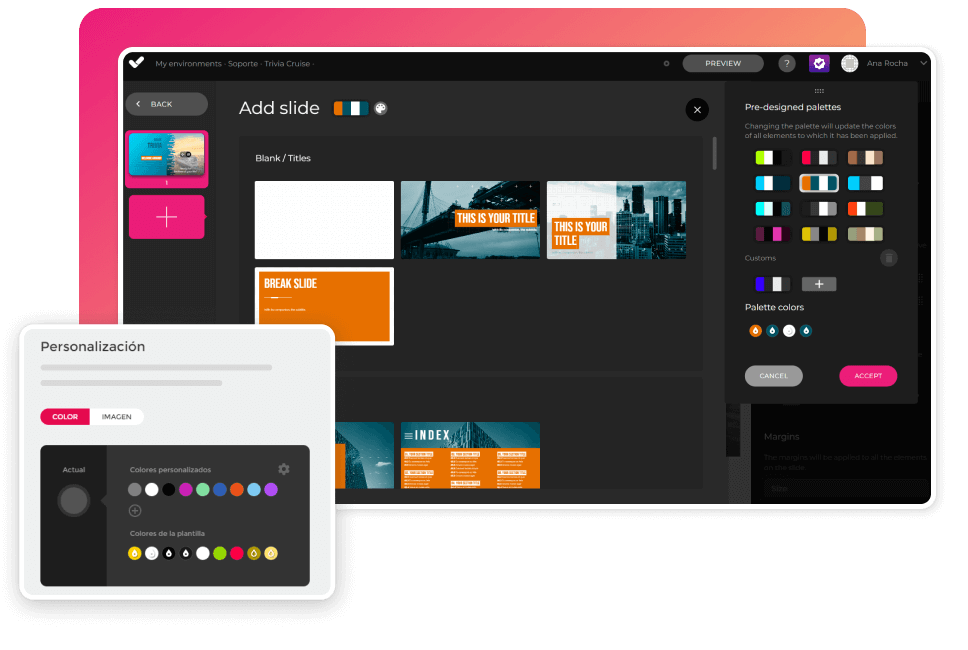
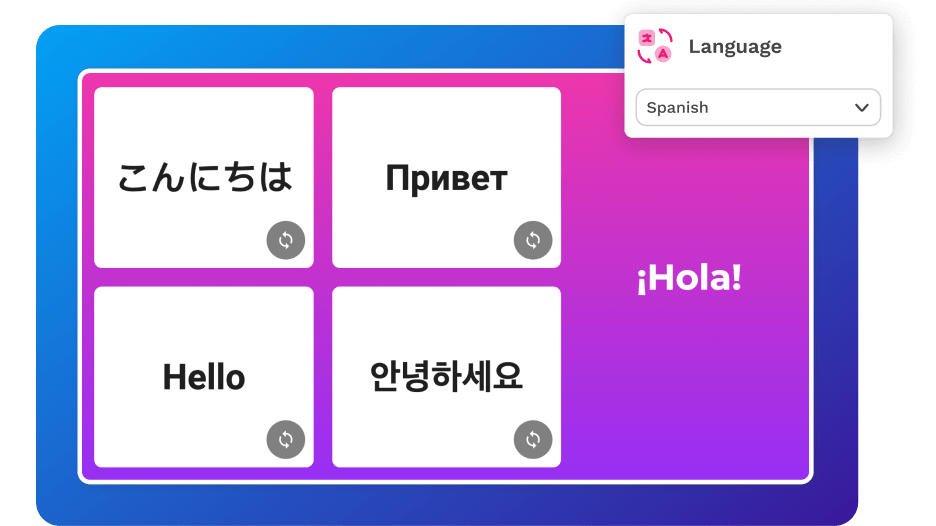
AI makes it possible for training to move beyond being a one-off project and become a continuous process. Creating and updating courses is no longer a bottleneck when content can be adapted or regenerated from new materials, documents, or changes in the source information.
This makes it possible to scale training to more teams, more languages, or more contexts without multiplying resources or costs. When content can be kept up to date with less effort, training remains relevant and aligned with business realities, strengthening the return on investment in training.
Another key benefit is consistency. AI tools that generate e-learning content based on corporate materials or documentation are able to maintain a homogeneous structure, a uniform tone, and a shared logic across internal content, even when many courses are created or multiple people are involved in the process.
In addition, tools such as isEazy Author go one step further. With its AI Autopilot functionality, AI applies your company’s visual identity across the entire project in seconds, maintaining visual consistency at all times.
This consistency improves the learner experience and makes training easier to follow and apply in the workplace. In the long term, a clearer and more consistent training offering helps make the impact of training more measurable and, therefore, optimizes training ROI.

By delegating the more operational tasks of content creation to AI, L&D teams gain time to work on more strategic aspects: defining objectives, validating quality, prioritizing training needs, or measuring results.
This shift in role is key to maximizing the value of training. When teams can spend more time designing training and less time producing it, the impact on the business is greater and training ROI stops being an unknown to become a tangible indicator.
When discussing training ROI, the focus is usually on direct metrics such as costs, time, or impact on results. However, a significant part of the value of training—especially when supported by AI—does not always show up immediately in the numbers.
Benefits such as greater adaptability, improved talent retention, or continuous skills development have a direct influence on organizational performance, even if they are not always measured using traditional financial indicators. These factors are often left out of training ROI measurement models, despite having a real impact on medium- and long-term success.
When the creation of training content becomes more agile and sustainable, training stops being a one-off initiative and becomes part of everyday work. This fosters a culture of continuous learning, reduces turnover linked to a lack of professional development, and helps build teams that are better prepared to face new challenges. Incorporating these types of qualitative indicators alongside quantitative metrics makes it possible to obtain a much more comprehensive view of the training ROI.
To truly understand the impact of AI on training ROI, it is useful to compare the traditional scenario with the AI-powered model. This transformation affects not only the numbers, but also the entire operation and the strategic capacity of L&D teams.
| Aspect | Without AI | With AI (isEazy Author) |
|---|---|---|
| Creation time | 40–60 hours per 1-hour course | 95–98% reduction in time |
| Scalability | Linear (more courses = more resources) | Exponential → scales without increasing costs |
| Visual consistency | Varies depending on the designer | Automatic with corporate branding |
| Time to market | 4–8 weeks | 3–7 days → 10x faster |
| Personalization | Limited and costly | Automated → higher engagement |
| L&D team role | 80% production, 20% strategy | 30% production, 70% strategy |
The following example illustrates a realistic scenario based on typical metrics of mid-sized companies before and after incorporating AI into their training processes.
| Aspect | Initial situation (without AI) | After implementing AI |
|---|---|---|
| L&D team | 4 people | 4 people (same size) |
| Courses created per year | 12 | 45 |
| Average response time | 6 weeks | 1 week |
| Outdated or unused courses | 40 % | 12 % |
| Training ROI | Not clearly measurable | +220% (estimated) |
Additional benefits observed:
The most important difference is not only in efficiency, but in the change in the role of the L&D team:
This shift in focus is precisely what multiplies training ROI: when training responds faster, is better prepared, and aligns with strategic objectives, its impact on the business increases significantly.
Measuring training ROI requires a balanced approach that combines financial, performance, and people-centered indicators. This comprehensive view makes it possible to capture both the immediate impact and the long-term value of AI-powered training.
These metrics connect training directly to the organization’s economic performance.
| Aspect | Detail |
|---|---|
| What it measures | Direct economic return from training |
| Formula | (Benefits − Costs) / Costs × 100 |
| Recommended target | >150% in strategic programs |
| Frequency | Quarterly in ongoing programs, every 3–6 months in one-off programs |
| Aspect | Detail |
|---|---|
| What to measure | Reduction in errors, rework, and unproductive time |
| How to calculate it | Average cost per error × reduction in the number of errors |
| Example | €500 error × 20 fewer errors per month = €10,000 in monthly savings |
| Aspect | Detail |
|---|---|
| What to measure | Sales, conversion, upselling |
| Method | Compare trained teams vs. untrained teams over the same period |
| Key point | Isolate the impact of training from other variables |
| Aspect | Detail |
|---|---|
| Formula | Total program cost / number of trained employees |
| Industry benchmark | €1,200–€1,600 per employee per year |
| With AI | Typical reduction of 60–75% |
| Aspect | Detail |
|---|---|
| What to measure | Specific benefits of the AI tool compared to its cost |
| Include | Time savings, scalability, reduced reliance on external providers |
| Payback period | 3–6 months |
They assess how training improves day-to-day business performance.
| Aspect | Detail |
|---|---|
| What to measure | Output per hour, tasks completed, goals achieved |
| Method | Pre- and post-training comparison |
| Typical impact | 15–30% increase |
| Aspect | Detail |
|---|---|
| What it measures | Time required to reach optimal performance |
| Key use cases | Onboarding, role changes, new tools |
| With AI | 30–50% reduction |
| Aspect | Detail |
|---|---|
| What it measures | Errors, incidents, complaints |
| How to express it | Percentage reduction + avoided cost |
| Key sectors | Manufacturing, customer service, compliance |
| Aspect | Detail |
|---|---|
| What it measures | Audits, quality assessments |
| Indicators | Quality score, number of revisions |
| Method | Compare scores before and after training |
| Aspect | Detail |
|---|---|
| What it measures | Time to achieve widespread adoption (>80% active users) |
| AI impact | Adoption 2–3 times faster |
| Indirect ROI | Less friction in digital transformation |
| Aspect | Detail |
|---|---|
| What it measures | Ideas proposed and implemented |
| Connection | Continuous training drives a culture of improvement |
| Method | Suggestion systems and internal projects |
The impact on people is both a direct benefit and a driver of future results.
| Aspect | Detail |
|---|---|
| Fórmula | Ending employees / starting employees × 100 |
| Impact | Up to 34% higher retention with a strong L&D strategy |
| Avoided cost | 1.5–2× annual salary |
| Aspect | Detail |
|---|---|
| What it measures | Training NPS, engagement, participation |
| Tools | Pulse surveys, interviews, analytics |
| Correlation | +21% productivity (Gallup) |
| Aspect | Detail |
|---|---|
| What it measures | Percentage of vacancies filled internally |
| Savings | Lower cost compared to external recruitment |
| Benefit | Shorter adaptation curve |
| Aspect | Detail |
|---|---|
| What it measures | Sick days before and after training |
| Connection | Higher satisfaction reduces absenteeism |
| Avoided cost | Daily salary × reduced days |
| Aspect | Detail |
|---|---|
| Key question | “Would you recommend this training to a colleague?” |
| Scale | –100 to +100 (>50 excellent) |
| Predictor | Higher NPS = greater real-world application |
| Aspect | Detail |
|---|---|
| Target rate | >80% mandatory / >60% optional |
| Indicators | Time spent on the platform, voluntary return |
| With AI | +15–25% increase in engagement |
In addition to the metrics used to calculate training ROI, below are some more specific ones to evaluate the efficiency of AI-powered training creation and management:
This systematic tracking makes it possible to justify the investment, identify opportunities for continuous improvement, and demonstrate the strategic value of the L&D function within the organization.
For training ROI to be more than a theoretical indicator, AI-powered training must be connected from the outset with business priorities. This does not depend solely on technology, but on how objectives are defined, how training is managed over time, and how its real impact is measured. These best practices help ensure that investment in AI-powered training delivers a clear return aligned with the results the organization expects to achieve:
The first step is to establish specific and measurable objectives from the beginning. Knowing what each training initiative aims to achieve—reducing onboarding time, updating key knowledge, or improving process adoption—makes it easier to link training to real business outcomes.
When objectives are clear, it becomes much easier to assess whether training is fulfilling its purpose and how it contributes to the organization’s training ROI.
Training should not be viewed as a closed project, but as an evolving process. Continuous monitoring makes it possible to identify which content works, which needs adjustment, and where there are opportunities for improvement.
Regularly reviewing training programs and updating them based on new needs helps keep training aligned with business reality and maximizes its impact over time.
When AI-powered training is used in isolation, its impact is limited. By contrast, encouraging its use across different departments expands its reach and strengthens a culture of continuous learning throughout the organization.
This cross-functional approach makes better use of the content created and helps ensure that the value of training is more clearly reflected in overall training ROI.
Measuring training ROI in AI-powered learning is not without its challenges. There are common obstacles that should be considered to avoid incomplete or unrealistic interpretations of results.
Not all training benefits are immediately reflected in numbers. Aspects such as confidence, autonomy, or the progressive development of skills take time and are more difficult to quantify.
Complementing quantitative data with qualitative information, such as internal surveys or interviews, makes it possible to obtain a more balanced view of the real impact of training.
AI evolves at a constant pace, which requires organizations to maintain a flexible approach. Progressively adapting content and training processes helps incorporate improvements without generating friction or dependence on rigid models. This adaptability is key to sustaining training ROI in the long term.
Adoption is just as important as technology. Supporting teams with clear communication, training, and ongoing support facilitates real use of the tools and prevents investments from being underutilized. Effective change management increases the likelihood of success and strengthens the impact of training on business results.
For AI-powered training to generate a sustainable impact, it is not enough to simply adopt new tools. It is essential to have a solution that enables faster, more scalable, and more controlled training creation, aligning the efforts of L&D teams with real business objectives.
isEazy Author is designed precisely for this purpose. Its approach to training content creation, powered by the full potential of AI, makes it possible to create e-learning courses much faster, in an agile way, and without requiring prior experience.
With its new feature, AI Autopilot, AI takes care of transforming ideas or your existing documentation into ready-to-use e-learning courses. In addition, this automation of the most intensive phases of the creation process—course structure, content generation, interactive elements, and multimedia—significantly reduces production time and associated costs. This way, teams always retain control to review, adjust, and validate the final result, ensuring pedagogical quality without sacrificing efficiency.

This working model has a direct impact on the training ROI of learning programs. Creating courses in less time, updating content more easily, and scaling training without increasing resources makes investment in training easier to measure, justify, and optimize over the long term.
If you want to see how isEazy Author can help you improve the training ROI of your corporate learning initiatives, request a demo and discover how to simplify the creation of e-learning courses with the number one authoring tool on the market.
Training ROI can be measured by analyzing indicators such as the reduction in course creation time, savings in internal or external costs, the speed at which training reaches teams, and the actual use of the content created. These data, combined with learner feedback, make it possible to objectively evaluate the impact of AI on training.
Training ROI measures the return on investment in training, that is, the real impact it delivers in relation to the time, resources, and budget invested. In the case of AI-powered training, training ROI is especially relevant because it makes it possible to assess whether automation and efficiency in content creation translate into cost savings, greater agility, and training that is better aligned with business needs.
Any organization that needs to create and update training on a recurring basis can benefit from using AI. Companies with frequent onboarding processes, compliance training, constant procedural changes, or scaling needs are the ones that most quickly perceive the impact on their training ROI when optimizing content creation with AI.
No. When applied correctly, AI acts as a support, not a replacement. It automates the more operational stages of content creation, but pedagogical control and final validation remain in the hands of training teams. This balance is key to ensuring course quality and maximizing training ROI.
The main advantage is efficiency. AI makes it possible to automate repetitive tasks, speed up content creation and updates, and scale training without increasing the workload of L&D teams. This makes training more sustainable over time and makes training ROI easier to justify compared to traditional, much more manual and slower models.

Welcome to a new way of creating e-learning courses with AI Autopilot.
Request a demo

The way you create e-learning courses is about to change forever
With AI Autopilot, transform an idea or your documents into a course with pedagogical structure, design, and interactivity.



The way you create e-learning courses is about to change forever
With AI Autopilot, transform an idea or your documents into a course with pedagogical structure, design, and interactivity.