Brain
The first AI trained to teach

Author
The #1 AI-powered authoring tool on the market

Factory
Custom e-learning content factory

Skills
Comprehensive power skills course catalog

LMS
All-in-one LMS platform with AI

Engage
App for managing frontline teams
Product

What is Brain?
Everything you need to know about the first AI trained to teach.

How does it work?
Adaptive, conversational, and contextual. That’s learning with Brain.

Security
Why your company’s knowledge never leaves your environment or trains other models.

Comparison
Discover what sets isEazy Brain apart from other AI solutions.

Frequently Asked Questions
Want to learn more? Find answers to all your questions about isEazy Brain here.

FEATURES

AINew
Unlock your full potential and speed up course creation with artificial intelligence.

Accessibility
Automatically meet accessibility guidelines—without sacrificing interactivity!

Interactivity
Boost engagement with interactive, ready-to-use activities that make learning fun.

Course Creation
Reduce the time it takes to create your e-learning courses with our authoring tool.

Distribution
We offer you different distribution options, so that nothing can stop you.

SCORM
Publish your course in SCORM format and share it on any LMS.

SERVICES

Instrucional Design
Surprise your students with multimedia and interactive content.

Custom Courses
We create e-learning courses for you—tailored to your needs and hassle-free!

Virtual Reality
Turn learning into an immersive experience.

Custom Avatars
Give your courses and videos a unique touch with personalized avatars.

Audiovisual FactoryNew
Turn training into something dynamic and visual with engaging videos.

CATALOG

Course catalog
Over 600 skills and competency courses to help you adapt to your team's needs.
Microsoft Copilot AcademyNew
Your professionals will learn how to apply Copilot AI to key processes within your organization.

Artificial Intelligence Academy
Train your teams in the practical use of AI to boost productivity and innovation in your company.

Cybersecurity Academy
Capacita a tu empresa con el catálogo más completo en seguridad digital corporativa.
FEATURES

Learning platform
Manage all your training from one place

Analitycs
Measure the impact of your training

Learning Experience
Offer a unique learning experience to your team
Content Library
Choose from hundreds of expert-created courses
Authoring Tool
Create your own content—faster than ever


Use cases
Choose the solution that best fits your needs

Industries
Solutions for all types of industries
USE CASES

Onboarding
Facilitate the onboarding process, productivity and engagement of your new employees.

Upskilling
Boost your team's skills and prepare them for the challenges of the future with upskilling.

Microlearning
Discover all the advantages of microlearning and boost your training results.

Gamification
Enjoy addictive training that will get your professionals hooked.

Internal Communication
Improve communication in your company and enjoy an aligned and committed team.

Mobile learning
Agile, flexible, and interactive learning—built for today’s digital-first workforce.
INDUSTRIES

Banking and financial services
Training in compliance, cybersecurity, customer service, and key skills development.

Pharmaceuticals and healthcare
Digital onboarding, regulatory updates, and ongoing training for healthcare staff.

Retail and consumer
Agile and scalable training for in-store, operational, and customer service teams.

Industry and manufacturing
Training in processes, safety, and corporate culture for distributed teams.

Education and training
Digital solutions for training centers, internal academies, and corporate universities.

Technology and telecommunications
Development of technical talent, digital skills, and upskilling and reskilling programs.
CLIENTS

MAPFRE
How MAPFRE turn e-learning into sales with isEazy

Pepco
A personalised learning experience for a growing team.

BBVA
Digitisation and creation of high quality e-learning content.

Shiseido
We increase the engagement of the training with a social and gamified app.

Telefónica
Large-scale reskilling for the company's digital transformation.

Vodafone
A personalised learning experience for a growing team.
More than 1,000 companies already rely on isEazy.






MEET ISEAZY

Events
Discover our upcoming events and connect with the future of e-learning.

News
Find out the latest news about isEazy: press releases, partnerships, updates...

Contact
Leave us your personal details and we will contact you as soon as possible.
About isEazyNew
Find out more about our company.

Careers
We are looking for the best talent, join our team!

Partners
Become our partner and grow your business.

INTERESTING RESOURCES

Blog
The best content on e-learning: trends, tools and key strategies.

Whitepapers
Gain valuable insights and stay ahead of industry trends.

Product releases
The latest news and releases of our e-learning products and solutions.

Glossary
Definitions of the most commonly used terms and key industry concepts.

Guides
Discover the best step-by-step tips and tricks to optimize your L&D strategy.

Webinars
Video sessions on our products, trends and more

Comparatives
Compare e-learning solutions available on the market and choose the most suitable one.


August 14, 2026
In Curitiba, isEazy examines the key factors behind the impact of AI on HR departments in more than 30 countries

CONTENT CREATED BY:
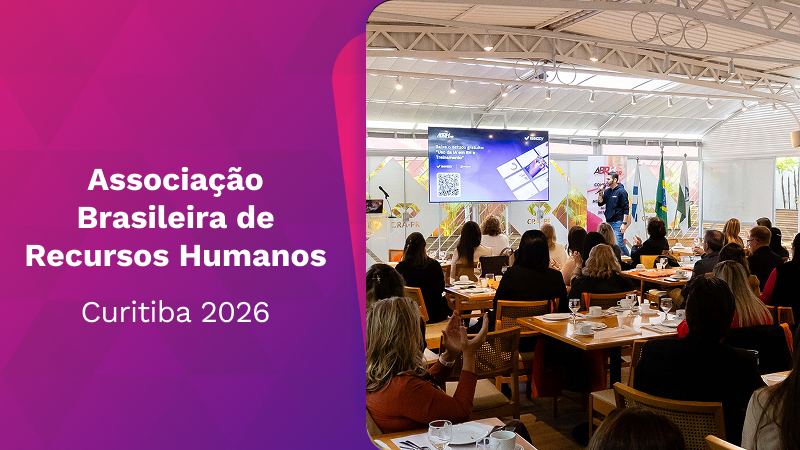
Table of contents
Beyond the boom in artificial intelligence (AI) applied to corporate learning, understanding how this transformation is actually taking place is essential for HR departments to unlock its full potential.
With this goal in mind, we took part in an event organized by the Brazilian Association of Human Resources – Paraná Chapter (ABRH-PR), an organization founded in 1966 in Curitiba, Brazil, where our Key Account Manager, Daniel Goler, delivered the session “From hype to reality: how AI is transforming HR in more than 30 countries”.
GenAI, Learning Analytics, and predictive models: the AI already transforming talent management
During the event, we shared the key findings from the “AI in HR and Learning” study, developed by isEazy and Microsoft based on responses from more than 300 professionals across 32 countries. The analysis allowed us to explore how organizations are adopting artificial intelligence and the main opportunities AI offers for managing and developing talent.


The data clearly confirms this gap between AI use and true integration. While AI is already part of many teams’ day-to-day work, the study reveals that 77% of the market has yet to fully integrate it into its processes, compared with 23% of organizations that have already made that leap. The difference is not just about having access to tools, but about embedding them into defined workflows, with clear usage criteria, internal know-how, and specific goals. In other words, the real challenge is no longer experimenting with AI, but turning it into an operational and strategic capability within HR and Learning.
The study also looks at which technologies will have the greatest impact on HR and corporate learning over the next three years. Generative AI ranks first, cited by 45% of respondents, closely followed by Learning Analytics and predictive models.
The close ranking of these priorities points to a clear evolution: the value of AI will not lie solely in generating content, but in combining that capability with data to better understand each professional and adapt the experience in real time. This means moving toward solutions that can interpret context, identify needs, adapt the level or format, answer questions, and recommend the most appropriate next step. In this way, generation, analytics, and prediction are beginning to converge into a more personalized, interactive learning experience that is more closely connected to real-world performance.


At isEazy, we would like to thank ABRH-PR for the opportunity to deliver this exclusive session and share our perspective and the insights gained through our study. We remain committed to creating spaces for dialogue that help bring together data, experiences, and knowledge around the real-world use of artificial intelligence in corporate learning.
Featured articles


One tool for all your training needs
Forget juggling multiple platforms—streamline your team’s training with a smart, AI-powered solution.
Request a demo


Need help?
If you are looking for a perfect e-learning tool tailored to your needs, don't hesitate to write to us!


Related articles